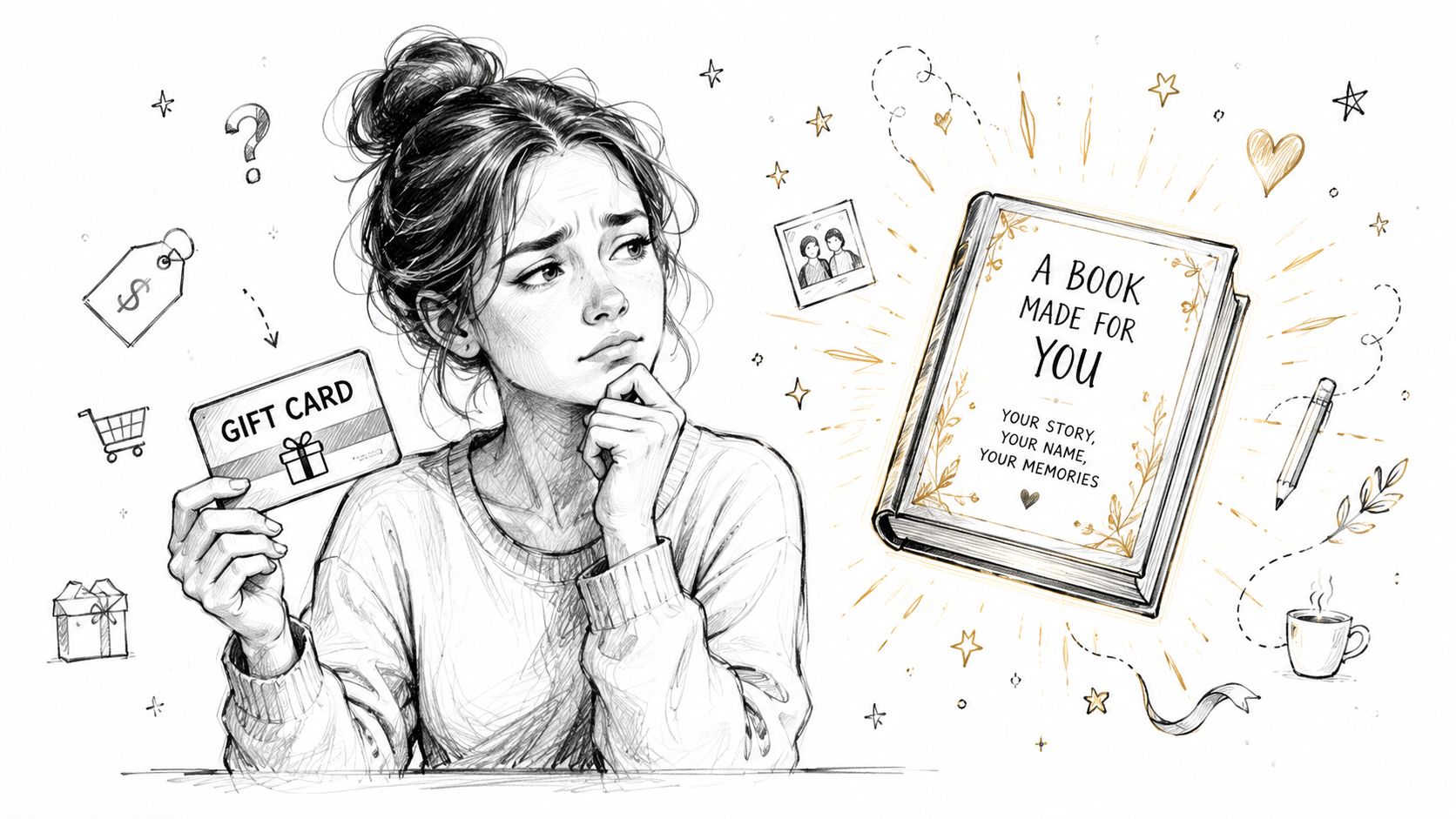
The bigger market behind that instinct is already substantial. The personalized gifts category was estimated at USD 33.49 billion in 2026 and is projected to reach USD 45.09 billion by 2030, which points to durable demand for one-of-a-kind gifts instead of mass-produced ones (Research and Markets). For books, that demand shows up in everything from simple photo keepsakes to fully custom narratives.
A good personalized book doesn't just print a name on the cover. It makes the recipient part of the experience, whether that means a child seeing themselves as the hero or an adult receiving a story that feels thoughtful without being too private. If you want more gift ideas in the same spirit, this guide to unique personalized gifts for friends is a useful companion.
Beyond the Gift Card The Rise of Personalized Books
A generic present solves the calendar problem, but not the memory problem. You hand it over, the recipient smiles, and two weeks later it's hard to remember what made it different from anything else in the pile. A personalized book changes that because it gives the person a role, a voice, or even a whole story world built around them.
The appeal is broader than sentiment. Personalized gifts keep growing because people want items that feel specific rather than interchangeable, and books fit that instinct especially well. They combine object, message, and keepsake in one format, which makes them easier to remember than a standard present and more meaningful than something purely decorative.
Why books hit harder than most gifts
A book can hold a real photograph, a shared memory, a fictional adventure, or a message from one person to another. That flexibility is what makes the format so strong for gifting. It can be playful for a child, romantic for a partner, reflective for a parent, or practical for an adult who values usefulness as much as sentiment.
The emotional payoff is also different from most gifts because the recipient isn't just opening something, they're entering a story where they matter. That small shift changes the entire experience. Instead of “someone bought this for me,” the feeling becomes “someone made this for me.”
Practical rule: if a gift can be described in one sentence without mentioning the person who receives it, it probably isn't personal enough.
That's why this category keeps expanding. People don't just want novelty, they want recognition. And a book, more than many other gift formats, can carry that recognition in a form that lasts.
What Makes a Personalized Book Truly Special
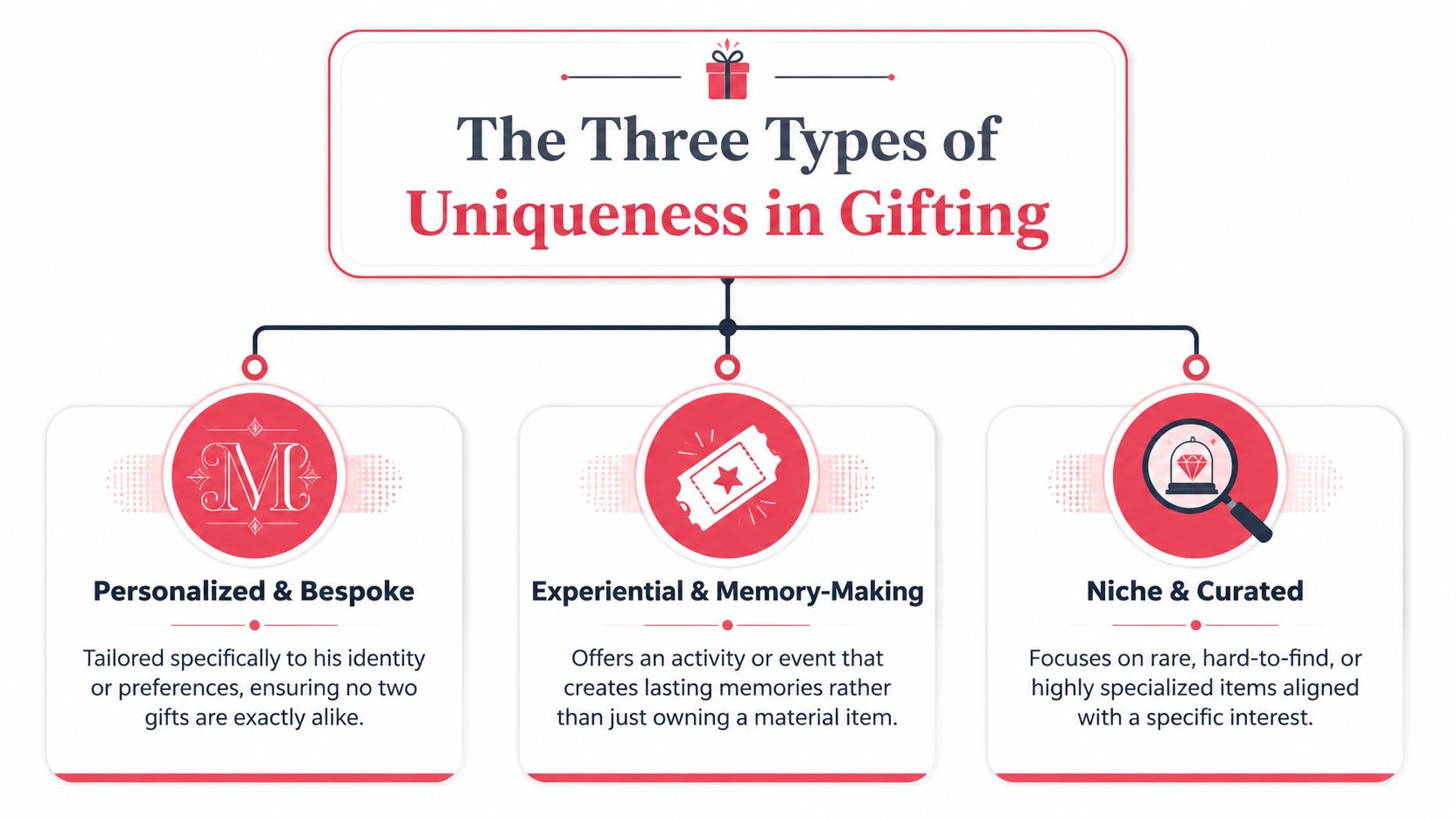
Think of personalization as a spectrum, not a switch. On one end, you're adding a name or photo to a template. On the other, you're shaping a story, characters, artwork, and tone around a specific person. Both can work, but they serve different kinds of moments.
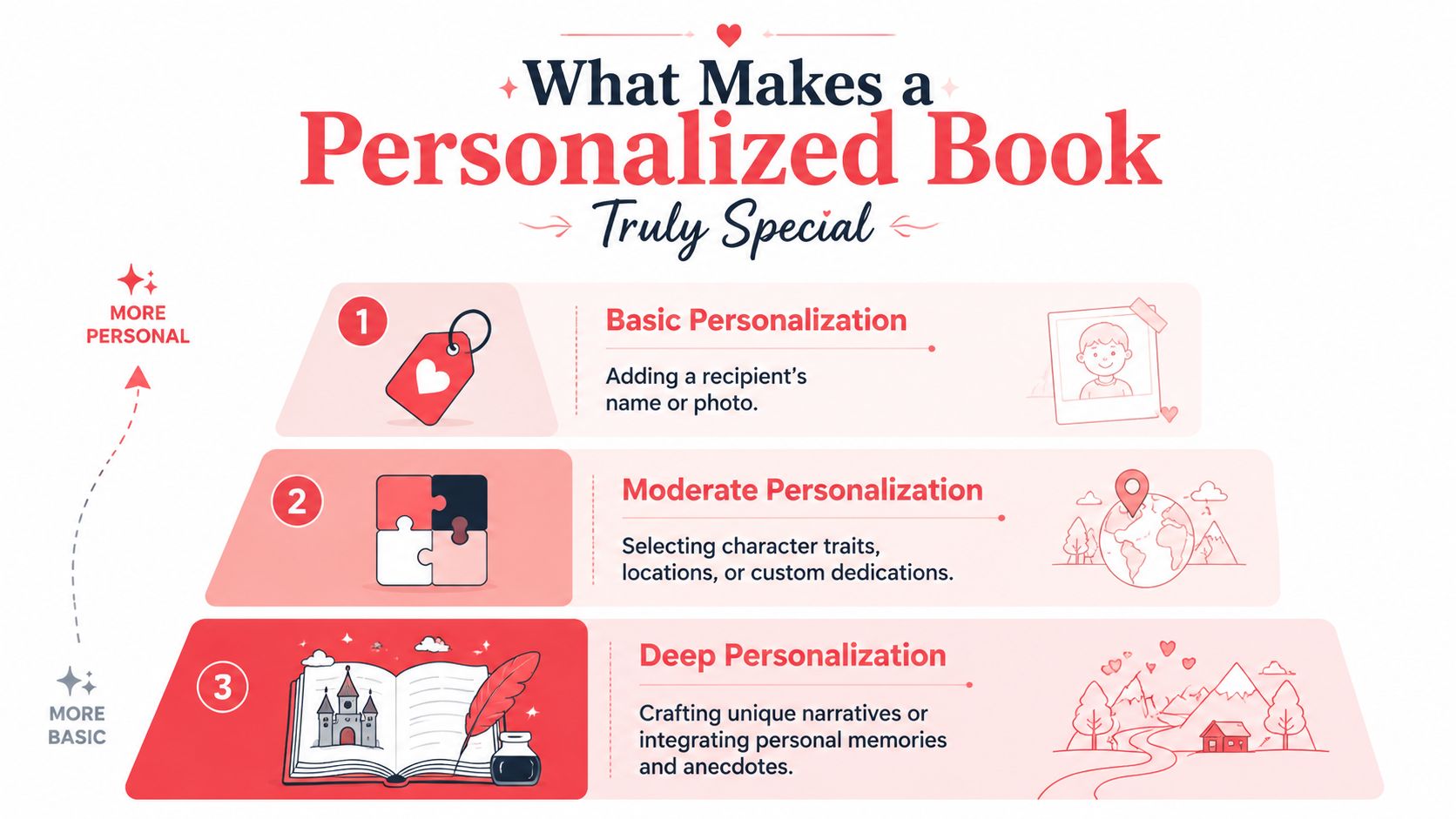
The three practical tiers
Basic personalization is the easiest entry point. It usually means a name, a photo, or a short dedication placed into a pre-built layout. This works well when you want a quick, polished gift that still feels personal.
Moderate personalization goes a step further. Here you might choose character traits, locations, or shared details so the book reflects the recipient more closely. It's the difference between buying a monogrammed jacket and choosing one that feels uniquely appropriate.
Deep personalization is where the gift becomes distinctive. The story itself changes, the visuals can shift, and real memories or anecdotes can be woven into the pages. That level of control is ideal when you want the book to feel like it belongs to one person, not just anyone.
A useful way to judge the right tier is to ask how private the relationship is. A close partner may appreciate a richer, more intimate narrative. A colleague, teacher, or friend may respond better to a lighter version that still feels thoughtful. The sweet spot is usually the one that feels specific without forcing emotional closeness that isn't there.
A personalized book should feel custom, not invasive. That line matters more than most people expect.
The result is simple. The more closely the book matches the recipient's world, the more likely it is to be kept, shared, and remembered.
Matching the Perfect Book to the Occasion
The best book gifts don't start with the format, they start with the moment. A birthday, a promotion, a reunion, or a graduation all call for different emotional tones, and forcing one style onto every occasion usually makes the gift feel off. A child's milestone can be bright and playful, while an adult's achievement might need something calmer and more elegant.
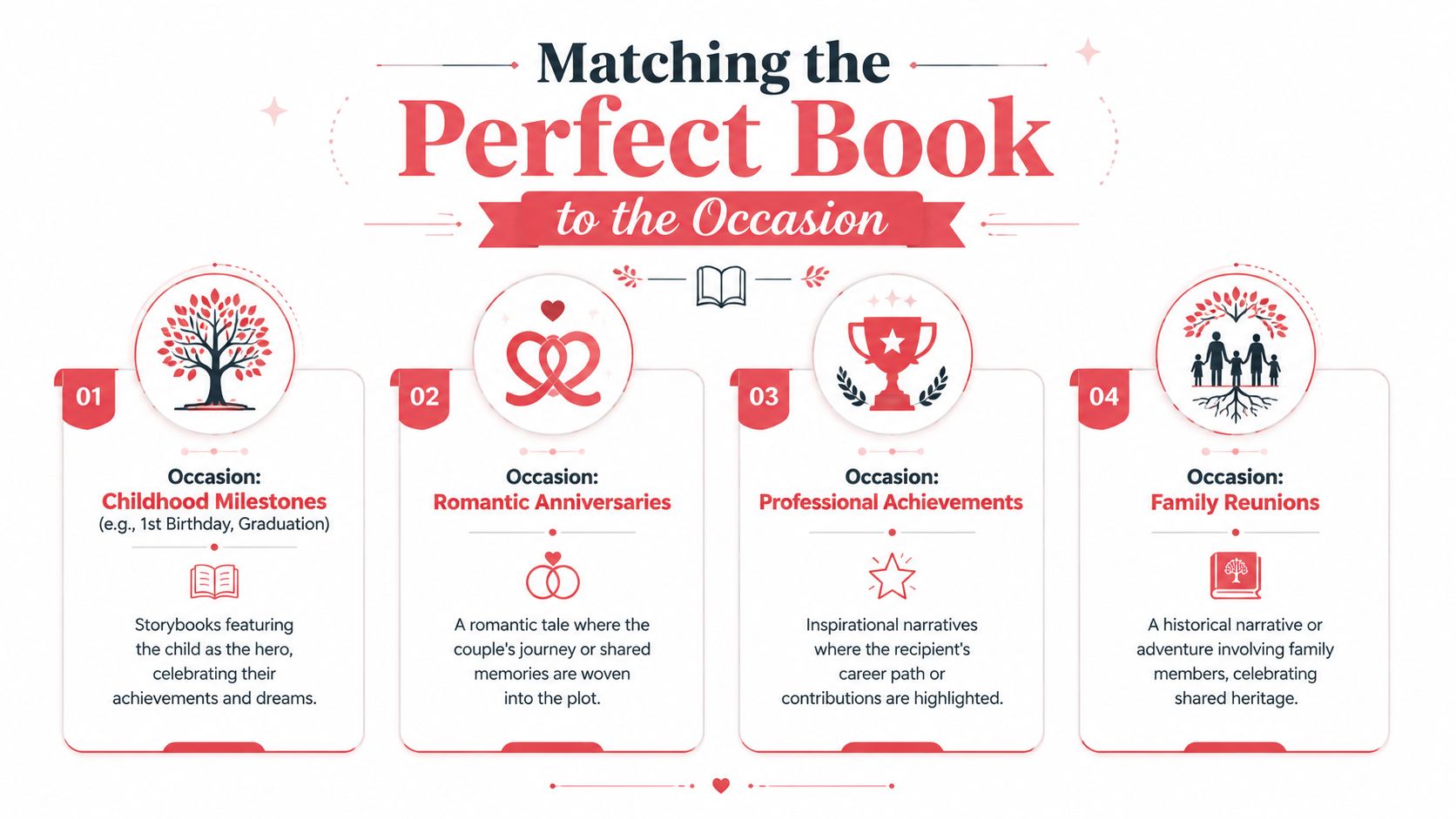
Childhood and family moments
For children, the strongest books usually place them at the center of the action. That could mean a first birthday, a school milestone, or a bedtime story that turns their name into part of the plot. These gifts work because kids respond quickly to recognition, especially when the book feels playful and easy to revisit.
Family moments call for a different kind of warmth. A reunion book might lean on shared memories, a family tree theme, or an adventure that includes several relatives. The point is to make the group feel connected without turning the book into a scrapbook that only the maker understands.
Romantic and adult occasions
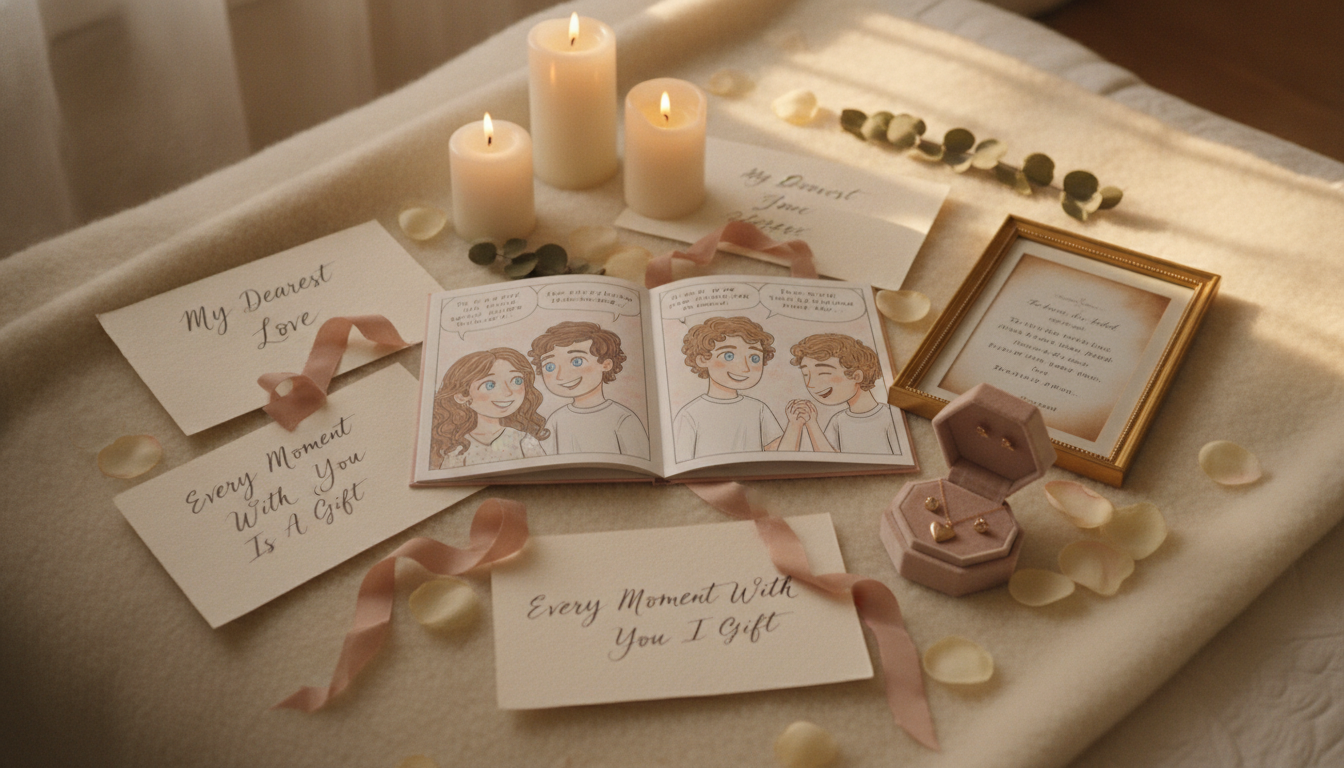
For anniversaries, the best books usually focus on a shared journey. That might mean a story built around milestones, private jokes, or places that matter to the couple. For adult gifts in general, the guidance is clear, keep it useful, relevant, and respectful of privacy. The most effective options often center on goals, habits, shared memories, or resilience, and they're usually the ones that feel easy to show another person without embarrassment (Pooks.ai).
Professional achievements need a different tone again. A graduation, a retirement, or a promotion usually calls for something forward-looking and affirming. If the book sounds too childish, it misses the point. If it sounds too formal, it loses the warmth that makes a gift memorable.
The easiest test is this. Ask whether the recipient would happily display it, read it aloud, or keep it on a shelf. If the answer feels yes, you're close.
Exploring Your Creative Options from Photo Books to AI Comics
Personalized books used to mean a narrow choice between a photo album and a prewritten story with a name swapped in. That's changed. Today, the spectrum runs from simple memory books to fully illustrated narratives, including comic-style books that can be built from photos, prompts, and character descriptions.
The global personalized books market was valued at US$ 1,041 million in 2024 and is forecast to reach USD 1,902 million by 2031, at a 9.0% CAGR (Data Bridge Market Research). That growth makes sense, because the category now serves people who want anything from a quick keepsake to a highly custom story.
Three formats worth comparing
Photo books are the most familiar option. You gather images, arrange them into pages, and add captions or short notes. They're ideal when the gift is built around real memories, like a vacation, a wedding, a baby's first year, or a family event.
Custom-name storybooks sit between template and original creation. You start with a story framework, then adjust the characters, names, and a few details. These work well for children and for adults who want something charming without needing a fully original narrative.
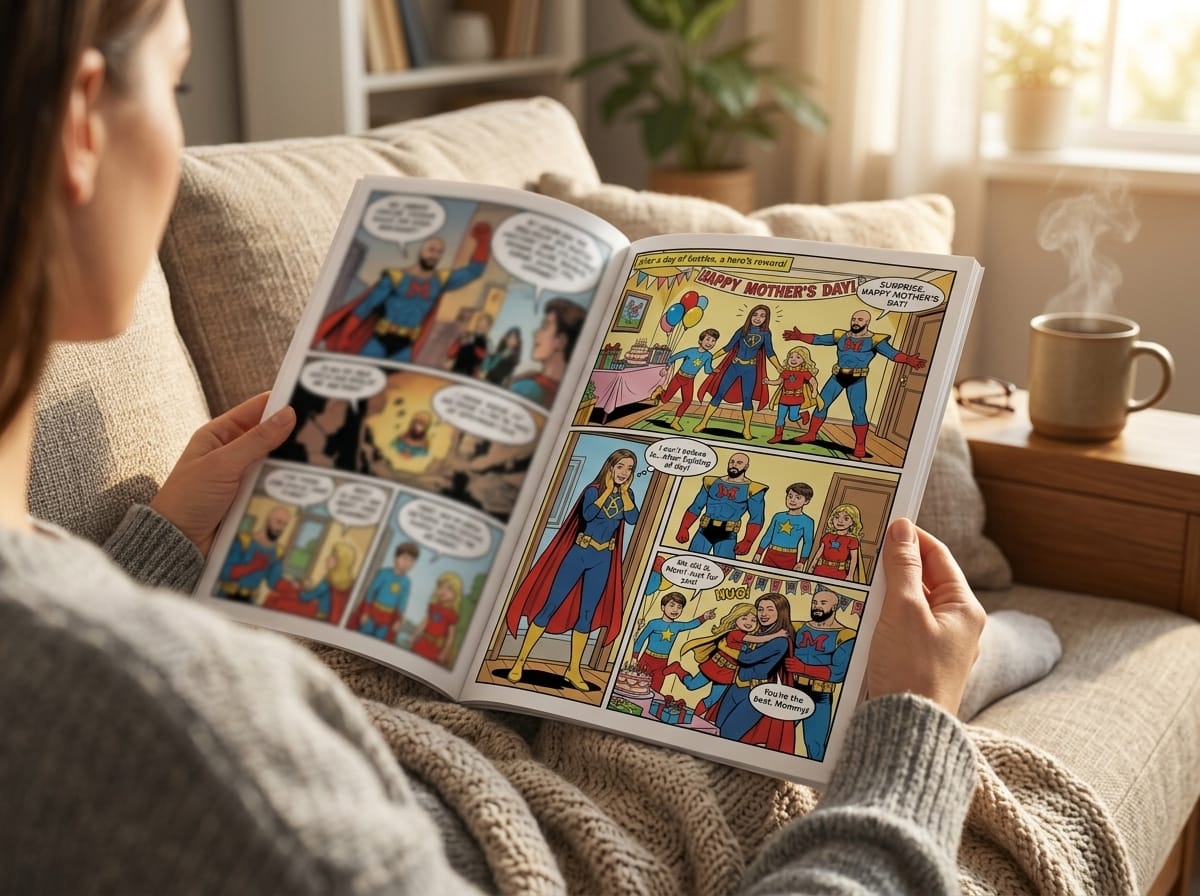
AI-generated comic books open a different lane entirely. Instead of only dropping in a name, you can create pages with panels, speech bubbles, and visuals shaped by photos or written prompts. That makes them useful when you want something more cinematic than a photo book and less manually intensive than drawing from scratch. PersonalizedComics is one option in this space, and its AI book maker guide shows how the format can turn a simple concept into a structured illustrated book.
How to choose
If your priority is speed and real memories, pick a photo book. If your priority is familiarity and gift-shop simplicity, choose a custom-name storybook. If your priority is visual originality and stronger narrative energy, an AI comic can bridge the gap between high-effort custom art and low-effort template gifts.
A primary shift is creative access. Tools now let ordinary gift-givers do work that once required an illustrator, a designer, or a lot of spare time. That's why the format feels so newly useful.
Your Step-by-Step Personalized Book Creation Guide
The easiest way to make a great book is to stop thinking of it as a giant project. Break it into small decisions. First comes the core idea, then the source material, then the tool, then the final polish.
Start with one clear emotional center
Choose one feeling or purpose before you start gathering details. Maybe you want the book to celebrate a child's growth, mark a wedding, honor a friendship, or recognize a parent's support. If the idea is fuzzy, the finished book usually feels scattered.
A simple test helps here. Can you describe the book in one sentence without explaining the whole backstory? If not, narrow the idea until you can.
Gather the pieces that matter
Pull together the raw material before you start designing. That can include photos, names, inside jokes, a favorite place, or a shared memory worth turning into a scene. For illustrated projects, choose photos with clear faces and strong expressions, since those tend to translate better into stylized art.
Good personalization sounds specific, not crowded. One or two strong details often beat a dozen tiny references.
Pick a method that matches your patience
DIY layouts work if you enjoy design and don't mind tweaking pages. Template-based services save time and still give you control over text and images. AI-assisted tools are useful when you want the system to handle the visual heavy lifting while you direct the story, characters, and tone.
For a comic-style gift, PersonalizedComics can turn photos and story prompts into illustrated pages with panels and speech bubbles, which makes it easier to move from idea to finished book without drawing skills. For a more traditional gift book, the same planning logic still applies, clear theme, selected memories, and concise writing.
Draft the words like you're speaking to one person
Keep the dialogue simple. Short lines usually feel more natural than polished speeches. If a page includes a dedication, write it the way you'd say it out loud, then trim anything that sounds stiff or overworked.
Review before you order
Read every name, date, and caption twice. Check whether the tone matches the person who will receive it, not just the person who is making it. A great final review catches awkward phrasing before it becomes permanent.
If you want a second practical reference, this guide to making a book as a gift is a useful planning companion.
Navigating Budgets and Timelines for Your Project
Price usually depends on three things, how much content you include, how customized the pages are, and how the book is produced. A simple photo book and a fully illustrated story won't live in the same cost range because they don't require the same amount of creative labor or production time. That's true whether you're making one book or planning several gifts.
The broader personalized gifts market is estimated to rise from USD 34.03 billion in 2026 to USD 61.66 billion by 2035, which shows that the category supports a wide range of price points and product types (Business Research Insights). In practice, that means there's room for modest keepsakes, mid-range custom stories, and premium gift books that feel closer to collectibles.
What pushes the price up
More pages usually mean more work. Hardcovers typically cost more than softcovers. Deep personalization, especially original illustration or custom scene-building, can also increase the total because it takes more time to create and review.
Timeline works the same way. A book that only needs uploaded photos and a few captions can move quickly. A book with custom artwork, multiple revisions, or shipping to a specific date needs much more planning.
How to plan without stress
Start earlier than you think you need to. That gives you room to fix a typo, replace a blurry photo, or simplify a section that feels too busy. If the gift matters, rushing the last step is usually where the quality slips.
A good budgeting habit is to decide what must feel premium and what can stay simple. Maybe the cover deserves the highest attention, while the interior stays minimal. Or maybe the artwork matters most, while the binding can stay straightforward. That kind of tradeoff keeps the project aligned with your actual goal instead of your wish list.
The Lasting Impact of a Story-Driven Gift
A personalized book works because it keeps more than a message. It holds a memory, a relationship, or a moment that might otherwise fade into the background. That's why people return to these gifts long after the occasion has passed.
The strongest books sit at the intersection of personal, thoughtful, and easy to keep. They don't need to be overloaded with details to matter. They just need the right balance of relevance, tone, and care.
If you're unsure where to begin, start with one person. Think about what they'd enjoy opening, reading, and showing someone else. Then build the story around that feeling.
A CTA for PersonalizedComics.
Filed under Gift Guides