That's where a book works differently from almost any other gift.
A good gift book isn't just an object. It's a story someone can hold, revisit, shelve, lend, and rediscover years later. It can be a photo-driven memory book, a short family history, a romantic timeline, a recipe collection with commentary, or a playful illustrated story built around real people. If you want to make a book as a gift, the smartest approach is simple: start with the story, then choose the format that serves it best.
The Search for a Truly Personal Gift
Some gifts get opened, admired politely, and forgotten by the next week. You've seen it happen. Maybe you've even bought one by accident while trying to avoid exactly that outcome.
That's why custom books land so well. They don't compete on novelty alone. They work because they prove attention. You noticed the trip they still talk about, the running joke from college, the way your partner tells one story at every family dinner, the exact details a generic present would miss.
The bigger gift market shows the same tension. The global gift industry is huge, but over $9.5 billion is wasted annually on unwanted gifts, which is exactly why hyper-personalized presents stand out so sharply, as noted in these gift-giving statistics from GiftaFeeling. A book built around one person's memories, humor, or milestones is much harder to shrug off.
A strong gift book says, “I know your story,” not just, “I bought you something.”
I've found that people hesitate because “book” sounds bigger than it is. They assume it means writing a memoir or designing something from scratch. In practice, the project can be surprisingly manageable when you narrow the idea. One anniversary. One friendship. One family legend. One fictionalized adventure starring real people.
That's also why books sit in a sweet spot between sentimental and practical. A framed photo captures one moment. A custom illustration captures one image. A book can carry sequence, voice, context, and payoff. It gives memories shape.
If you want inspiration beyond the usual mug-and-candle circuit, this roundup of customized art gifts for meaningful occasions is a useful reminder that personalized storytelling gifts tend to feel more deliberate than off-the-shelf options.
First Steps in Planning Your Perfect Gift Book
Too many creators choose the format too early. They decide “I'm making a photo book” before they know what the emotional point is. That's backwards.
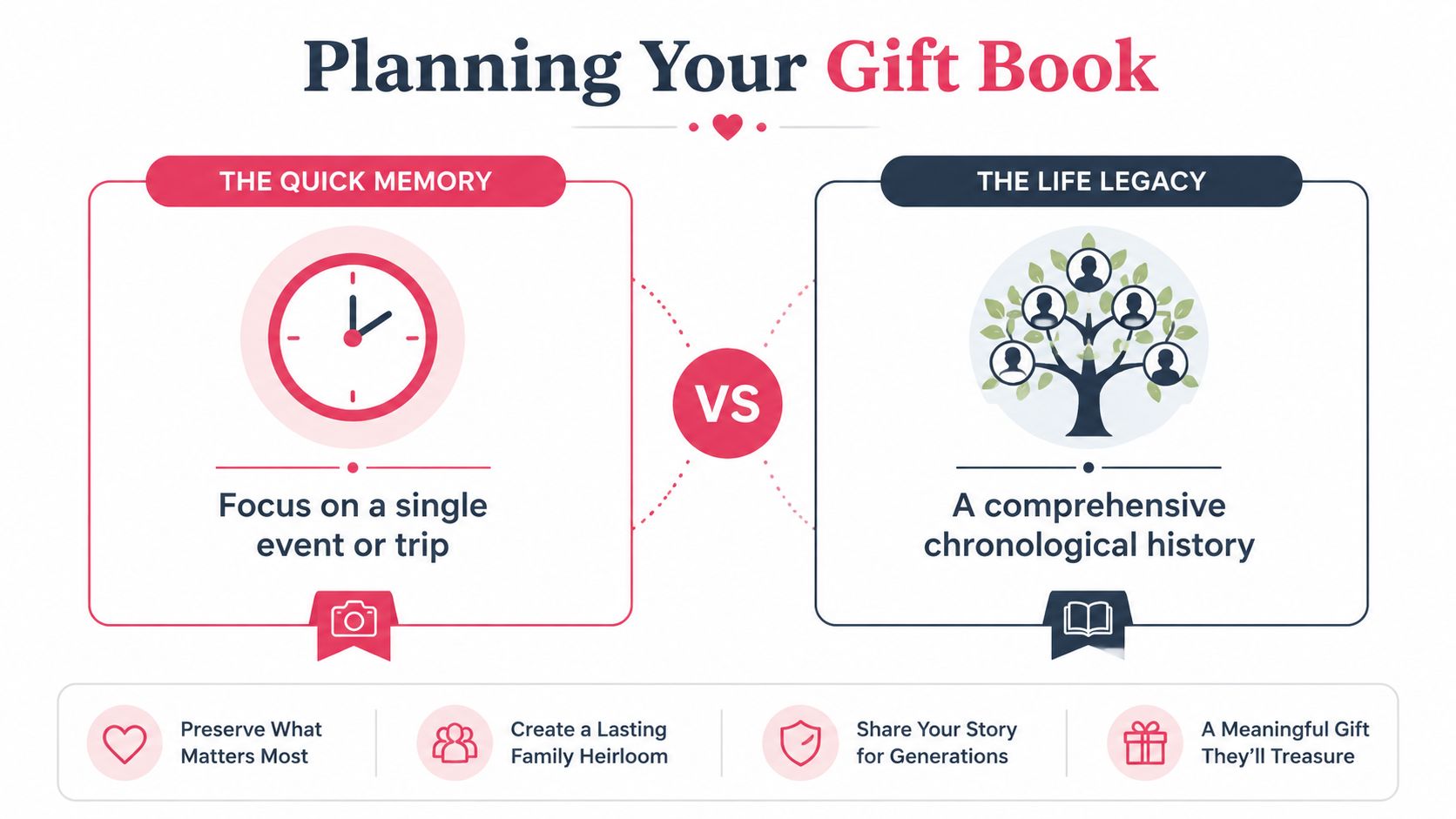
Start with one question: What should the recipient feel when they finish the last page? Nostalgic, seen, amused, proud, comforted, celebrated. Once you know that, the right format gets much easier to pick.
Choose the format after the story
Not every gift idea belongs in the same kind of book. Here's the practical comparison I use.
| Format | Best for | Works well when | Often falls flat when |
|---|---|---|---|
| Photo book | Trips, birthdays, family highlights | The visuals already carry emotion | You rely on photos alone and never add context |
| Written storybook | Love letters, family history, tribute gifts | You have anecdotes, voice, and reflection | You over-explain and lose momentum |
| Comic book | Funny memories, fictionalized adventures, milestone gifts | The recipient enjoys visual storytelling and character-driven scenes | The plot is too vague or inside-joke-heavy |
The timing is good for unusual formats too. Personalized gift platforms have made custom projects much more accessible, and 33% of people have received an unexpectedly eccentric book as a gift, which tells you readers are more open to creative formats than many gift-givers assume, according to WonderWraps on creating a book as a gift.
That matters because a lot of people secretly want permission to make something a little odd. A faux superhero origin story for your brother. A noir-style anniversary comic. A “how we survived moving house” illustrated chronicle. Those ideas work if the storytelling is coherent.
Build around one central theme
A gift book gets stronger when it has a spine. Not a binding spine. A narrative spine.
Try one of these anchors:
A defining period
The first year of marriage, a big move, a semester abroad, a baby's first months.A recurring relationship dynamic
The friend who always brings chaos. The grandparent who tells the same perfect story. The sibling rivalry that turned into loyalty.A single event with enough texture
One road trip, one holiday, one reunion, one proposal.A fictional lens for real memories
Turn real people into detectives, explorers, astronauts, fantasy heroes, or comic-book versions of themselves.
Planning rule: if you can summarize the book in one sentence, you're ready to make it. If you need a paragraph, the idea is still too loose.
Keep the scope smaller than your enthusiasm
The biggest early mistake is overbuilding. People try to cover an entire life when the stronger gift would cover one chapter well.
A smaller concept usually wins because it creates momentum. It's easier to collect material, sequence scenes, and finish on time. A tight, story-first gift also feels more intentional. It says you chose the best part, not that you dumped everything into a layout.
If you're torn between “quick memory” and “life legacy,” ask which one the recipient would reread. That answer is usually the right one.
Gathering Memories and Meaningful Content
Once the concept is clear, gathering material that sounds and feels like the recipient's world is the primary task. Not stock sentiment. Not generic captions. Specific details.
The strongest gift books are built from small evidence. Screenshots of old texts. Half-forgotten photos from someone else's phone. A sentence your dad always says. The nickname nobody outside the family knows. Those details do the emotional heavy lifting.
Find the pieces other people overlook
Start broader than your camera roll. Good source material often hides in places people don't think to check.
Message archives
Search texts, email, or chat apps for birthdays, travel plans, jokes, and voice notes.Social media albums
Look at tagged photos, captions, comments, and old stories saved to highlights.Physical boxes and drawers
Tickets, postcards, recipes, notes, school papers, printed snapshots.Quiet interviews
Ask siblings, cousins, roommates, or parents for one favorite memory each. Keep the question narrow so people answer with something usable.
A useful prompt is: “What's one story about them that you always tell?” That usually produces better material than “Send memories.”
Organize by scene, not by file type
Don't create folders named “Photos,” “Quotes,” and “Scans” if you can help it. That sounds tidy, but it slows down assembly later.
Use folders named after story beats instead:
- How it started
- The turning point
- The running joke
- The disaster that became funny
- What I want them to remember
That structure works whether you're making a simple keepsake or a more visual project. It also helps you spot gaps. If “the turning point” has no images, you may need a written page, a recreated scene, or an illustrated sequence instead of another collage.
The best content collection method is the one that leaves you with scenes, not scraps.
Adapt the book to the person reading it
This matters more than many tutorials admit. Not every recipient wants the same pacing, page density, or language level.
That's especially important for children and for readers with specific needs. A 2025 survey found that 72% of parents seek adaptive storybooks for neurodiverse children, and searches for “personalized comic book for autistic child” surged 320%, which signals a clear need for more customized formats, as reported in this overview of adaptive storybook demand.
In practical terms, that can mean:
- Shorter text blocks for readers who fatigue easily
- Predictable page rhythms so each spread feels stable
- Clear emotional cues in both images and narration
- Literal, uncluttered language when figurative writing gets in the way
- Sensory-aware design choices with calmer visuals and less chaos on the page
A book becomes more personal when it matches how someone reads, not just what it's about.
Bringing Your Story to Life on the Page
A pile of memories isn't a book yet. It becomes a book when you arrange it with movement. Something begins, something develops, something lands.
That's true whether you're making a small photo keepsake, a narrative booklet, or an illustrated comic built from prompts and photos.
Use a simple story arc
You do not need a complicated structure. Most successful gift books follow a basic three-part arc.
Beginning. Establish the person, relationship, or event.
Middle. Show change, conflict, surprise, or accumulation.
End. Deliver reflection, gratitude, or a punchline.
For example, an anniversary gift might open with awkward early photos and first impressions, move into shared milestones and mishaps, then end with what those years built. A friendship comic might begin with the first meeting, escalate through increasingly ridiculous episodes, and close with a mock-epic tribute.
Here's a clean page flow that works often:
- Opening dedication or title page
- Intro scene or setup
- Three to five core moments
- One pivot or emotional surprise
- Closing note, letter, or final image with weight
Match layout to emotional pace
One common mistake is treating every page equally. Not every memory deserves the same visual volume.
Use more space for the moments that matter most. Give quiet moments room to breathe. Let funny sequences move faster with smaller panels or shorter text bursts.
A few layout rules save a lot of frustration:
One focal point per page or spread
If everything is important, nothing feels important.Short captions beat dense explanation
A sentence with voice usually beats a paragraph of summary.Consistent fonts calm the design
Pick one readable body font and one accent style, then stop.White space is not wasted space
It helps sentiment feel deliberate instead of crowded.
Design checkpoint: if a page feels busy on screen, it will usually feel busier in print.
When illustration solves the problem photos can't
Some of the best gift-book moments have no good photos. Maybe the memory happened before everyone documented everything. Maybe the funniest scene exists only as family folklore. Maybe the emotional truth is better expressed through stylization than through literal snapshots.
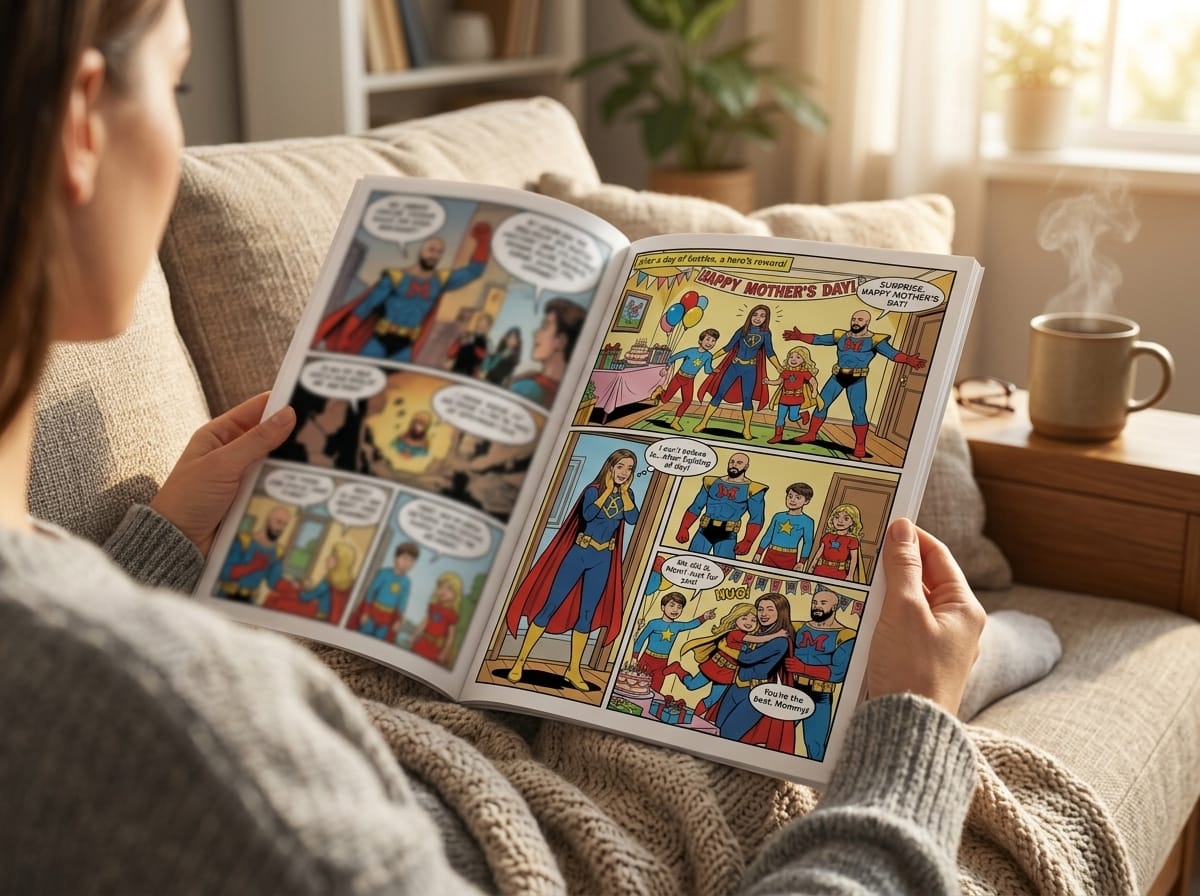
That's where illustrated storytelling becomes more than a gimmick. It lets you recreate scenes, exaggerate personality in a loving way, and turn private memories into a polished visual narrative. Comics are especially strong here because they combine sequence, dialogue, narration, and visual performance.
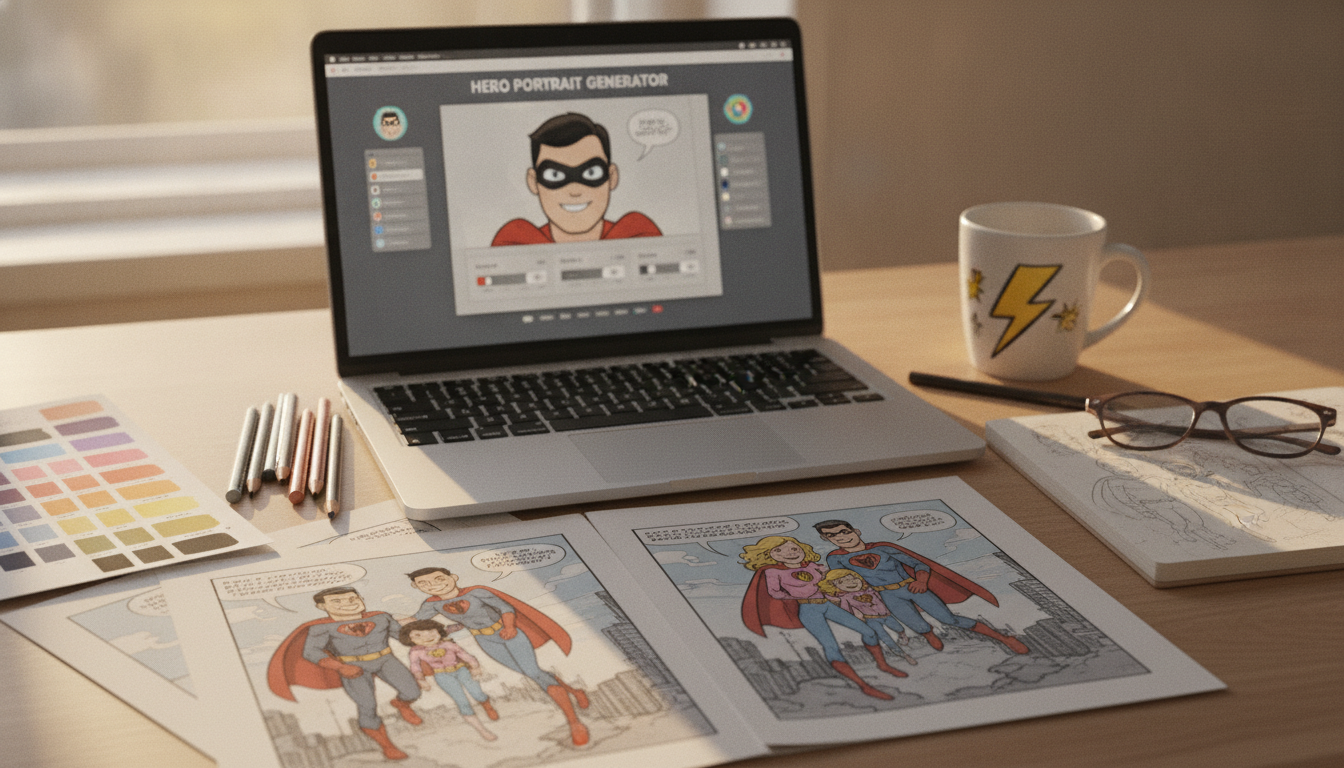
AI-assisted tools have widened access to that format. Instead of needing drawing skills, you can now build a comic by defining characters, uploading reference photos, choosing an art direction, and writing the beats of the story. The tool handles the illustrated execution, while you stay in charge of the premise, pacing, tone, and details.
That's a useful shift for gift-making because it removes the old trade-off between ambition and skill. A non-artist can still produce something visually cohesive if the narrative choices are strong.
If you want to see how personalized illustrated storytelling works in practice, these examples of personalized comic books built around real people and custom plots show why the format has become such a compelling gift option.
Give the book a voice, not just content
The final difference between a decent keepsake and a memorable one is voice. The reader should hear you in it, or hear the relationship in it.
That doesn't mean writing a lot. It means writing specifically.
Compare these:
- “We had so much fun on this trip.”
- “You spent three hours insisting the map was upside down, and somehow we still found the best meal of the trip.”
The second line creates a person. It sounds lived in. That's what gift books need.
Use names. Keep jokes intact. Quote people accurately if you can. Let one or two lines carry warmth without overloading every page with emotional commentary. Readers trust restraint more than a constant attempt to make them cry.
Navigating Printing Production and Timelines
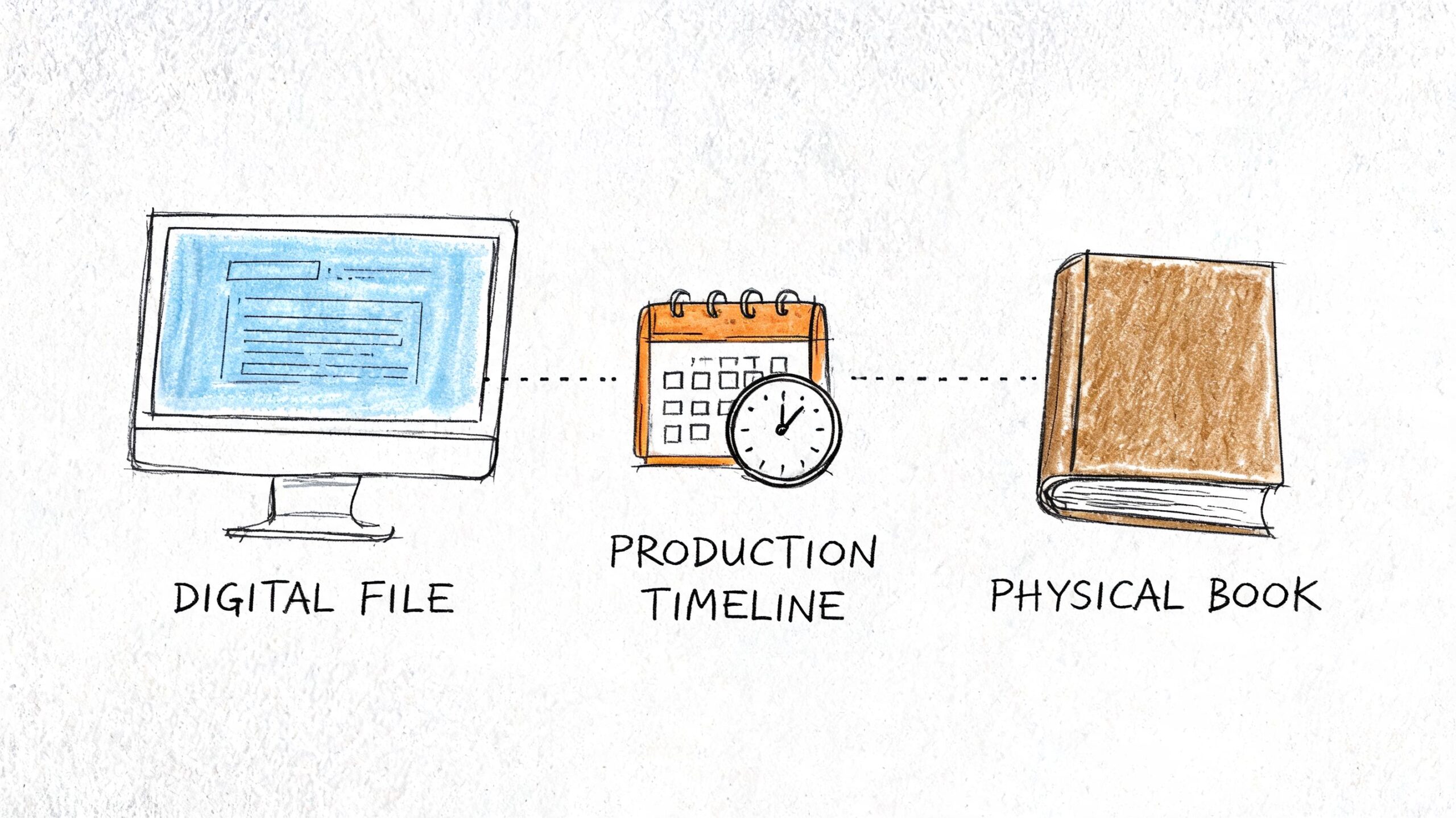
The digital draft feels like the hard part until you reach production. Then you realize paper, binding, proofing, and delivery can make or break the gift.
A beautiful concept printed carelessly looks accidental. A simple concept printed well looks valuable.
Choose materials for the kind of reading it will get
Paper and binding should reflect how the book will be used. A coffee-table family book needs different production choices than a joke gift meant for one dramatic reveal.
A useful starting point:
| Production choice | Better for | Watch out for |
|---|---|---|
| Matte paper | Text-heavy books, illustrated pages, softer color | Very dark images can lose punch |
| Glossy paper | Bright photo books | Glare can make reading captions annoying |
| Softcover | Light, casual, lower-stakes gifts | Can feel less substantial |
| Hardcover | Milestone gifts, keepsakes, display value | Needs more lead time and careful proofing |
Durability matters more than many people expect. According to forum-based preservation concerns collected here, 68% of recipients of handmade gifts worry about long-term preservation, especially fading pages and loose bindings. That's why archival-quality materials matter. If a service offers 100gsm+ matte stock, that's worth serious consideration for a keepsake intended to last.
Proof like a skeptic
Never approve a print file in a sentimental mood. Proof it like someone trying to find flaws.
Check these items in order:
Names first
Misspelled names are the mistake people notice fastest.Image consistency
Watch for one low-resolution photo among otherwise sharp pages.Margins and trim
Important faces, speech bubbles, or captions shouldn't sit too close to the edge.Color shifts
Screens often show brighter color than print will deliver.Page turns
Make sure reveals happen where you intend, especially in stories with punchlines or emotional beats.
I also recommend reviewing once for technical issues and once for story rhythm. Those are different reads.
Build extra time into every step
People usually underestimate production because the creative work feels “almost done.” Printing disagrees.
Give yourself buffer for:
- final edits
- proof review
- print processing
- shipping
- the possibility that you'll want one correction round
If your date is fixed, finish the draft earlier than feels necessary. Gift projects suffer most when the maker leaves no room for revisions. Rushed books usually show it in the cover, the captions, or the paper choice.
Order early enough that a delay is an inconvenience, not a disaster.
Handmade, printed, or hybrid
There's no single right production path. Each one has trade-offs.
Fully handmade can feel intimate, especially for short books, but it asks more of your finishing skills.
Print-on-demand gives cleaner results and easier duplication.
Hybrid often works best: design digitally, print pages cleanly, then add handwritten notes, inserts, envelopes, or tipped-in memorabilia.
If you're creating an illustrated gift and want a polished physical result, it helps to review practical guidance on printing a custom comic book from file prep through finished copy. Even if your project isn't a traditional comic, the production logic carries over well.
Presenting Your Book for Maximum Impact
A custom book already has emotional weight. Presentation decides whether the moment feels casual or unforgettable.
The best reveal usually matches the tone of the book. A funny comic can arrive in a mock “collector's edition” wrap. A romantic storybook might come with a short handwritten note tucked into the first page. A family memory book often lands best when opened slowly, with people nearby who recognize the names and scenes.
Make the wrapping part of the experience
You don't need elaborate packaging. You need a little intention.
Try one of these approaches:
Slip in one teaser item
A movie ticket stub, recipe card, travel trinket, or printed “chapter title” from the story inside.Use a clean box instead of floppy gift wrap
Books feel better when they have structure in the hand.Add a first-page note
Not a long speech. Just enough to frame why you made it.Read or point to one page first
This helps the recipient understand the tone right away.
A strong presentation gives the recipient a runway into the story. They don't have to guess whether it's funny, sentimental, or both.
Let the book do the talking
When the moment comes, resist the urge to over-explain. Hand it over. Stay nearby. Watch where they pause.
That's one of the pleasures of making a book as a gift. It creates a shared reading experience, not just an exchange. People point, laugh, interrupt, remember, and call other people over. The gift keeps unfolding after it's opened.
And that's the ultimate reward. You didn't just give someone a custom object. You gave them a version of their life, your relationship, or your shared history that now exists in a form they can return to.
If you want an easier way to turn your idea into a polished illustrated gift, PersonalizedComics is worth exploring. It lets you turn photos and story ideas into fully illustrated custom comic books without drawing skills, with multiple art styles, a free three-page preview, and the option to order a premium physical copy when you're ready to give it.
Filed under Gift Guides