This guide is built to be your definitive resource, offering a wide array of actionable ideas for comic strips. We move beyond generic prompts to provide you with structured frameworks for everything from slice-of-life comedy and epic fantasy to noir mystery and personalized memoirs. Each concept is a complete launchpad, packed with specific panel suggestions, dialogue hooks, and practical tips for bringing it to life.
For creators looking to produce professional-quality visuals quickly, we've included tips on how to implement each idea using a tool like PersonalizedComics, which lets you focus on storytelling without needing any drawing skills. Whether you're crafting a heartfelt gift, prototyping your first graphic novel, or simply seeking a fun creative outlet, these concepts will help you transform your vision into a finished comic strip. Consider this your starting point for turning a blank page into a sequence of brilliant panels.
1. Slice-of-Life Comedy
Slice-of-life comedy is one of the most enduring and beloved ideas for comic strips because it finds humor in the ordinary. This genre revolves around everyday situations, relatable character interactions, and the funny side of mundane activities. Its power lies in observational humor and character-driven narratives that connect with readers through authenticity and familiarity.
Strips like Calvin and Hobbes and Garfield demonstrate how this format can explore anything from the whimsical imagination of a child to the cynical thoughts of a housecat. The humor isn't about grand adventures; it’s about the small, recognizable moments that make up our daily lives. This approach is perfect for creating a comic that feels personal and genuine, whether it's for a close friend or a broader audience.
How to Implement This Idea
To create a compelling slice-of-life comic, focus on a core relationship or a specific environment. A recurring cast of characters is key to building a world your readers can invest in.
Panel Suggestions:
- Panel 1: A character attempts a simple task, like cooking breakfast.
- Panel 2: The task goes comically wrong, with a pot boiling over or toast catching fire.
- Panel 3: The character has an exaggerated, deadpan reaction, staring at the chaos.
Dialogue Hook: Start a scene with a simple, relatable complaint. For example, a character might sigh and say, "I'm not saying I need coffee to function, but I think the coffee needs me to function."
Quick Tip: Use the PersonalizedComics tool to build a recurring character based on your own photo. This instantly adds a layer of personal connection and makes it simple to create consistent, multi-page story arcs about your own life or inside jokes. Adding sound effect text like "Sizzle!" or "POP!" can also boost the comedic timing of a punchline.
2. Superhero Origin Stories
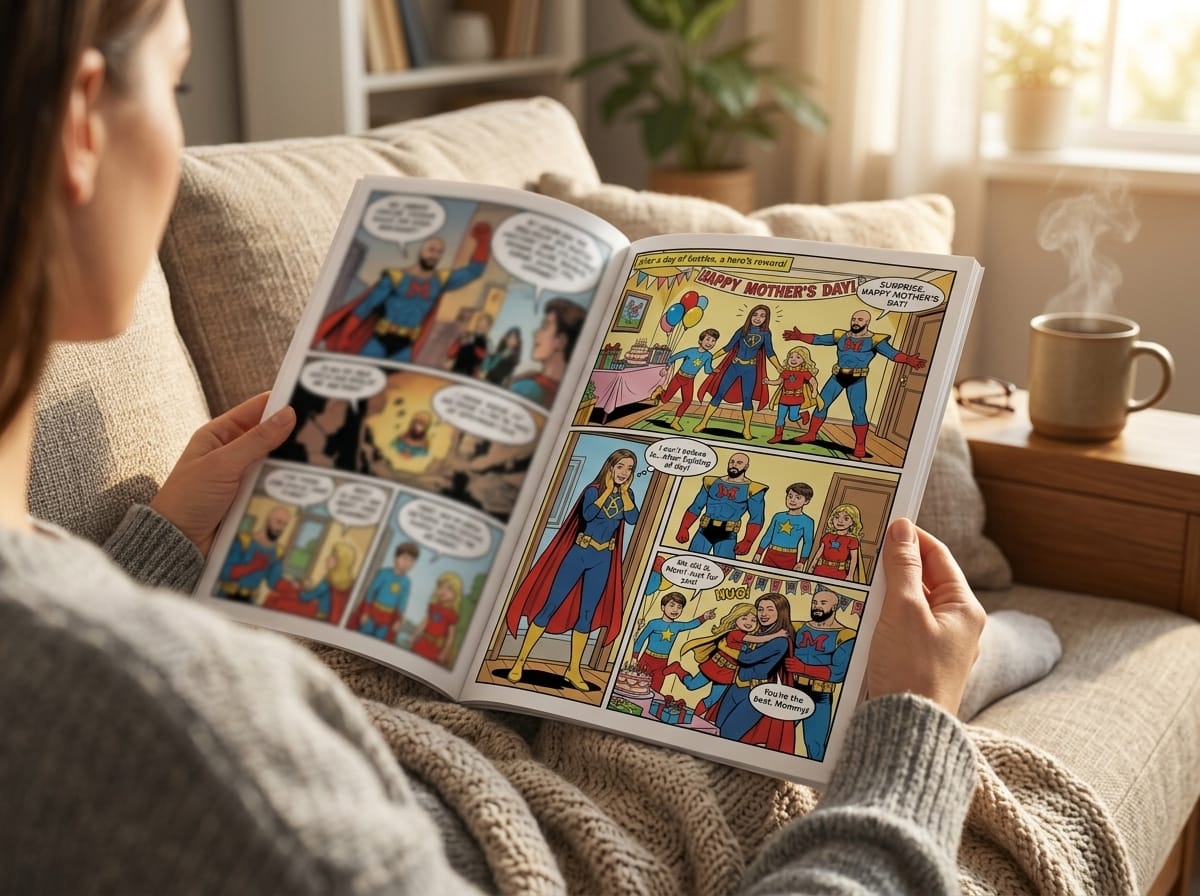
Superhero origin stories are classic ideas for comic strips because they tap into the universal fantasy of discovering you have extraordinary abilities. This genre follows an ordinary person's journey from discovering their powers to becoming a hero, blending action, personal growth, and compelling moral choices. Its appeal comes from the dramatic transformation and the exploration of what it means to have power and responsibility.
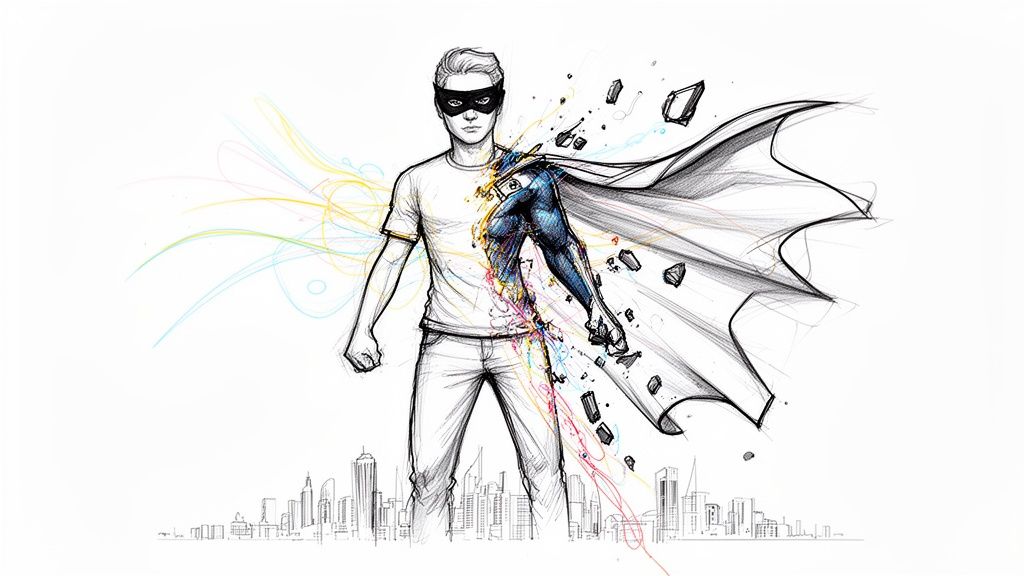
Iconic examples like Spider-Man show how this format can ground a hero with relatable, real-world problems, while stories like Batman Begins prove how a dedicated focus on the origin itself can create a powerful narrative. The core of this idea is not just about the powers but about the person behind the mask and the defining moments that shape their heroic identity. This makes it an exciting concept for a gift or a personal project that tells a complete, impactful story.
How to Implement This Idea
To build a captivating origin story, focus on the "before" and "after" of the transformation. Show the character's normal life first to make the discovery of their powers more dramatic. A 5-10 page story arc is great for developing a complete narrative from discovery to the first heroic act.
Panel Suggestions:
- Panel 1: The character is in a mundane setting when something strange happens (e.g., an object floats, they move with impossible speed).
- Panel 2: A close-up on their face showing shock and confusion as they realize what they just did.
- Panel 3: A "training montage" panel showing them testing their new powers, with mixed (and often comical) results.
Dialogue Hook: Start the story with the character expressing a feeling of being ordinary or helpless. For example, "If only I could do something to help…" just before their powers manifest.
Quick Tip: Use the PersonalizedComics tool to become the hero of your own origin story by uploading a photo. You can design custom powers based on your real-life skills or interests, like super-strength for a gym lover or telekinesis for a bookworm. Our Graphic Novel and Cyberpunk styles add dramatic flair perfect for an action-packed debut. You can learn more about building your custom comic book with our step-by-step guide.
3. Fantasy Adventure Quest
A fantasy adventure quest is a classic and powerful idea for comic strips, offering a grand stage for epic storytelling. This genre centers on a group of heroes embarking on a perilous journey through magical worlds, facing mythical creatures, and seeking ancient treasures. Its strength comes from world-building, character development, and high-stakes conflict that captivates readers and keeps them invested in the outcome.
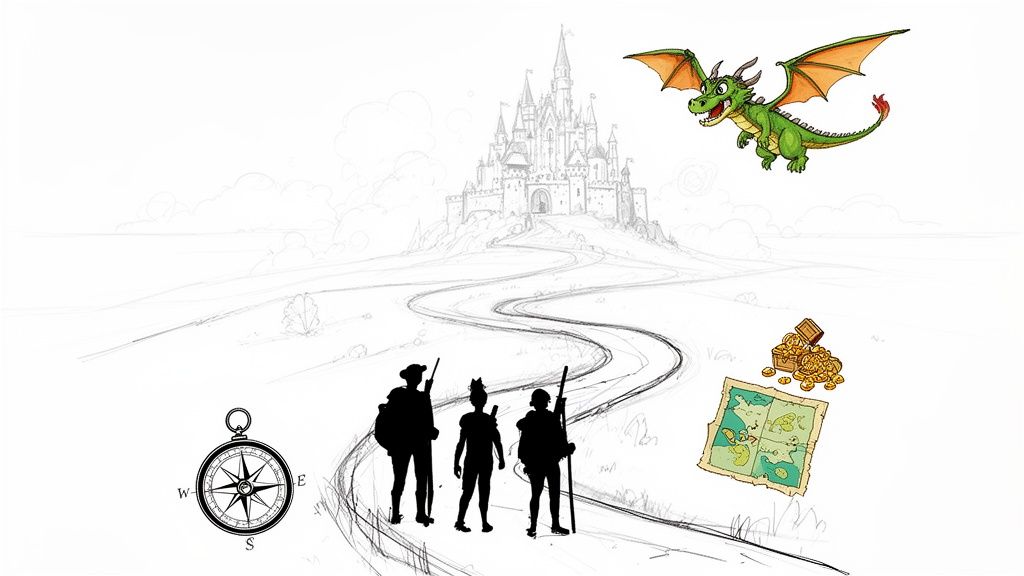
Iconic examples like The Lord of the Rings comic adaptations and modern series like Saga show the genre's incredible range, from traditional high fantasy to gritty, character-driven epics. The core appeal is escapism, allowing you to create a universe with its own rules, history, and dangers. This format is ideal for longer, serialized stories where character growth and plot progression are central to the experience.
How to Implement This Idea
To build a compelling fantasy quest, start with a clear objective for your heroes and establish the stakes early on. A diverse party of characters, each with unique skills and motivations, will create dynamic interactions and drive the narrative forward.
Panel Suggestions:
- Panel 1: The party stands before a towering, ancient ruin, a map held aloft by the leader.
- Panel 2: A close-up on a monstrous creature, like a griffin or a troll, emerging from the shadows.
- Panel 3: The heroes draw their weapons, ready for battle, with determined expressions.
Dialogue Hook: Begin with a line that establishes the world and the immediate conflict. For instance, a grizzled warrior might say, "The Oracle's map ends here. Whatever guards the Sunstone is just beyond this door."
Quick Tip: The PersonalizedComics tool excels at creating fantasy narratives. Use its dedicated fantasy art styles and upload photos of friends to create a unique adventuring party. Build a multi-chapter saga by ordering serialized books, each containing a part of the quest. You can even design a world map and include it as a dedicated page in your comic to bring your world to life.
4. Noir Detective Mystery
A noir detective mystery offers one of the most atmospheric and plot-driven ideas for comic strips. This genre dives into a dark world of crime, corruption, and moral ambiguity, following a cynical protagonist as they navigate a complex case. Its strength comes from moody visuals, sharp dialogue, and intricate plot twists that keep readers guessing.
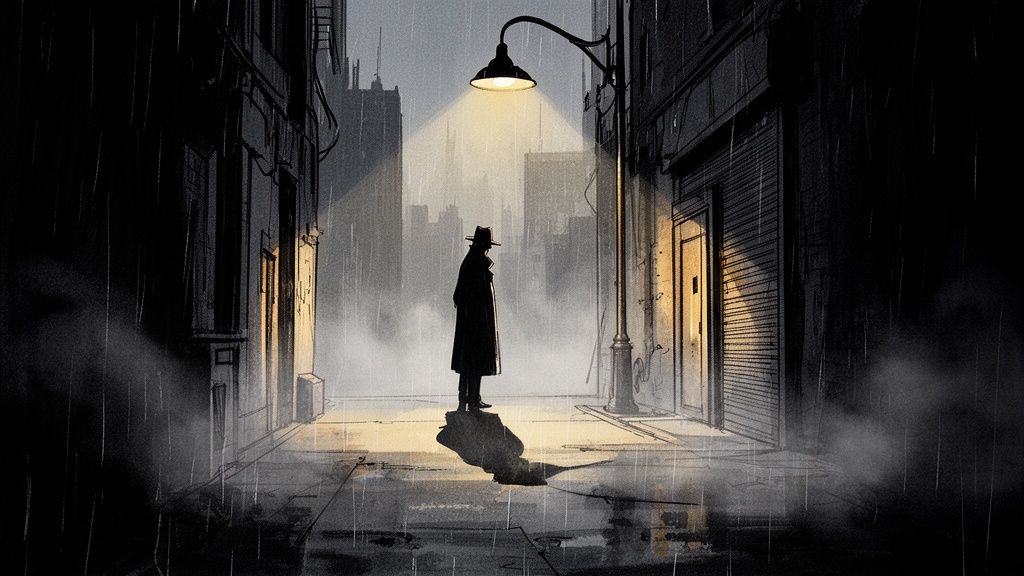
Iconic comics like Frank Miller's Sin City and Blacksad masterfully use this format to tell gripping stories. The appeal isn't just about solving the crime; it's about exploring the shadows of a city and the questionable ethics of its inhabitants. This approach is excellent for building a serialized story with high stakes and a powerful, cinematic feel.
How to Implement This Idea
To create an effective noir mystery, focus on establishing a thick atmosphere and a compelling central case. The story should be structured as a classic whodunit with a clear setup, investigation, and a final, often surprising, revelation.
Panel Suggestions:
- Panel 1: A close-up of a clue, like a dropped handkerchief with a monogram, lying on a rain-soaked street.
- Panel 2: The detective, face half-hidden in shadow, looks down at the clue with a grim expression.
- Panel 3: A wide shot of the crime scene, emphasizing the dark, imposing city skyline in the background.
Dialogue Hook: Begin a scene with classic hardboiled narration. For instance, the detective's internal monologue could start with, "The rain in this city doesn't wash away sins. It just makes them harder to see."
Quick Tip: Select the Noir art style in the PersonalizedComics tool to instantly capture the high-contrast, shadowy aesthetic. Personalize the comic by placing your face on the detective protagonist and create an 8 to 12-page story arc complete with named suspects, red herrings, and a shocking twist ending. Using silhouettes and dramatic lighting will make your mystery even more impactful.
5. Romantic Comedy (Romcom)
A romantic comedy, or romcom, is one of the most heartwarming ideas for comic strips, focusing on the lighthearted and humorous side of love. This genre explores dating mishaps, relationship milestones, and the funny, awkward, and sweet moments that come with falling for someone. Its strength is in blending emotional connection with comedic timing, creating a narrative that is both relatable and endearing.
Comics like Kim Casali's Love is… and Alice Oseman's Heartstopper show the genre's range, from simple, adorable moments to deeper coming-of-age stories. The humor often comes from miscommunication, opposite personalities clashing, or the sheer awkwardness of first dates. This approach is perfect for creating a comic that serves as a touching tribute to a real relationship or a fun, fictional story about the pursuit of love.
How to Implement This Idea
To build a compelling romcom strip, center the story on the dynamic between two main characters. Showing events from both of their perspectives can add depth and humor as the audience sees how differently each person interprets the same situation.
Panel Suggestions:
- Panel 1: Two characters are on a first date, both looking visibly nervous.
- Panel 2: One character tries to make a joke that falls completely flat, leading to an awkward silence.
- Panel 3: Both characters burst out laughing at the awkwardness, instantly breaking the tension and connecting.
Dialogue Hook: Begin with a classic dating scenario. For instance, one character could nervously text a friend, "Okay, they're here. Do I look like I tried too hard or not hard enough?"
Quick Tip: Use the PersonalizedComics dual-character narrative styles to turn real photos of a couple into comic art. This is a fantastic gift for anniversaries, proposals, or Valentine's Day. Building a 6-10 page story arc that goes from a first meeting to a relationship milestone makes for a memorable keepsake. You can turn your romance into a custom comic book and even order premium physical copies.
6. Educational/Instructional Comics
Educational or instructional comics are powerful ideas for comic strips that use visual storytelling to teach concepts, skills, or information. This genre transforms potentially dry subjects into engaging narratives, making complex topics more accessible and memorable. Its strength comes from combining relatable characters and clear visual sequences to explain everything from scientific principles to historical events.
Strips like NASA's Artemis comics or indie projects like Cyber City Comics show how this format can make learning about space exploration or computer science exciting. The goal isn't just to present facts; it's to guide the reader on a journey of discovery. This approach is perfect for creating content for classrooms, training materials, or simply for anyone who wants to share knowledge in a fun, digestible way.
How to Implement This Idea
To create an effective educational comic, frame the lesson within a simple story. Introduce a protagonist who is learning the concept alongside the audience, which makes the information feel more grounded and less like a lecture. Breaking down complex ideas into step-by-step visual panels is essential.
Panel Suggestions:
- Panel 1: A character looks confused by a complex diagram or problem (e.g., a math equation).
- Panel 2: A guide or mentor character appears and visually breaks the problem into smaller, simpler parts, using graphics and annotations.
- Panel 3: The first character has a "lightbulb" moment of understanding, with the simplified concept now making perfect sense.
Dialogue Hook: Start a scene with a question that your audience might also have. For instance, a character could ask, "Okay, I get that it works, but can someone explain how photosynthesis actually turns sunlight into plant food?"
Quick Tip: Use the PersonalizedComics tool to cast yourself or a friend as the protagonist on a learning journey. This adds a personal touch that makes the information more relatable. Structuring the comic as a 5-8 page learning arc with a clear beginning, middle, and end helps solidify the lesson. Adding humorous reactions or funny sidekicks can also keep the tone light and prevent it from becoming a dull textbook.
7. Cyberpunk/Sci-Fi Dystopia
Cyberpunk and sci-fi dystopia are powerful ideas for comic strips that explore futuristic worlds dominated by advanced technology, corporate control, and societal decay. This genre thrives on high-tech aesthetics, intricate world-building, and speculative “what-if” scenarios that question humanity's relationship with technology. The appeal lies in its blend of action, philosophy, and striking visuals that create an immersive, thought-provoking experience.
Iconic works like Akira and Ghost in the Shell established the genre's foundations, while modern comics based on universes like Cyberpunk 2077 show its continued relevance. The stories often focus on anti-heroes, rebels, or ordinary citizens navigating oppressive systems. This makes it an ideal framework for creating a comic with deep lore and compelling visual storytelling, perfect for serialized narratives aimed at gaming communities and tech enthusiasts.
How to Implement This Idea
To build a compelling cyberpunk world, focus on establishing a clear conflict between technology and humanity. Detailed environments and a consistent visual style are critical for making your futuristic setting believable and immersive.
Panel Suggestions:
- Panel 1: A wide shot of a neon-drenched cityscape at night, with towering skyscrapers and flying vehicles.
- Panel 2: A close-up on the main character, showing their cybernetic augmentation (like a glowing eye or a robotic arm) as they receive a mysterious message on a holographic display.
- Panel 3: The character looks determined, with the city's neon lights reflecting in their eyes, ready for a mission.
Dialogue Hook: Start a scene with a line that instantly establishes the setting's tone. For example, a character might say, "In this city, the rain never washes the streets clean, it just makes the chrome rust."
Quick Tip: The PersonalizedComics tool is perfect for creating a cyberpunk aesthetic. Use the cyberpunk art style for visual consistency across an 8-15 page story arc. You can personalize your main character with futuristic modifications and add visual specs for custom tech gadgets. Use text boxes to layer in technical jargon or internal monologues to balance high-octane action with deeper philosophical themes.
8. Coming-of-Age Story
A coming-of-age story is a powerful idea for a comic strip that follows a character's journey from youth to adulthood. This genre focuses on the emotional and psychological growth of a protagonist, exploring themes of identity, first experiences, personal struggles, and self-discovery. Its strength lies in creating a deep, narrative-driven experience that resonates with anyone who has navigated the awkward and triumphant moments of growing up.
Graphic novels like Raina Telgemeier's Smile and Alice Oseman's Heartstopper show how effective this format is at capturing the emotional core of adolescence. The story isn't just a sequence of events; it's a reflection on how pivotal moments shape who we become. This approach is ideal for creating a meaningful, serialized comic that chronicles a personal journey, making it a perfect gift for a graduate or a treasured family keepsake.
How to Implement This Idea
To build a compelling coming-of-age narrative, focus on a defined emotional arc over 10 to 15 pages. Center the story on key relationships and turning points that define the character's growth, balancing heartfelt moments with light humor.
Panel Suggestions:
- Panel 1: A young character looks nervously at the entrance to a new school or social event.
- Panel 2: The character makes a friend, sharing a small, genuine smile.
- Panel 3: Years later, the now-older character looks back at a photo of that moment with a sense of fondness and nostalgia.
Dialogue Hook: Begin a scene with a character expressing a universal adolescent fear or desire. For example, a character might confide in a friend, "I just wish I knew who I was supposed to be. Does everyone else have it figured out?"
Quick Tip: Use the PersonalizedComics tool to tell a real-life story by uploading photos of someone at different ages. This creates an authentic visual timeline of their growth. Structuring the comic around specific memories, inside jokes, and heartfelt messages makes the final product deeply personal. Consider ordering a premium physical copy to turn the comic into a lasting family heirloom.
9. Action/Adventure with Humor
Action/Adventure with humor blends thrilling, fast-paced sequences with witty dialogue and situational comedy. This genre is one of the most exciting ideas for comic strips because it provides a perfect balance of adrenaline and laughter, keeping readers engaged on multiple levels. The core appeal is the juxtaposition of high stakes and lighthearted character moments.
Comics like Marvel's Deadpool and Bryan Lee O'Malley's Scott Pilgrim master this blend, where intense fight scenes are often punctuated by irreverent jokes or absurd humor. The adventure drives the plot forward, but the comedy gives the characters their personality and makes the story memorable. This approach is fantastic for creating a gift for a friend group, turning a shared memory into an epic, funny quest.
How to Implement This Idea
To successfully mix action and humor, alternate between high-intensity moments and comedic relief. One panel might feature a dramatic explosion, while the next shows a character complaining about getting dust on their favorite jacket. Creating characters with contrasting personalities, like a serious hero paired with a goofy sidekick, is a classic way to generate natural banter.
Panel Suggestions:
- Panel 1: Two characters are in a dramatic standoff with a "villain" (e.g., a squirrel that stole their picnic basket).
- Panel 2: One character launches into an over-the-top action pose, ready to fight.
- Panel 3: The other character is completely distracted, pointing off-panel and saying, "Hey, is that a taco truck?"
Dialogue Hook: Begin an action scene with an underwhelming or funny observation. For instance, as a giant robot approaches, a character could say, "You know, for a city-destroying menace, its paint job is surprisingly tasteful."
Quick Tip: The PersonalizedComics adventure-themed templates are ideal for this genre. Create an 8-12 page story arc where your friend group must complete a mission. Use a dynamic, manga-inspired style for action panels and add bold sound effects like "KRAKOOM!" or "SWOOSH!" to give the fights a powerful impact. This is great for group gifts that celebrate shared experiences with an adventurous twist.
10. Personalized Gift/Memoir Comics
One of the most meaningful ideas for comic strips is to transform real-life memories into a personalized gift or memoir. This approach turns your personal stories, inside jokes, and significant life events into a custom-illustrated narrative. Its power comes from capturing genuine emotion and creating a tangible keepsake that celebrates relationships and milestones, making it far more impactful than a generic greeting card.
These comics serve as powerful storytelling tools for anniversaries, weddings, birthdays, or even memorials. An anniversary comic can document a couple's journey from their first date to the present, while a graduation strip can celebrate a student's hard work and future aspirations. The goal is to create a visual history that resonates deeply with the people involved, turning shared experiences into a cherished piece of art.
How to Implement This Idea
To create a successful gift comic, start by outlining the key moments you want to include. Gather reference photos of the people, places, and important objects to ensure accuracy and a personal touch. The narrative can be a chronological journey or a "highlight reel" of your favorite memories.
Panel Suggestions:
- Panel 1: A flashback panel showing a couple's first meeting, with stylized, romantic art.
- Panel 2: A montage of shared experiences, like traveling or adopting a pet, shown in smaller, quick-cut panels.
- Panel 3: A final panel showing the couple in the present day, with a heartfelt caption or dialogue.
Dialogue Hook: Begin with a line that instantly sets a nostalgic tone. For example, a character could say, "Do you remember that time we…?" or a caption could read, "Our story started on a Tuesday." Learn more about turning memories into a custom comic book gift.
Quick Tip: The PersonalizedComics tool is designed for exactly this purpose. Upload photos of your loved ones to create character models, then choose an art style that fits the mood, whether it's funny, nostalgic, or romantic. Add specific dates, locations, and inside jokes to make the story uniquely yours. For the best result, order a premium physical copy to create a lasting keepsake.
Top 10 Comic Strip Ideas Comparison
| Genre | Implementation Complexity | Resource Requirements | Expected Outcomes | Ideal Use Cases | Key Advantages |
|---|---|---|---|---|---|
| Slice-of-Life Comedy | Low — dialogue-driven, simple panel work | Minimal art complexity; recurring character designs; optional photos | Relatable humor and emotional connection; easy serialization | Gifts, social strips, personal storytelling | Broad relatability, low production cost, flexible format |
| Superhero Origin Stories | High — action sequencing and consistent visual style | Detailed action art, multiple character designs, 5–10 page arcs | Visually dynamic origin arcs with clear stakes and growth | Young adults, cosplayers, fantasy fans, serialized releases | High customization, strong dramatic tension, visual spectacle |
| Fantasy Adventure Quest | High — extensive world-building and consistency | Multiple character and creature designs, maps, longer page counts | Immersive epic narrative and repeatable chapter-based stories | Fantasy fans, RPG players, graphic novel projects | Creative freedom, rich visuals, high replayability |
| Noir Detective Mystery | Medium–High — plotting, pacing, and mood control | Strong writing, noir art style, clue-based structure across pages | Tense, atmospheric mysteries with twists and moral ambiguity | Adult mystery fans, thriller readers, noir aesthetic lovers | High atmosphere with minimal color, dialogue-driven impact |
| Romantic Comedy (Romcom) | Medium — requires chemistry and emotional beats | Character designs, photo integration for couples, flexible length | Heartfelt, shareable romantic stories with comedic moments | Couples, gift comics, social-shareable romance content | Universal appeal, high emotional engagement, adaptable styles |
| Educational/Instructional Comics | Medium — balance teaching and storytelling | Subject expertise, clear visual sequences, 5–8 page learning arcs | Improved retention and practical learning outcomes | Teachers, trainers, educational content creators, corporate training | High utility, adaptable to many subjects, strong B2B potential |
| Cyberpunk/Sci‑Fi Dystopia | High — detailed tech design and layered world-building | Complex visual assets, tech concepts, 8–15 page arcs | Thought-provoking futuristic narratives with strong aesthetic impact | Sci‑fi fans, gamers, tech communities, futurists | Distinct visual identity, deep thematic potential, niche appeal |
| Coming-of‑Age Story | Medium — needs emotional authenticity and arc coherence | Personal photos, multi-page structure (10–15 pages), character development | Deep emotional resonance and keepsake-quality narratives | Young adults, parents, graduates, memoir projects | Strong personal impact, highly customizable, lasting resonance |
| Action/Adventure with Humor | Medium–High — balancing dynamic action and comedic timing | Skilled panel composition, varied pacing, multiple character assets | High entertainment value combining thrills and laughs | Friend groups, gaming communities, entertainment-focused creators | Broad audience appeal, high shareability, energetic pacing |
| Personalized Gift / Memoir Comics | Medium — depends on personalization depth and storytelling | High-quality personal photos, anecdotes, design choices, premium print options | Highly meaningful, emotional keepsakes tailored to recipients | Anniversaries, weddings, milestones, memorials, personalized gifts | One-of-a-kind emotional value; photo integration enables professional results |
Turn Your Idea into a Comic Masterpiece Today
We've journeyed through a landscape of creative possibilities, covering everything from the relatable charm of slice-of-life comedy to the epic scope of a fantasy adventure quest. This extensive collection of ideas for comic strips was designed to be more than just a list; it's a launchpad. You now have a toolkit filled with ten distinct genres, complete with panel suggestions, dialogue hooks, and practical tips to kickstart your storytelling. The gap between a fleeting thought and a finished comic has never been smaller.
The true value of these frameworks lies in their flexibility. A noir detective mystery can be a serious, gritty tale or a hilarious parody starring your house cat. A personalized gift comic can immortalize a single inside joke or narrate the entire history of a friendship. The power is in your hands to mix, match, and adapt these concepts to fit your unique vision. The most important takeaway is that you don't need to be a professional artist or writer to create something meaningful, funny, or exciting. You just need a starting point, and you now have ten of them.
From Spark to Story: Your Actionable Next Steps
An idea, no matter how brilliant, remains just an idea until you take action. Hesitation is the biggest hurdle for any creator. You might feel you lack the drawing skills, the right software, or the time to bring your story to life. This is where you can shift your mindset from "I can't" to "How can I?"
Here’s a simple, actionable plan to move forward right now:
- Select Your Foundation: Revisit the list and choose the single idea that excites you the most. Is it the witty banter of a rom-com or the world-building of a cyberpunk dystopia? Don't overthink it; pick the one that makes you want to start writing immediately.
- Outline a Simple Arc: Before you worry about panels and art, just jot down the basic story. Who are the main characters? What is the central conflict or joke? What happens at the beginning, middle, and end? A few bullet points are all you need to create a roadmap.
- Prototype Your First Few Pages: The fear of a blank page is real. The best way to overcome it is to make your first mark. Commit to creating just the first few panels or the first page. This small, achievable goal builds momentum and makes the larger project feel far less intimidating.
Key Insight: The goal isn't perfection on the first try; it's progress. Prototyping allows you to test your core concept, refine dialogue, and see your characters in action without committing to a massive project. It’s the single most effective way to turn abstract ideas for comic strips into tangible reality.
The Enduring Power of Visual Storytelling
Creating a comic strip is a uniquely rewarding experience. It’s a way to connect with an audience, whether that audience is the entire internet, a classroom of students, or just one special person in your life. The combination of words and images creates an immediate, emotional impact that prose alone can't always match. Whether you are crafting an educational comic to explain a complex topic or a coming-of-age story to explore personal growth, you are participating in one of the oldest and most effective forms of communication.
Don't let these ideas for comic strips remain dormant in a document. You have the concepts, the prompts, and a clear path forward. Your story deserves to be told, and there has never been a better or easier time to tell it. The tools are at your fingertips, waiting for you to bring your world to life, one panel at a time. The next great character or unforgettable joke is waiting just on the other side of you taking that first step.
Ready to bring your story to life without needing to draw a single line? With PersonalizedComics, you can turn your script and photos into a professional-quality comic in minutes using AI. Choose an art style, describe your scenes, and watch as the platform generates your pages, making it the perfect tool to transform your ideas for comic strips into a finished product. Get started with your first four pages free at PersonalizedComics and become a comic creator today.
Filed under Comic Craft