Maybe it's a birthday gift for a partner who's gotten your family through a rough year. Maybe it's a classroom activity. Maybe you've always wanted to see yourself, your kid, or your best friend on a comic page, but you don't draw and you don't want the result to feel generic.
That's a key challenge when you customize a superhero. Many creators start with the costume, the power effect, or the pose. Professionals usually start somewhere else. We start with the person. The strongest custom heroes don't just look cool. They feel specific. They carry a memory, a flaw, a job, a private joke, a fear, or a piece of family history.
A memorable superhero isn't built from random “epic” details piled on top of each other. It's built from one human truth, translated into comic language.
Forging Your Hero's Core Identity
Most tutorials fixate on masks, capes, and anatomy studies. That skips the part readers remember. Existing “customize a superhero” content often emphasizes visual design while neglecting personal stories, motivations, and character arcs, even though that emotional layer is what makes a custom comic memorable for gift-givers and storytellers, as noted in this discussion of the storytelling gap in superhero customization.
That's why the first question isn't “What powers do they have?” It's “Why does this person deserve a superhero version at all?”
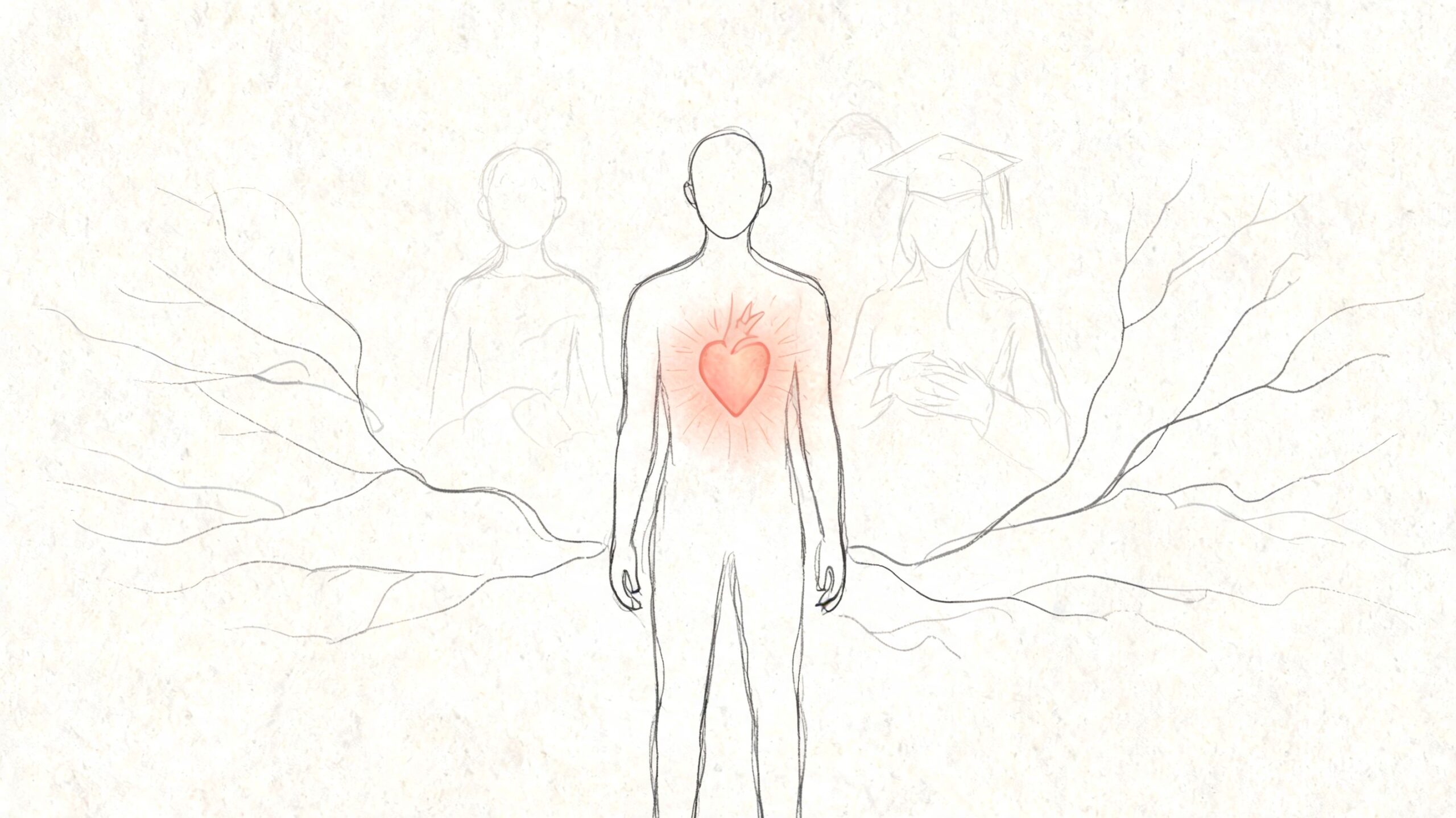
Start with a real emotional anchor
A custom hero gets stronger when it comes from something lived. Don't brainstorm powers first. Brainstorm evidence.
Use prompts like these:
- A defining trait: What does this person do when everyone else is overwhelmed?
- A repeated phrase: Is there a saying they use all the time that could become a motto?
- A hard-won victory: What have they survived, rebuilt, or learned to carry?
- A role in other people's lives: Protector, encourager, organizer, peacemaker, chaos engine.
- An inside joke: Sometimes the best custom heroes come from something silly and highly personal.
If you're creating a comic as a gift, pick one memory you know the recipient would recognize instantly. That gives your comic emotional gravity without needing a long explanation.
Practical rule: If you can swap your hero concept with anybody else's name and it still works, the idea isn't personal enough yet.
Translate everyday identity into comic logic
This is the part beginners often skip. They know the person well, but they don't convert that knowledge into a usable character premise.
Try this simple transformation method:
| Real-life detail | Comic translation |
|---|---|
| Nurse who stays calm in emergencies | Crisis-reading hero who can slow perceived time |
| Dad known for fixing everything | Tech-based guardian with modular gadget armor |
| Friend who always lifts morale | Light-manipulating hero who restores hope |
| Teacher with endless patience | Shield-based protector who absorbs chaos |
The point isn't literal accuracy. The point is symbolic truth. A good superhero concept exaggerates what's already there.
Build an origin that matches the emotion
Origins work best when they reflect the kind of story you want to tell. If the comic is about resilience, an accidental transformation may fit. If it's about legacy, inherited power may feel better. If it's about ingenuity, a tech-built persona can carry more meaning.
Jon Skaza's dataset of 611 superheroes and supervillains offers a useful benchmark for this kind of thinking. In that set, 35% gained powers through accidents, 25% through birth, 20% through tech or gadgets, and 15% through magic, according to his superhero statistics analysis. Those patterns are helpful because they show the classic lanes readers already understand.
Pick the lane that best supports your personal story, not the one that sounds biggest.
Give the hero a motive, not just an origin
Origin answers “how.” Motive answers “why keep going?”
A personal superhero usually becomes more compelling when the motive is intimate:
- To protect one person
- To live up to a promise
- To redeem a failure
- To make invisible work visible
- To turn pain into service
Once you know that motive, your comic scenes write faster. If you need help turning that idea into page-ready beats, this guide on how to write a comic book script is a practical next step.
The strongest custom heroes don't begin as power fantasies. They begin as acts of recognition.
Defining Powers and Personality
A good custom superhero stops feeling generic the moment the power reveals something personal.
A child of paramedics might develop the ability to slow time for a few seconds in emergencies. A person who spent years holding a family together might generate force fields instead of blasts. Someone known for reading a room could become a telepath, but the more interesting version might be emotional tuning, sensing stress, dishonesty, or grief before anyone says a word. The power lands because it grows from lived experience.
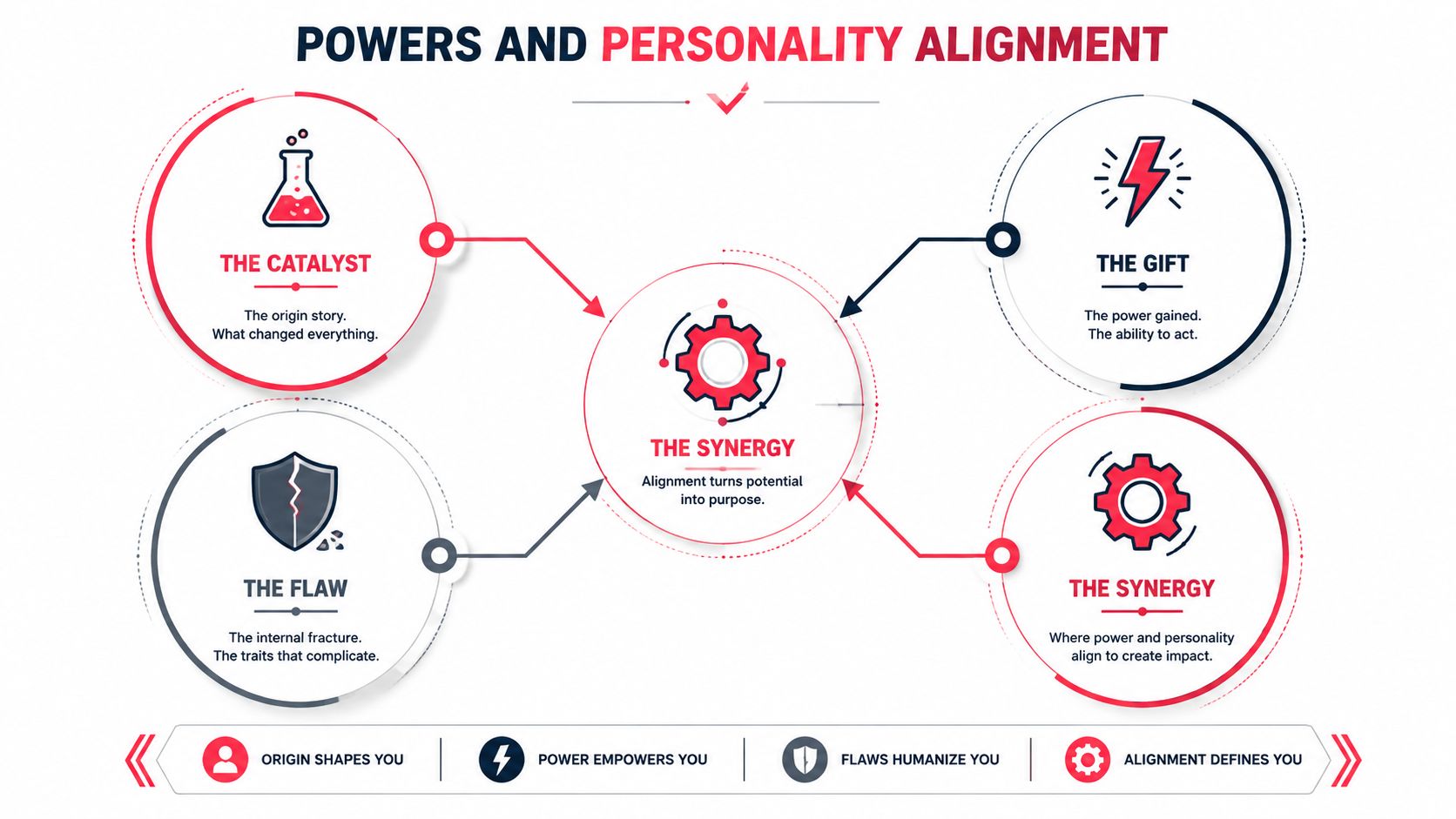
Build powers from biography, not from the genre shelf
Readers already know the broad categories. Flight, strength, energy projection, genius, invisibility, telekinesis. The job is not to hunt for the rarest ability. The job is to choose one that carries the person's history.
That choice changes everything on the page.
A standard power can feel original when its expression is specific to the character:
- Flight can read as freedom, vigilance, migration, or a refusal to stay trapped
- Super strength can suggest caregiving, manual skill, endurance, or the pressure of always being the dependable one
- Energy projection can become warmth, protection, music, weather, memory, or rage made visible
- High intelligence works best when it shows up as problem-solving style, not just exposition
This is also where style matters. If you want the power to feel hopeful, mythic, noir, or kinetic, choose visual references early and compare them with different comic book art styles for your superhero story.
Let the power behave like the person
Professionally, this is one of the fastest ways to improve a character.
Two heroes can both control fire and feel completely different if their personalities shape how the power moves. A disciplined character might create narrow, precise lines of heat. An anxious character might cause flare-ups under stress. A playful hero might use sparks as distraction, misdirection, or performance. Same power. Different identity.
Use these questions to pressure-test the idea:
- How does the power show up when the hero is afraid?
- What does it look like when they are calm and fully in control?
- Does the ability protect, pursue, conceal, repair, or overwhelm?
- What part of their real personality becomes more obvious because of it?
If the answer could fit anybody, the concept still needs work.
Give the power a cost that creates choices
Power without cost gets dull fast. Cost is what turns a cool mechanic into drama.
The best costs are tied to the individual rather than pasted on as a generic weakness. A memory-based power might blur the hero's own past. Super hearing could make crowded spaces unbearable. Healing abilities might transfer pain instead of erasing it. A protective shield could fail whenever the hero hesitates between saving one person and saving many.
Those trade-offs give supporting characters a purpose too. Friends cover blind spots. Rivals exploit patterns. Family members can call out the emotional habit behind the mistake.
Personality needs friction
A flattering portrait is not yet a character. A memorable hero carries a trait that helps in one context and causes damage in another.
I usually look for a quality that becomes dangerous under pressure:
- Loyal enough to stay, stubborn enough to stay too long
- Funny enough to lift morale, guarded enough to hide real pain
- Confident enough to lead, proud enough to ignore warnings
- Protective enough to save people, controlling enough to smother them
- Selfless enough to sacrifice, fearful enough to never ask for care in return
That kind of friction gives scenes shape. It also helps an AI tool generate more consistent dialogue and body language, because the character is no longer just “good” or “strong.” The hero has a pattern.
Write one contradiction you can return to
This is the note I give artists and writers all the time: every strong hero should contain a contradiction.
A rescuer who hates being rescued.
A public symbol who needs privacy.
A brave fighter who avoids one specific truth.
A genius who cannot improvise emotionally.
That contradiction should affect powers, dialogue, and scene choices. If you are customizing a superhero for yourself, your partner, your child, or a friend, this is often the detail that makes the comic feel intimate instead of decorative.
The strongest custom heroes do more than look powerful. They reveal who someone has been, what they carry, and what they are still trying to become.
Designing a Signature Look and Style
Readers identify heroes fast, and costume design does a huge part of that work. Professional costume methodology suggests 73% of superhero character recognition comes from distinctive costume markers, while adding more than 8 costume elements can reduce recognition by 40%, according to this superhero costume design reference.
That matches what working artists see all the time. Overdesigned characters feel busy before they feel iconic.
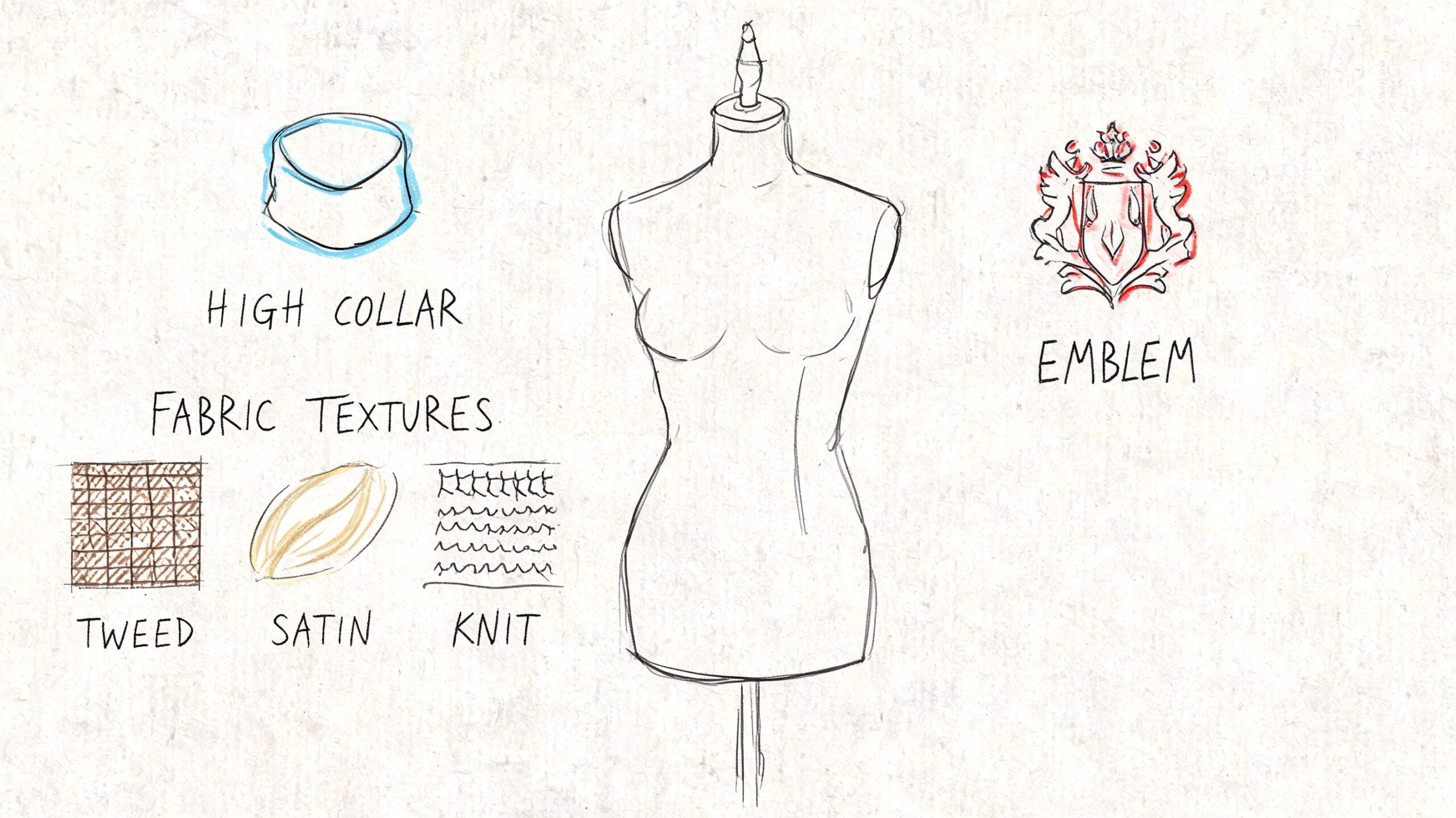
Strip the costume down to symbols
A strong superhero design usually reads in silhouette first and detail second.
Start with a short list of visual anchors:
- One emblem or chest idea
- One dominant shape language
- One accessory with meaning
- One texture or material cue
- One color relationship
That's enough for most custom heroes.
If the character's theme is protection, use broader shapes, shields, wraps, layered outerwear, or structured shoulders. If the theme is speed or improvisation, sharpen the silhouette and reduce bulk. If the power source is mystical, let the costume feel ceremonial. If it's tech-driven, let seams, panels, lenses, or modular parts carry that message.
Make every element answer a question
Weak costume choices usually happen when people decorate before they define.
Ask each design choice to justify itself:
- Why does this hero wear a mask?
- Why this emblem?
- Why these gloves, boots, or cloak shapes?
- Why this fabric finish?
- Why would this person choose this presentation?
If you can't answer, remove it.
A signature look doesn't come from adding more. It comes from keeping only what the character would never give up.
Use color to support the story tone
You don't need a formal color theory background to make a good choice. You need consistency.
Here is a practical way to proceed:
| Story feeling | Visual direction |
|---|---|
| Hopeful and uplifting | Clear contrast, brighter primaries, clean shapes |
| Gritty or haunted | Muted range, heavy shadows, worn textures |
| Mystical and emotional | Luminous accents, layered fabrics, symbolic motifs |
| Tech-forward and sharp | Controlled palette, geometric panels, sleek edges |
Most beginners make one of two mistakes. They either pick colors they personally like without considering the story, or they use too many statement colors at once. Limiting the palette usually creates a stronger hero.
Pick an art style that amplifies the character
Style changes meaning. The exact same hero concept can feel heartfelt, intense, playful, or cinematic depending on the visual treatment.
That's why style selection should happen after the character premise is clear. A noir approach can turn a protector into a haunted vigilante. Manga can emphasize emotional beats and expressive action. Classic American comic styling often suits bold heroism. Graphic novel treatment can make personal history feel weightier. Watercolor softens memory-driven stories. Cyberpunk helps tech-origin heroes. Retro pop supports humor and bright iconography. Fantasy fits mythic or magical identity.
If you're comparing options, this overview of comic book style choices is useful because it frames style as a storytelling decision, not just a visual preference.
The costume should tell readers what kind of promise the story is making before anyone speaks.
Building Your Comic with AI and Composition
The hardest part for most non-artists isn't imagination. It's translation. They know the hero they want, but they can't draw them consistently across panels, expressions, and scenes.
That's where AI tools change the workflow. They reduce the craft barrier, but they don't remove the need for direction. If you want a comic page to feel coherent, you still need to feed the system clear decisions.
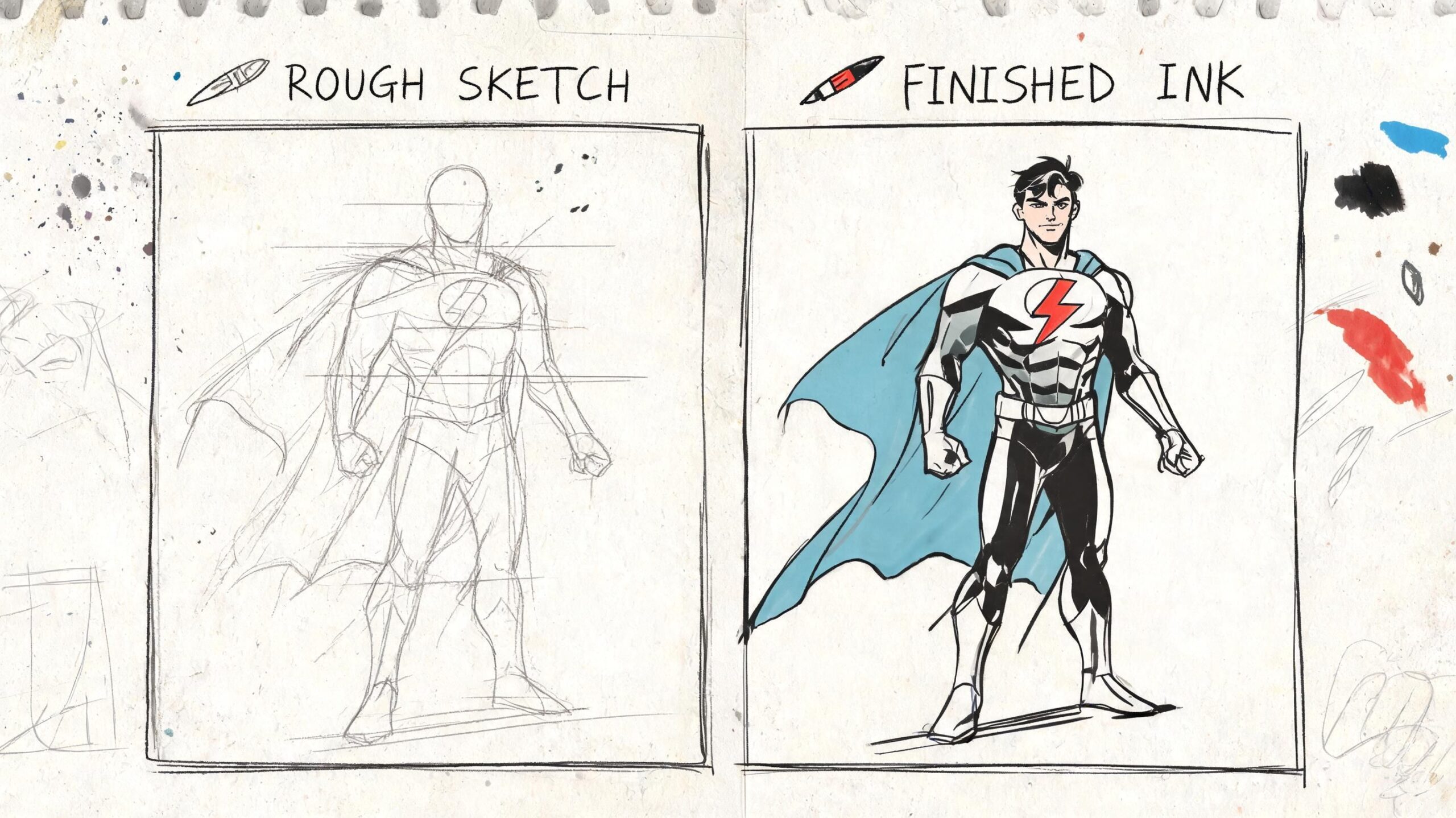
Choose your creation path
Creators building a personalized comic typically use one of two approaches.
Photo-based transformation
This works best when the emotional goal is recognition. You want the recipient, child, partner, or friend to feel, “That's me.”
For stronger results, use photos with:
- Clear facial visibility
- Simple lighting
- A readable pose
- Minimal visual clutter
- Expression that matches the story tone
Then add only the details that matter. Don't stuff the prompt with every idea you've ever had. Focus on identity markers, costume logic, and mood.
Example direction:
“Turn this person into a resilient city guardian. High-collared protective suit, glowing chest emblem inspired by a heartbeat monitor, deep blue and silver palette, calm determined expression.”
Prompt-first creation
This works better when you're inventing from scratch or blending multiple inspirations.
A strong prompt usually includes these parts:
- Role or archetype
- Emotional tone
- Visual motifs
- Costume function
- Environment or scene context
Compare the difference:
- Weak prompt: “Cool superhero with powers”
- Better prompt: “Hopeful neighborhood protector with light-based shielding powers, practical jacket-inspired armor, sunrise gold accents, grounded urban setting, warm expressive face”
Build the page around one dramatic turn
Most amateur comics fail because too much happens too fast. A page needs one clear movement.
Effective superhero storytelling often uses a 4 to 6 panel framework. According to this comic composition reference, 4-panel pages achieve 68% narrative clarity, while 6-panel formats can improve emotional impact by 52% through stronger pacing and tension.
Use that as a practical choice:
| Page type | Best use |
|---|---|
| 4 panels | Quick gag, reveal, classroom project, simple gift page |
| 5 panels | Slightly more breathing room for reaction and setup |
| 6 panels | Emotional beats, confrontation, rescue, mini origin arc |
A page structure that works
If you're new to comic writing, this sequence is dependable:
- Panel 1 sets the scene.
- Panel 2 introduces the problem.
- Panel 3 reveals the power or key decision.
- Panels 4 and 5 escalate the conflict.
- Final panel resolves, twists, or lands the emotional beat.
That structure is simple enough for beginners and strong enough to feel professional when the images stay consistent.
Working advice: Don't ask one page to tell an entire mythology. Ask it to deliver one emotional payoff.
Keep dialogue shorter than you think
Beginners overwrite speech bubbles because they're trying to explain the whole backstory. Let the visuals do some of that labor.
Use dialogue for:
- immediate emotion
- contrast between characters
- punchlines
- promises
- decisions
Use caption boxes for:
- brief setup
- time shifts
- reflective voice
- thematic framing
If a speech bubble contains two full thoughts, split it. If a caption repeats what the art already shows, cut it.
Use AI like a director, not a spectator
The best output usually comes after one or two rounds of refinement. Change one thing at a time. If the costume is right but the facial expression is wrong, don't rewrite the entire prompt. If the hero looks good but the page pacing feels muddy, fix panel intent before generating again.
For creators experimenting with full-page storytelling, this guide to an AI book maker workflow can help you think beyond a single image and into sequence.
A practical checkpoint before finalizing any page:
- Character consistency: Does the hero still look like the same person?
- Power clarity: Can the reader tell what the ability is doing?
- Panel priority: Is there one obvious focal point per panel?
- Text economy: Are the words supporting the image rather than competing with it?
- Emotional landing: Does the last panel say something more than “look at this action pose”?
When you customize a superhero with AI, the software handles rendering. You still handle judgment. That's the part that turns output into a comic.
Gifting, Printing, and Avoiding Common Pitfalls
Custom superhero creation has moved well beyond niche fandom. The demand for customizable creative activities is visible in education and hobby spaces, with over 1,200 “create a superhero” resources on Teachers Pay Teachers, and that trend sits inside a $15.5 billion global comics market, according to this summary of superhero template demand and comics market context. That wider interest makes sense. A personalized comic can function as entertainment, tribute, classroom material, or keepsake all at once.
The best gift versions don't feel mass-produced. They feel observant. They show that you noticed who someone is and took the time to translate that into story form.
Make the comic feel gift-worthy
A superhero comic lands harder as a gift when the premise connects to the occasion.
A few strong use cases:
- Birthday comic: Turn the recipient's best traits into the central power set.
- Anniversary comic: Build a two-hero story around shared history, locations, or private jokes.
- Parent gift: Recast family routines as heroic missions.
- Teacher or classroom project: Create a virtue-based class hero with a simple challenge-and-resolution page.
- Recovery or encouragement gift: Focus on endurance, hope, or protection rather than spectacle.
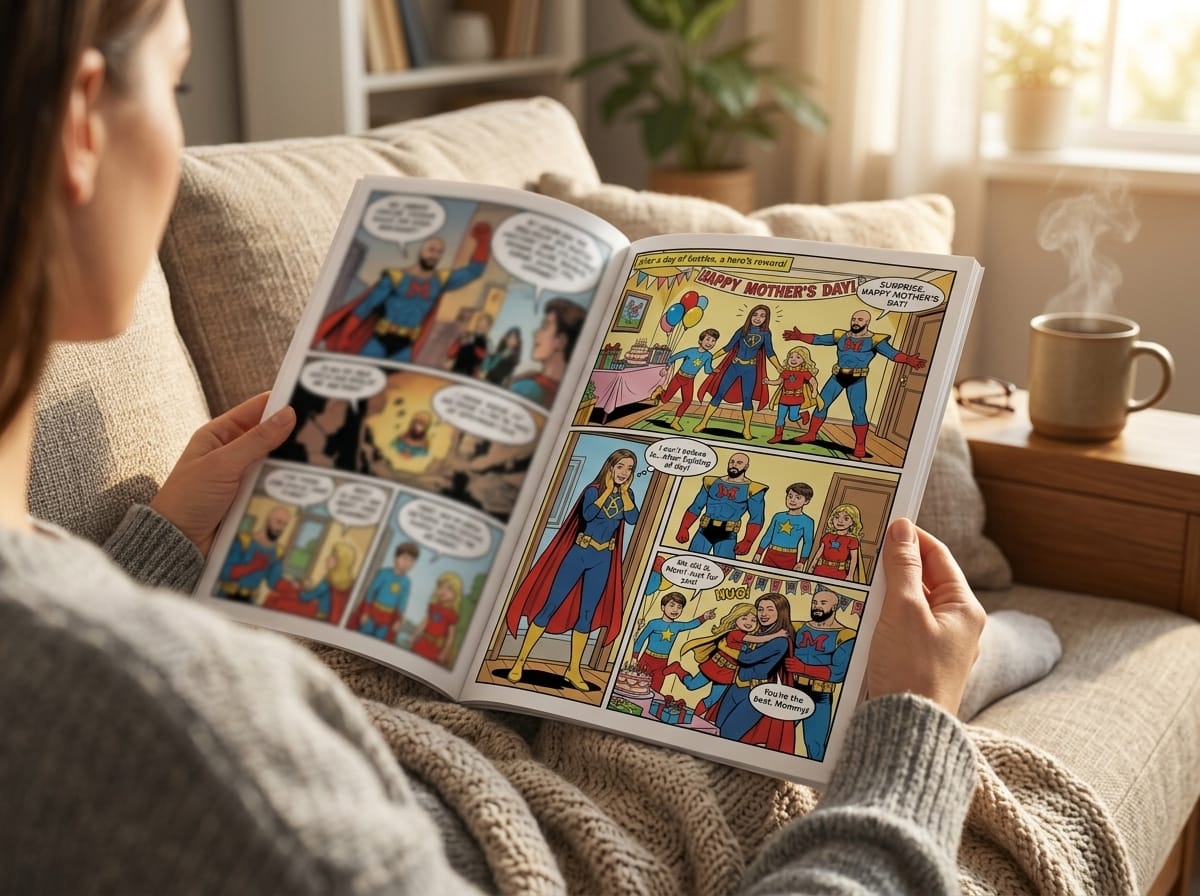
Physical presentation matters too. A printed comic changes the experience. People hold it differently, reread it differently, and keep it longer. If the project marks a major life moment, print is usually worth it.
The emotional jump from “fun file” to “keepsake” often happens the moment the comic becomes an object.
Run a final quality check
Before you export or print, pause and review the project like an editor.
Story problems to catch
- Weak premise: If the hero could be anybody, the comic still needs more personal DNA.
- No internal conflict: If the hero has power but no flaw, scenes will feel thin.
- Backstory overload: If the first page explains everything, the comic loses momentum.
Visual problems to catch
- Too many costume ideas: Pick the symbols that matter and remove the rest.
- Style mismatch: A serious tribute can get undercut by a playful visual treatment, or vice versa.
- Inconsistent character appearance: Check hair, face shape, emblem, and silhouette across every page.
Page design problems to catch
- Crowded panels: If the eye doesn't know where to go first, simplify.
- Speech bubble overload: Reduce text until the page breathes.
- Flat ending: Make sure the final panel resolves emotionally, not just visually.
Think like a reader, not just a maker
A creator remembers all the intent behind a custom comic. The reader doesn't. They only get what's on the page.
So ask two simple questions at the end:
- Does this hero feel like a specific person?
- Does this comic leave the reader with one clear emotion?
If the answer to both is yes, you've done the hard part well.
If you're ready to turn a photo, memory, or character idea into a finished comic, PersonalizedComics makes that process accessible without drawing skills. You can choose from eight art styles, generate complete comic pages with dialogue and panels, and even order a premium printed copy, all with a credit-based system and no subscription.
Filed under Making Your Comic