Maybe it’s a birthday gift that should feel more personal than a photo book. Maybe it’s a funny story your family keeps retelling and you want to turn into something you can hold. Maybe you’ve got the opening scene of a graphic novel in your head, but you can’t draw and don’t want that to be the reason the story never leaves your notes app.
That’s exactly where personalized comic books fit.
They let you turn real people, real memories, and original ideas into visual stories without needing traditional comic production skills. That matters because comics are far from niche. The global comic book market was valued at USD 17.69 billion in 2025 and is projected to reach USD 27.01 billion by 2034, a sign that the format keeps adapting across print, digital, and personalized experiences (Fortune Business Insights on the comic book market).
The opportunity is bigger than novelty. A personalized comic can work as a keepsake, a prototype, a classroom tool, an event memento, or a pitch piece. What makes the format powerful is the combination of story, image, and identity. A reader doesn’t just consume it. They recognize themselves in it.
The mistake new creators make is thinking the process is only about uploading a photo and clicking generate. That’s how you get a passable result. It’s not how you get a comic you’d proudly print, gift, or share.
Professional-looking personalized comic books come from better decisions before and after generation. You need a clear story shape. You need source images that help the model understand the character. You need dialogue that fits the page. Most of all, you need a workflow for catching and correcting visual drift before it spreads across the whole book.
A strong AI comic is directed, not merely generated.
That’s the difference this guide focuses on. Not how to make any comic, but how to make one that feels intentional. The pages should read cleanly, the faces should stay recognizable, and the style should hold from panel to panel.
The Ultimate Guide to AI Personalized Comic Books
Why this format works so well
Comics have always been good at compressing emotion into a small space. A glance, a caption, a sound effect, one well-timed panel cut. That’s why personalized comic books feel more vivid than many other custom products. They don’t just preserve a memory. They stage it.
A photo album shows what happened. A comic lets you shape how it felt.
That’s a big creative shift. You can exaggerate the funny part of a wedding speech, turn a pet into a sidekick, redesign a family road trip as sci-fi, or frame a child as the hero of their own fantasy quest. None of that requires formal drawing training anymore. It does require taste and direction.
What AI changes and what it doesn’t
AI removes much of the production barrier. It can translate your plot notes, character references, and style choices into complete comic pages far faster than a traditional pipeline. But AI doesn’t automatically make good storytelling choices.
It won’t know which facial expression matters most in the reveal scene unless you tell it. It won’t understand that page two needs to echo page one’s outfit details unless you lock those details in. It won’t shorten a wordy speech bubble unless you edit like a comics writer.
That’s why the strongest results come from treating AI as your production partner, not your replacement brain.
What professional quality means
First-time users often think quality means polished rendering. In comics, that’s only part of it. A professional result usually comes down to four things:
- Clear character identity so the same person feels recognizable throughout
- Stable visual language so the style doesn’t wobble between pages
- Readable storytelling so the eye moves naturally through the panels
- Controlled text density so dialogue supports the art instead of burying it
If you get those right, even a short comic feels finished.
Practical rule: Start with a short story you can fully control. A concise comic with consistent characters looks more professional than a long comic that loses its own face halfway through.
Planning Your Comic From Concept to Script
A good comic starts before any image generation. If the story is fuzzy, the pages will be fuzzy too.
The cleanest approach for a first project is to think in four-page terms. That’s enough room for setup, movement, payoff, and a final image that feels complete.
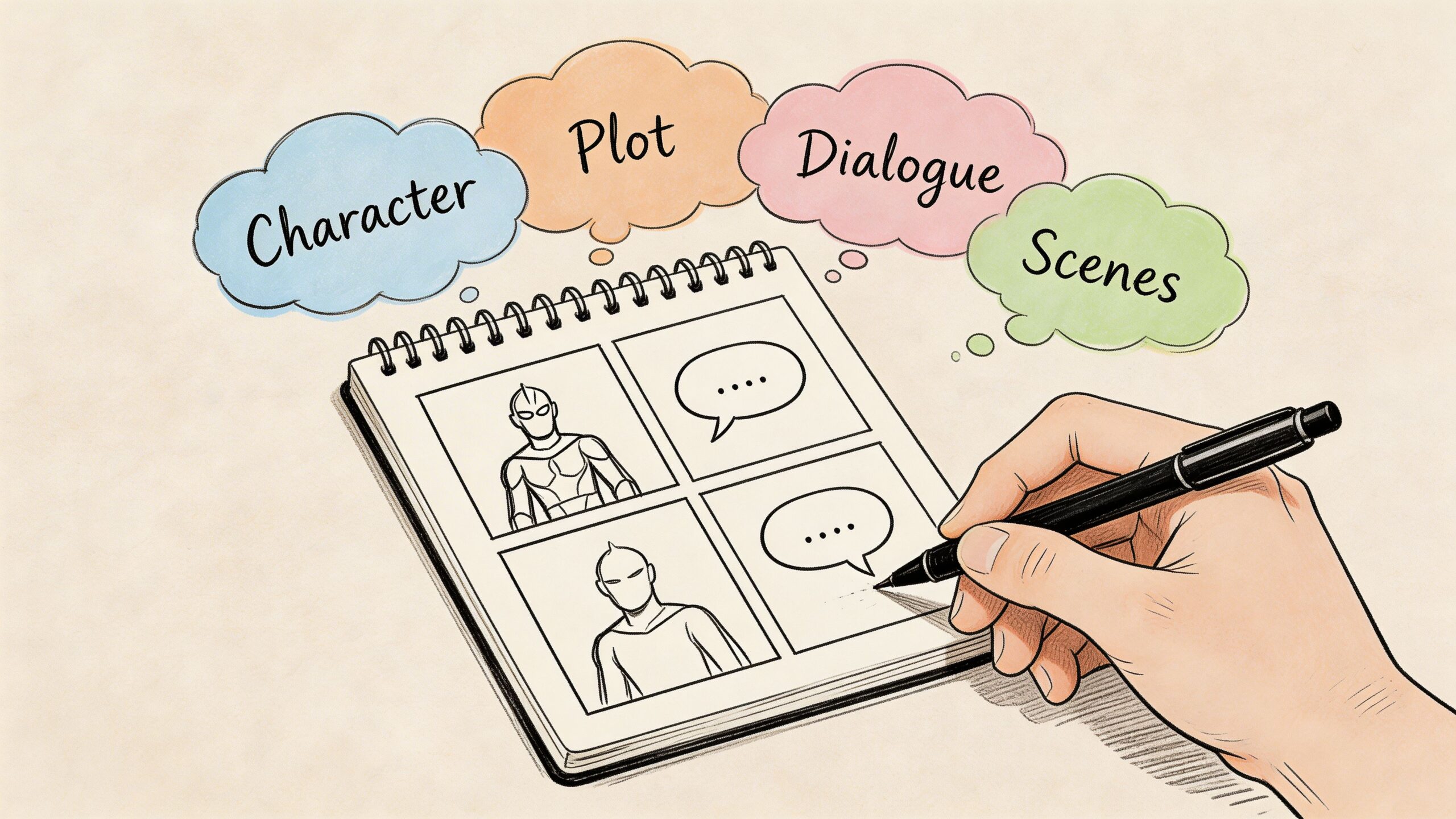
Comics are also reaching wider audiences than some might realize. The North American comic market surpassed $2 billion in 2021, with much of that growth coming from broader distribution beyond comic shops, which signals a wider appetite for accessible graphic storytelling (Statista’s breakdown of comic and graphic novel sales in the U.S. and Canada). That broader audience is one reason simple, emotionally direct stories work so well in personalized form.
Build the story around one clear turn
For a first comic, don’t try to tell a whole life story. Pick a moment with a built-in change.
A few reliable structures work well:
Gift story
Someone wants to create a surprise, runs into a small obstacle, and lands the reveal.Memory story
A real event gets retold with heightened style. A trip, proposal, graduation, first day, or family joke.Origin story
A real person becomes a hero version of themselves and discovers a defining power or purpose.
The simplest story framework is:
| Story beat | What it does | What to write |
|---|---|---|
| Opening | Introduces the character and situation | Who they are, where they are, what mood they’re in |
| Goal | Gives the page sequence momentum | What they want right now |
| Obstacle | Creates movement and emotion | What goes wrong or complicates things |
| Resolution | Pays off the setup | The reveal, lesson, laugh, or emotional close |
Pick reference photos like a director
A smiling front-facing portrait isn’t enough. It helps the AI identify the person, but it won’t teach range.
Use photos that show:
- Different angles such as front, three-quarter, and side
- Different expressions like neutral, happy, surprised, focused
- Consistent core features including hairstyle, glasses, facial hair, and any defining accessories
- Full or partial outfit clues if clothing continuity matters to the story
If you’re using real people, choose images where the face is visible and unobstructed. Avoid heavy filters and crowded backgrounds when possible. The cleaner the signal, the better the model can hold onto the person.
Keep your script short enough to fit the art
New comic writers almost always overwrite. They write for prose, not for panels.
A panel wants one job. One visual action. One emotional beat. One line of dialogue, maybe two. If you cram too much text into each panel, the comic stops breathing.
Here’s a practical page rhythm for beginners:
- Page one introduces the person and the setup
- Page two pushes the problem or desire
- Page three escalates or twists
- Page four resolves and lands a memorable final panel
If you want help turning rough notes into comic-ready scenes, this guide on how to write a graphic novel script is a useful reference point.
Write dialogue that sounds spoken
Read every balloon aloud. If you wouldn’t say it that way, rewrite it.
A few habits help immediately:
- Cut the first sentence when it only warms up the line.
- Use names sparingly because repeated names make dialogue stiff.
- Let the art carry context so the text can stay lean.
- Use captions for transitions and balloons for immediate emotion.
If the panel already shows the character shocked, the dialogue doesn’t need to explain the shock again.
That’s the core planning discipline. Decide the moment. Choose better references. Write less than you think you need. Your AI output gets sharper because your inputs finally have a shape.
Bringing Your Vision to Life with AI Generation
Once the story blueprint is ready, generation becomes much easier to control. This stage is where users either gain momentum or create a mess they spend hours trying to rescue.
The difference is usually the order of operations.
Don’t start by typing a huge prompt and hoping the system figures out your comic instincts. Start by locking the variables that matter most. Style first. Character references second. Story beats third. Dialogue last.
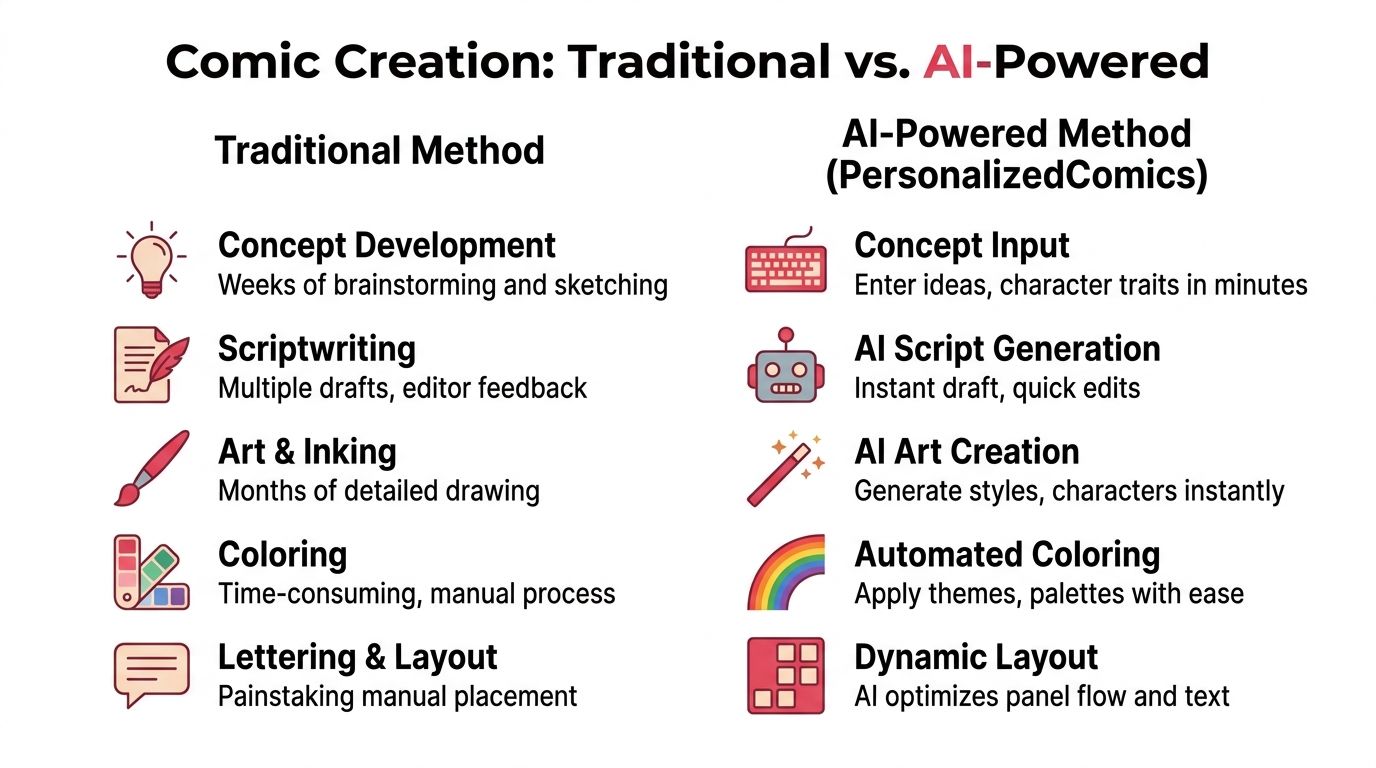
Choose a style that supports the story
Different comic aesthetics do different jobs.
If you want emotional warmth, watercolor can soften the page. If you want high drama, noir gives you contrast and tension. If the story needs energy and expressive acting, manga often carries that well. If you’re making a superhero-style gift, classic American or graphic novel styling usually reads fast and familiar.
A simple selection guide looks like this:
| Style direction | Best fit | Watch out for |
|---|---|---|
| Manga | Fast emotion, action, youth-oriented stories | Overly exaggerated reactions if your story is subtle |
| Classic American | Hero stories, gifts, broad readability | Can feel too bold for quiet family scenes |
| Graphic novel | Balanced and versatile | Needs strong prompt direction to avoid generic staging |
| Noir | Mystery, romance with tension, detective framing | Shadows can obscure likeness |
| Watercolor | Memory pieces, softer gifts, children’s stories | Fine facial details may need extra care |
| Cyberpunk | Streamer branding, futuristic concepts, bold identity | Backgrounds can overpower faces |
| Retro pop | Comedic tone, playful nostalgia | Strong palettes can compete with dialogue |
| Fantasy | Quest stories, weddings as fairy tales, kids as heroes | Costume complexity can increase drift |
Create the character before you create the page
This step matters more than people expect.
If the platform lets you upload photos to build a character model, take time here. Don’t rush into full-page generation until the person looks right in a simple test render. It’s easier to fix identity early than after a whole sequence is built around a weak model.
For original characters, be specific in the prompt. “Brave hero” is vague. “Young archivist with short dark curls, round glasses, practical jacket, curious expression, slightly ink-stained fingers” gives the model something visual to hold.
One option in this category is PersonalizedComics, which supports photo-based character creation, original hero prompts, eight art styles, and page-based generation with speech bubbles, sound effects, and narration. The key advantage in any system like this isn’t that it generates quickly. It’s that you can structure the inputs so the pages belong to the same comic.
Feed the system with page-ready information
The strongest prompt sets aren’t long. They’re organized.
Use separate fields or clean blocks for:
Character identity
Name, age range, visual traits, clothing essentials, emotional toneScene description
Where the page takes place and what physically happensStory purpose
What the reader should understand or feel by the end of the pageDialogue and captions
Final text, kept short enough to fit comfortably
If you can, define recurring constants once and repeat them lightly. A blue denim jacket, a yellow scarf, a silver nose ring, a distinctive haircut. Those repeated anchors help reduce drift.
Understand the economics without overthinking them
Traditional comic production is labor heavy. AI generation automates tasks that make up about 85% of a traditional comic page’s labor cost, especially line art, coloring, and prepress. That shift is what allows credit-based systems to offer custom pages at 15% to 25% of freelance rates (Nick Macari’s breakdown of comic page rates and creator budgets).
For a user, the practical takeaway is straightforward. A page-based credit system works best when you generate with intent. Don’t burn pages on undefined ideas. Build a page plan, then generate.
A clean generation workflow
This is the order I recommend for a first serious comic:
Test the character model
Run a basic portrait or simple panel to check likeness.Generate page one only
Don’t build the entire comic until page one proves the tone and face.Review text fit
Make sure balloons aren’t overcrowded and narration isn’t doing too much.Generate the next pages in sequence
Sequential generation often preserves stronger continuity than jumping around.Keep notes while reviewing
Record what must stay consistent. Hair shape, outfit details, eye color, expression range, props.
A first pass is for discovery. A second pass is where the comic starts becoming yours.
Many beginners assume speed is the main benefit of AI comics. It isn’t. Control is. Speed only helps if you use it to iterate on the right details.
Editing Your AI Comic for Visual Consistency
The first output is almost never the final comic.
That’s not a flaw. It’s normal production reality. The polished look people associate with finished comics comes from review, correction, and repetition. AI changes how fast you can do that. It doesn’t remove the need.
Consistency is vital, as up to 28% of complaints on personalized art platforms involve a character changing appearance from page to page, making it one of the biggest practical issues in this format (analysis of user feedback cited by DearComic).
What to check on every page
Treat each generated page like a proof, not a verdict.
Use this review checklist:
Face fidelity
Does the character still look like the same person from page one?Hair and accessories
Are hairstyle, glasses, jewelry, hats, and facial hair stable?Clothing continuity
If the scene is continuous, did the outfit suddenly change?Body scale
Does the character’s height and build remain plausible from panel to panel?Emotion match
Is the face showing the emotion the scene needs?Background logic
Did the setting shift in a way that breaks the sequence?
Fix one variable at a time
A common mistake is rewriting the whole prompt every time something looks off. That often creates fresh problems.
If the face is wrong but the page composition works, adjust only the identity instruction. If the page layout is awkward but the likeness is good, leave the character prompt alone and refine the scene description. Controlled iteration beats dramatic resets.
A practical way to revise is to use notes like:
| Problem | Better correction move |
|---|---|
| Face looks older on page three | Reinforce age, hairstyle, and facial structure in the character note |
| Expression feels flat | Ask for a more specific emotion such as relieved, nervous, or stunned |
| Outfit changes mid-scene | Restate the clothing anchors for that page sequence |
| Style softens or hardens too much | Reassert the original art style and tone in the page prompt |
| Character looks different across panels | Regenerate the affected panel or page with stronger identity references |
Build a continuity sheet
Professional comic teams use model sheets and continuity notes. You should too, even for a short project.
Your continuity sheet can be simple:
- Character name
- Core facial traits
- Hair description
- Signature clothing items
- Color cues
- Key props
- Expression range
- Story-specific details that must remain constant
Keep it open while you generate. The point isn’t bureaucracy. It’s memory. After a few pages, people forget exactly which version of the character felt right. A continuity sheet keeps your own taste from drifting.
The AI forgets fast. The creator can’t afford to.
Don’t accept a pretty page that breaks the story
This is the hardest discipline for new users. Sometimes a page looks attractive but damages continuity. Maybe the lighting is beautiful, but the character suddenly has a different jawline. Maybe the panel composition is dramatic, but the emotional beat is wrong.
Reject it.
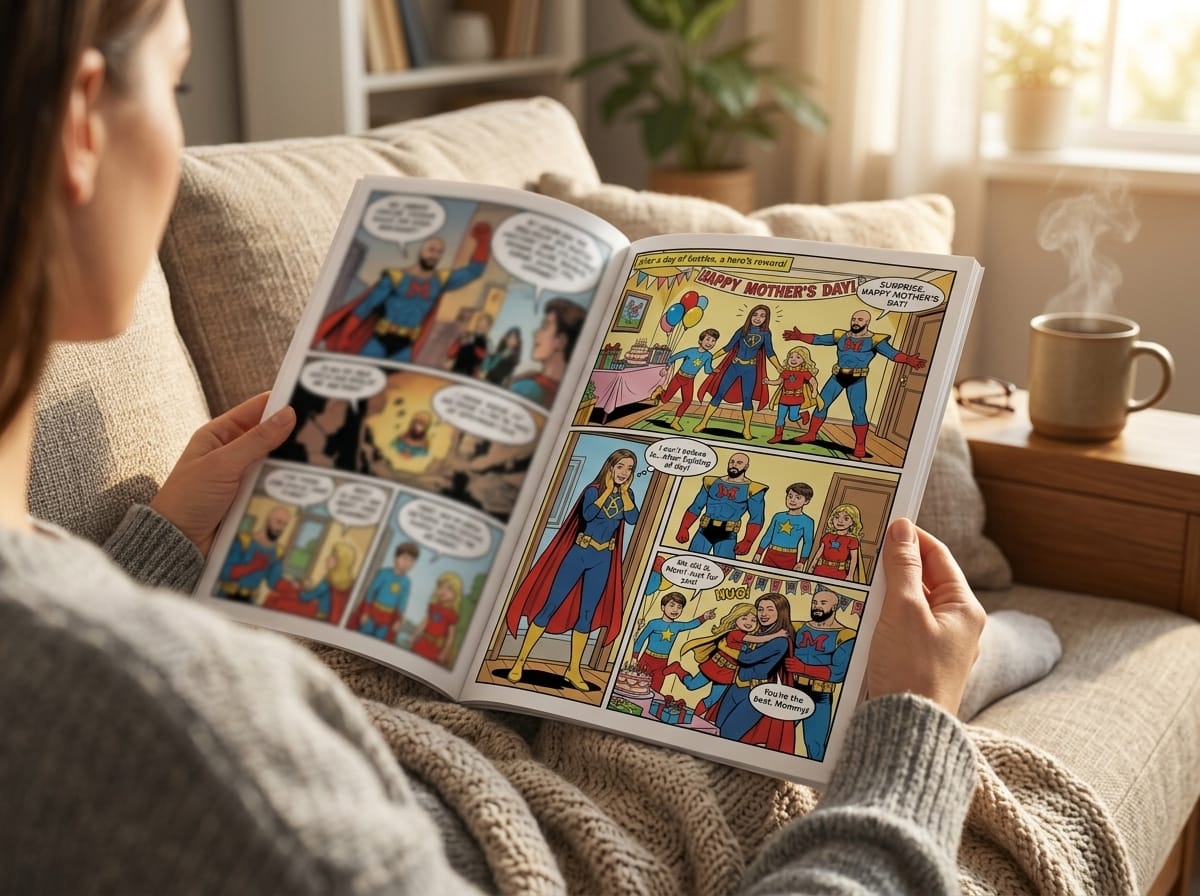
Readers forgive stylization. They don’t forgive confusion. If a mother looks like a different person halfway through a gift comic, the illusion collapses. If the hero’s costume keeps mutating, the book starts reading like a compilation instead of a story.
Small corrections have outsized impact
You don’t always need a full regeneration. Often the comic sharpens when you make a few focused edits:
- Shorten speech bubbles so faces aren’t crowded
- Replace generic reactions with precise emotional direction
- Reorder captions so the eye moves more naturally
- Regenerate only the page that introduces the most obvious drift
- Reuse the strongest prior wording for character identity instead of improvising anew
Professional quality emerges from this approach. Not from demanding perfection in one click, but from noticing what changed, deciding what matters, and steering the comic back onto its own rails.
Beyond the Basics Advanced Tips and Creative Ideas
Once you’ve made one solid comic, the format opens up quickly. The most interesting projects usually aren’t the obvious ones.
A personalized comic can still be a birthday gift or anniversary surprise, but it also works for teaching, pitching, community storytelling, and audience building. The comic medium holds attention in ways plain text often doesn’t. Research on comics-based methods found 89% participant retention in studies, which helps explain why the format works so well when engagement matters (ACM research on comics as a multimodal sequential data elicitation tool).
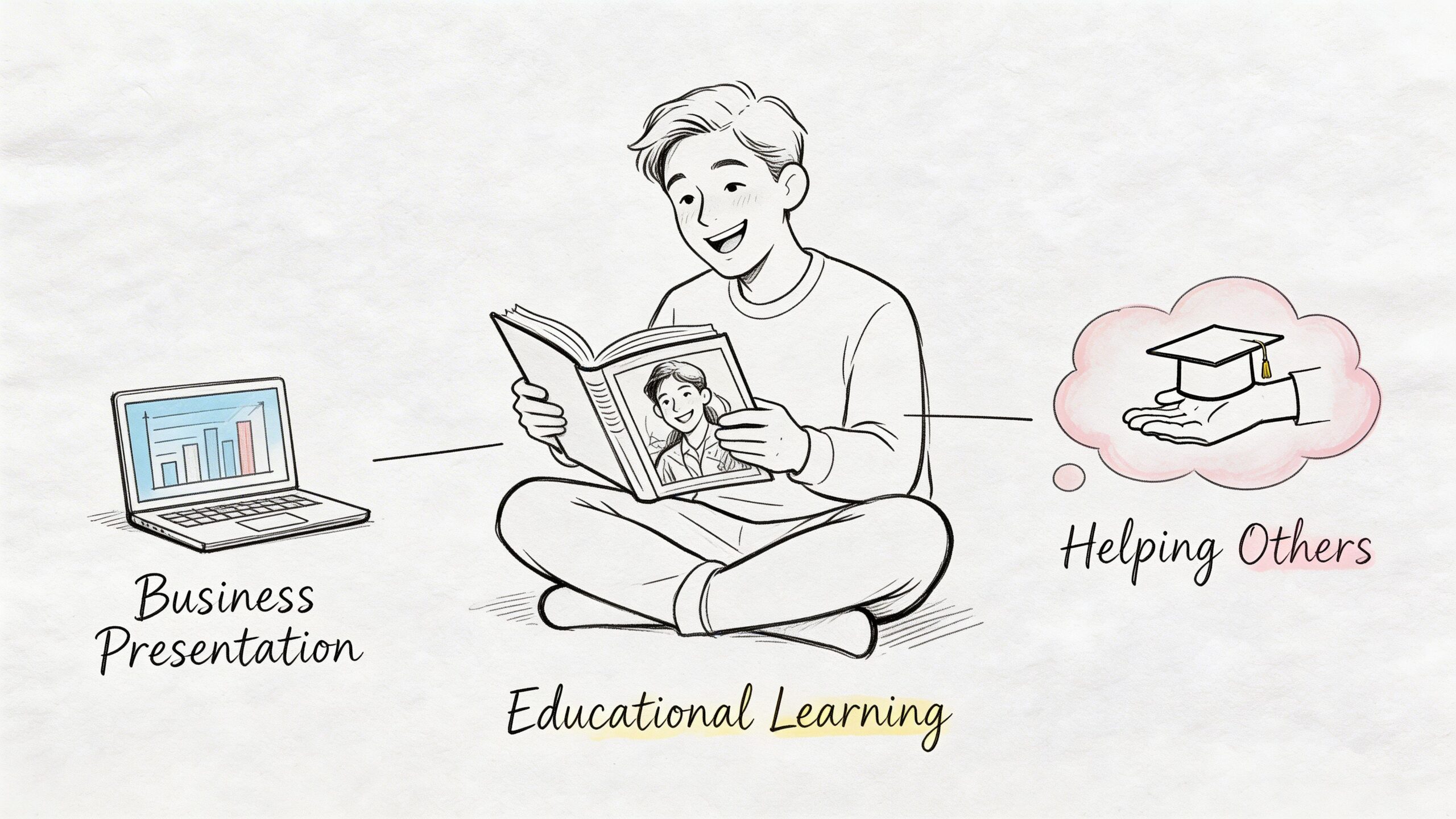
Three creator scenarios that work especially well
A teacher turns a lesson into a scene-driven comic.
Instead of assigning a wall of explanatory text, the teacher frames a historical event through two student-age witnesses. One page sets the conflict. Another shows the decision point. A final page lands the consequence. The educational gain isn’t about simplification alone. It’s that the comic gives the learner sequence, image, and motivation at the same time.
A writer prototypes a graphic novel opening.
This is one of the smartest uses of AI comic tools. A writer doesn’t need to commission a full book to test whether the opening pages read well. They can generate a short sequence, check pacing, test character designs, and see whether the page turn lands. That’s useful before investing in a longer collaboration or print run.
A streamer creates an origin comic for their audience.
This works because streamers and creators already operate through persona. A comic can dramatize the channel’s tone, recurring jokes, or fictionalized backstory in a format that feels more collectible than a standard post.
Advanced storytelling moves that improve the page
You don’t need technical complexity to make a comic feel refined. A few choices go a long way.
Use one silent panel
A panel with no dialogue can reset pacing and add weight to a reveal or emotional beat.Vary panel intensity
A page of equal-size panels can feel flat. Mix close reactions with wider scene panels when the story needs contrast.End on an image, not an explanation
The last panel usually lands better when the art completes the thought.Let sound effects do some work
A door slam, magical burst, crowd cheer, or tiny comedic thud can energize a page without adding more spoken text.
Creative directions people often overlook
Some of the strongest personalized comic books aren’t autobiographical in a strict sense. They remix reality.
Consider ideas like:
| Project type | Why it works |
|---|---|
| Wedding or engagement comic | Turns real milestones into a cinematic keepsake |
| Pet adventure issue | Gives a familiar subject instant charm and humor |
| Team or club story | Builds shared identity for a group |
| Family holiday special | Lets multiple people appear in one unified narrative |
| Classroom explainer | Makes information easier to revisit and discuss |
| Convention persona comic | Helps cosplayers and creators extend their visual brand |
A comic doesn’t need a grand plot to feel memorable. It needs a viewpoint, a rhythm, and a reason to exist.
That last part matters. If the project has a clear emotional or practical purpose, the creative choices become easier. You know what the book is trying to do.
From Digital Creation to Premium Printed Comic
A digital file is useful. A printed comic feels finished.
That difference matters more than people expect. Once the story exists as an object with pages, cover, sequencing, and physical weight, it stops feeling like a novelty experiment and starts feeling like a real publication. For gifts, especially, print changes the experience completely. People don’t just scroll it once. They pick it up, show it around, leave it on a table, and return to it.
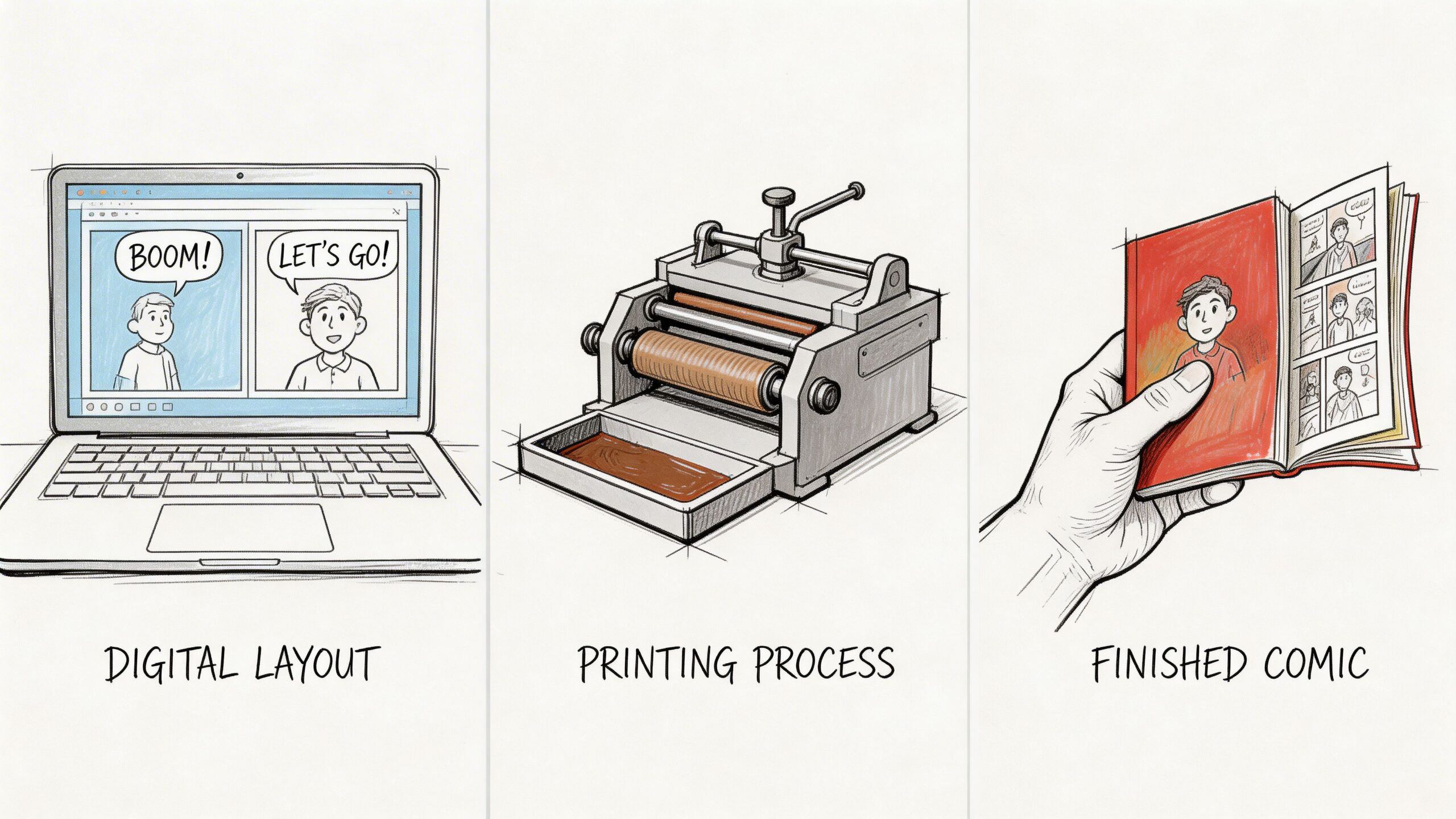
What to check before you print
Printing makes every unresolved issue more visible. Tiny text looks smaller. continuity mistakes stand out. Color choices that felt fine on screen can look louder on paper.
Run a final pre-print review for:
Cover strength
Does the main image immediately communicate the tone of the comic?Text readability
Are speech bubbles easy to read at print size?Page order
Does the story flow cleanly from first page to last?Color balance
Do key scenes feel too dark or too saturated?Ending quality
Does the last page deserve to be the final impression?
If you want a deeper walkthrough of print decisions, this guide to creating and printing your own custom comic book is the right next read.
Print rewards restraint
The most printable comics are rarely the most crowded ones.
A strong printed book usually has:
- cleaner page compositions
- shorter dialogue
- more deliberate facial acting
- fewer unnecessary scene changes
- one clear visual identity from cover to final page
That’s good news for a first project. You don’t need a long book. You need a coherent one.
Consent matters when the story is personal
This is the part many people skip because they’re excited to make the gift. Don’t skip it.
If you’re turning real people into comic characters, especially in a book you plan to print or share, get their permission when appropriate. That’s particularly important for children, private events, sensitive family stories, and public-facing content tied to someone’s likeness.
A personalized comic should feel generous, not invasive.
Why now is the right time to start
Creators who want to make personalized comic books delay for the same reason. They think they need the whole story worked out before beginning.
You don’t.
You need one clear idea, a handful of usable photos or a solid character description, and enough patience to revise for consistency. That’s it. The craft part comes from making decisions, not waiting for perfect confidence.
A short comic that gets made beats a masterpiece that stays hypothetical.
If you’ve been sitting on a gift idea, a family story, or the first scene of a graphic novel, start with one short project at PersonalizedComics. New users get a free three-page preview comic, which is enough to make a real first comic, test a style, and learn the workflow without committing to a subscription.
Filed under Making Your Comic