Red Haired Cartoon Characters Female & How to Recreate Them
You probably already know the feeling. You spot a red-haired animated character on screen and instantly understand the energy she brings. She's curious, bold, sarcastic, glamorous, dangerous, or impossible to ignore. The hair does part of the visual work, but the underlying reason these characters stick is that the design, attitude, and story all line up.
That's why the best red haired cartoon characters female fans remember aren't just pretty color studies. They're tightly built archetypes. Ariel turns curiosity into motion. Jessica Rabbit turns glamour into suspense. Merida turns untamed hair into a visual expression of independence. When the design and personality support each other, the character lands fast.
If you want to make your own comic, that's useful news. You don't need to copy a famous character. You need to understand the recipe behind why she works, then rebuild that recipe as something original. PersonalizedComics makes that process much easier because you can choose a clear art style, upload photos if you want a real person transformed into a character, and generate finished pages with panels, dialogue, and narration.
The eight characters below aren't just icons to admire. They're practical templates for building fantasy leads, noir divas, sitcom anchors, rebels, anti-heroes, and sharp-tongued observers inside your own comic pages.
1. Ariel – The Little Mermaid
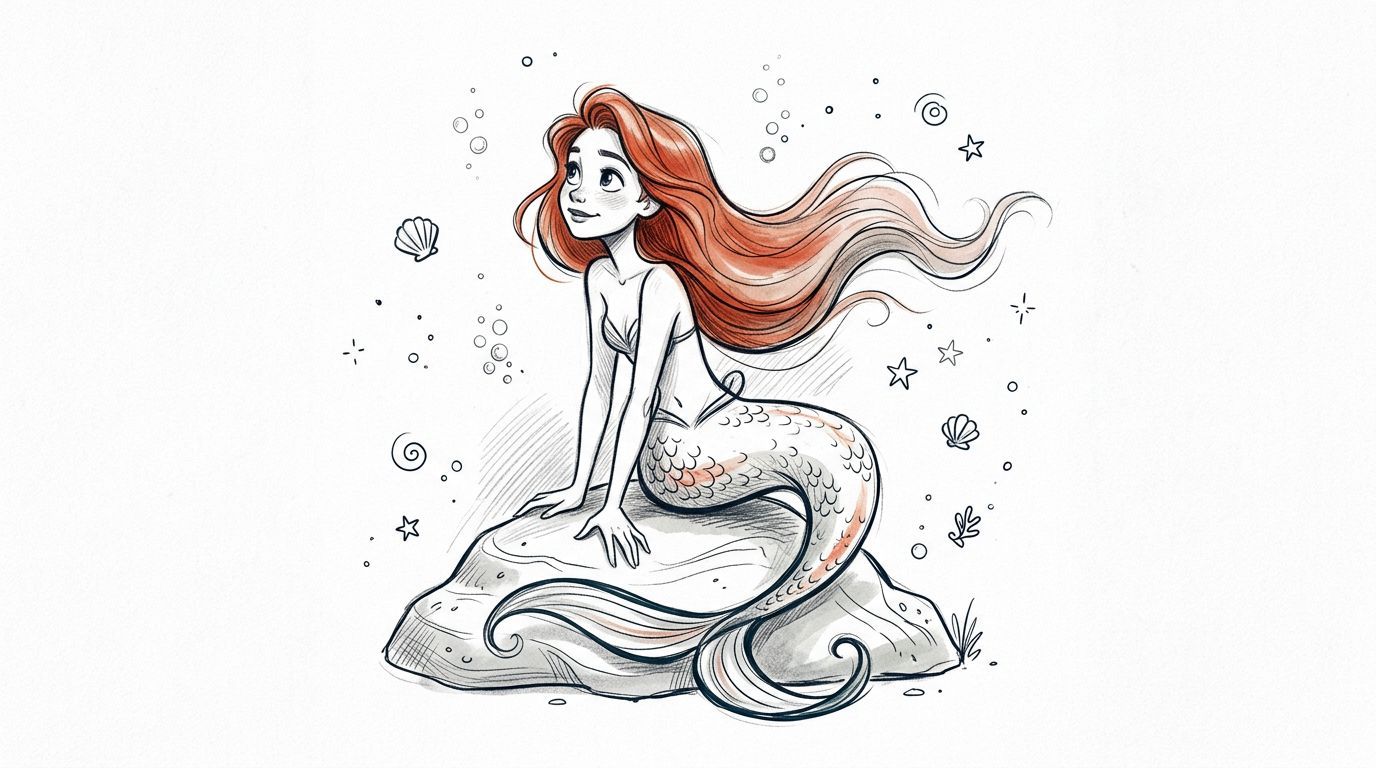
Ariel works because she mixes innocence with momentum. She's not passive for a second. Even in quiet scenes, her design suggests movement. Flowing hair, open expressions, and a setting full of currents all reinforce that she wants more than the world she's been given.
Her popularity isn't vague fan memory. Disney's 1989 The Little Mermaid earned $111 million globally in its initial release, and Ariel's red hair was treated as a key design element in the character's identity, according to this Ariel franchise summary. That commercial footprint matters because it shows how powerful a clean visual concept can be when it matches a strong emotional arc.
How to build an Ariel-inspired original
If you're using PersonalizedComics, start with the Fantasy style or Watercolor style. Fantasy gives you stronger environmental drama. Watercolor is better if you want softness, romance, and dreamlike underwater color transitions.
Use this recipe:
- Give her a want: Curiosity is enough. She doesn't need a kingdom-sized objective in page one.
- Build motion into the silhouette: Long hair, trailing fabric, fins, ribbons, or seaweed-like accessories help.
- Choose a contrasting setting: Bright hair against cool blues or sea greens still works beautifully.
- Keep the archetype, change the specifics: Make her a harbor witch, reef explorer, lake spirit, or deep-sea cartographer instead of a mermaid princess.
Practical rule: Don't recreate Ariel directly. Recreate the feeling of a heroine whose appearance signals longing, wonder, and forward motion.
A strong use case here is a gift comic. Turn a partner, child, or friend into an original sea heroine by uploading their photo, then describe the transformed character with copper or crimson hair, ocean-themed costume details, and a clear emotional goal. PersonalizedComics handles the page composition, so you can focus on the fantasy premise instead of wrestling with layout.
2. Jessica Rabbit – Who Framed Roger Rabbit
Jessica Rabbit is the reminder that a character can be exaggerated and still feel controlled. Her design is theatrical, but the reason she lasts is restraint. She doesn't need constant action. She dominates scenes through posture, shape, lighting, and the promise that she knows more than everyone else in the room.
That's the lesson to steal for your own comic. Seductive design without narrative control falls flat. Mystery without visual confidence also falls flat. Jessica's archetype works when both are present.
How to use the noir glamour formula
For PersonalizedComics, choose Noir first. Graphic Novel is the fallback if you want more contemporary linework. In either style, write scenes where the character changes the room before she changes the plot. That means entrances, pauses, glances, and selective dialogue.
Try these design choices:
- Use one memorable statement element: Gloves, a satin dress, a dramatic slit, a vintage microphone, a cigarette holder, or a sculpted wave hairstyle.
- Limit the palette in your prompt: Black, cream, ruby, gold, smoke-gray.
- Write fewer lines: A noir bombshell shouldn't explain herself too early.
- Give her influence: She needs information, status, or emotional control over the detective, singer, mayor, or mob boss.
A practical comic scenario is a personalized mystery gift. Turn the recipient into a lounge singer, club owner, heiress, or star witness in a 1940s-inspired city. Upload a photo, pick Noir, and specify “high contrast lighting, glamorous red-haired lead, art deco interior, suspicious atmosphere.” The result usually looks better when you keep backgrounds simple and let expression carry the panel.
She should look expensive, but her story needs stakes. Style alone won't carry a page.
What doesn't work is borrowing only the dress and hair. If the script has no tension, the character reads as costume instead of archetype.
3. Wilma Flintstone – The Flintstones
Wilma is one of the clearest examples of warmth plus comic timing. Her red hair isn't there to signal danger or romance. It gives a domestic character snap. She reads quickly on screen, and her visual neatness supports her role as the person who often sees the problem before everyone else does.
That makes her a strong template for comics built around family life, nostalgia, or gentle sitcom conflict. She's especially useful if you want a female lead who feels competent without turning every scene into a speech about competence.
Why Wilma's structure still works
Wilma-style characters shine when the story rhythm is setup, complication, and payoff. In PersonalizedComics, Retro Pop is the obvious style pick. The shapes feel playful, color blocking stays clean, and domestic comedy reads well.
Build with these choices:
- Anchor her in routine: Breakfast scene, neighborhood drama, budget problem, party planning, family outing.
- Let her solve social problems, not just physical ones: She reads people well.
- Use design economy: Updo, bold earrings or necklace, simple dress shape, one standout color accent.
- Keep the comedy relational: The funniest panels usually come from reactions, not punchlines.
A good project here is a family gift comic that turns real relatives into a retro stone-age or vintage-suburb cast. Upload photos, assign everyone a simple visual role, and prompt the AI for a short domestic crisis, like a birthday gone sideways or a vacation mishap.
Wilma-inspired stories fail when creators overcomplicate them. Don't load the page with lore. Let the humor come from how a practical woman deals with lovable chaos.
4. Merida – Brave
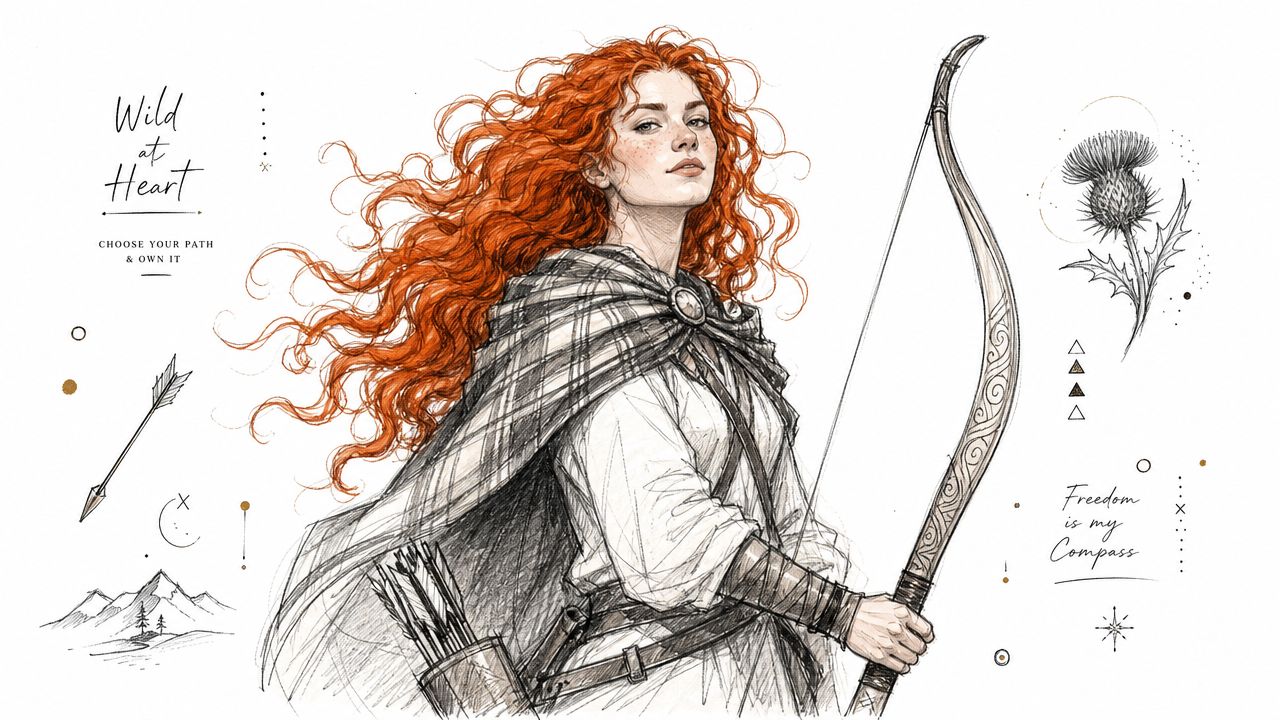
Merida proves that red hair can do more than frame a face. It can become part of the action language of the character. Her curls feel untamed because she is. That link between form and personality is what makes her so useful as a model for creator-built heroines.
If you want to design a warrior, ranger, runaway noble, or rebellious heir inside PersonalizedComics, Merida is one of the strongest starting points because her archetype is physically active and emotionally clear.
The rebel fantasy build
Use Fantasy for action scenes and Watercolor for emotional family moments. The best Merida-inspired pages balance both. You want speed in one scene and vulnerability in the next.
Here's a strong build pattern:
- Choose one embodied skill: Archery, falconry, horse riding, tracking, swordplay.
- Make the hair part of the silhouette: Volume matters. Don't flatten it in your prompt.
- Give rebellion a personal target: Family duty, arranged future, inherited role, political expectation.
- Avoid generic “strong female character” writing: Specific choices beat slogans every time.
A practical example is a coming-of-age comic where a teen or young adult becomes a fantasy archer version of themselves. Upload their photo, request a windswept red-haired transformation, then outline a short plot about refusing a role that doesn't fit. The platform will turn that into sequential pages fast.
What doesn't work is making her rebellious in aesthetics only. If she never pushes against a real obligation, the character reads as cosplay, not story.
5. Poison Ivy (Pamela Isley) – DC Animated Universe
Poison Ivy is where many creators go right and wrong at the same time. They get the look immediately. Red hair, green palette, botanical motifs, cool expression. But if the character has no internal argument, she becomes decoration.
Ivy works because beauty and danger are inseparable in her design. She's persuasive, intelligent, and often morally difficult to pin down. That ambiguity is valuable if you want to make comics for older readers or anyone who enjoys conflicted anti-heroes.
Building a morally complex redhead
For PersonalizedComics, this is a Noir or Graphic Novel character. Noir works if you want seduction, corruption, and secrecy. Graphic Novel works if you want a cleaner modern anti-hero look with sharper action panels.
Use this structure:
- Start with a belief, not a costume: She thinks people are violating something sacred, natural, or living.
- Make her right about something: That keeps her from feeling flat.
- Make her methods unsettling: Moral complexity needs a real price.
- Use controlled visual repetition: Vines, thorns, flowers, leaf silhouettes, toxic greenhouse glass.
The strongest anti-heroes don't ask readers to agree with them. They force readers to understand them.
One useful personalized comic concept is an eco-thriller. Turn the main character into an original botanical vigilante protecting a park, greenhouse, coastline, or poisoned neighborhood. Use darker page prompts, selective narration, and fewer jokes. This archetype improves when you let silence and facial expression do some of the work.
There's also a broader pattern around red-haired female coding in animation. A 2024 analysis of 500 animated series found that 38% of female redheads were coded as “hyper-intelligent” or “disruptive,” versus 22% for non-redheaded counterparts, according to this discussion of redhead cartoon patterns. That doesn't mean every red-haired woman should be written this way. It does mean creators should decide whether they're embracing or subverting that signal.
6. Daria Morgendorffer – Daria
Daria is one of the best templates for creators who prefer voice over spectacle. Her power isn't visual extravagance. It's precision. She sees what other people are pretending not to see, and the comedy comes from that gap.
That makes her perfect for PersonalizedComics projects driven by dialogue, captions, internal monologue, and awkward social observation. If you're making a campus comic, workplace satire, teacher gift, or deadpan coming-of-age story, Daria's structure is gold.
How to write a sharp observer
Use Graphic Novel style and keep the prompts visually clean. Busy backgrounds can weaken this type of story because the humor depends on expression and timing, not environmental overload.
A strong Daria-like recipe looks like this:
- Give the lead a filter: She notices hypocrisy, absurdity, status games, or fake enthusiasm.
- Use captions carefully: One strong internal line can replace a paragraph of dialogue.
- Make supporting characters broad enough to bounce off her: Overeager friend, clueless authority figure, trend-chaser, chronic self-promoter.
- Keep the wardrobe ordinary: Normal clothes help the voice stand out.
A practical scenario is turning everyday life into dry comedy. Upload a photo, choose Graphic Novel, and prompt something like “college orientation day, sarcastic red-haired lead, awkward campus energy, understated expressions.” Then write short dialogue exchanges instead of big speeches.
Daria-inspired comics fail when every line sounds equally cynical. The voice needs contrast. Give her one person she cares about, one situation that catches her off guard, or one moment where the armor slips.
7. Babs Bunny – Tiny Toon Adventures
Babs Bunny runs on speed. She talks fast, pivots fast, and keeps the comic energy in motion. If you like ensemble casts, gags, and family-friendly chaos, she's one of the best archetypes to study because she's funny without becoming passive side relief.
She also helps solve a common creator problem. Many first-time comic makers write one good lead and then surround her with interchangeable extras. Babs-style characters force you to think about bounce, interruption, reaction, and rhythm.
Making comedy actually land on the page
For this kind of project, pick Classic American style. It supports exaggeration well and gives action beats enough elasticity for visual comedy.
Try these moves:
- Write scenes around reversals: The confident joke lands, then the situation snaps back.
- Use ensemble contrast: Straight man, chaos engine, worrier, show-off, sweetheart.
- Prompt for physical acting: Wide gestures, elastic expressions, exaggerated takes.
- Use sound effects sparingly but clearly: They help pacing when the joke is visual.
A strong application is a birthday, school, or sibling gift comic where several real people become a cartoon troupe. Upload multiple photos, assign each person a comic role, and build around one escalating misunderstanding. PersonalizedComics can render those group scenes much faster than hand-building panel flow from scratch.
Comedy pages need space. If every panel is packed with chatter, the joke has nowhere to land.
What doesn't work is writing “random” instead of comic structure. Babs energy is playful, but the scene still needs setup and payoff.
8. Annie (Little Orphan Annie) – Classic Animation
Annie shows how a red-haired girl can represent resilience instead of glamour, rebellion, or irony. Her curly silhouette, hopeful expression, and underdog story make her useful when you want emotional uplift. She's especially effective for family comics, school projects, or gift books built around perseverance.
This archetype also adapts well. You don't need the original setting to use the emotional engine. The core is simple. A young heroine faces instability, keeps moving, and changes the mood of the people around her.
Building a hopeful character without making her flat
Retro Pop works well if you want period flavor. Watercolor is better if you want warmth and sentiment. In either case, keep the stakes human-sized. Hope lands harder when the problem is believable.
Use this approach:
- Give her a rough starting point: New town, foster situation, school transition, financial strain, loneliness.
- Balance optimism with frustration: Pure cheer can feel fake.
- Use recurring visual symbols: Worn suitcase, dog companion, patched coat, lucky ribbon, notebook.
- End each page with movement: Annie-type stories are strongest when the lead keeps choosing forward motion.
A nice PersonalizedComics use case is an inspirational gift for a child or family member going through change. Upload a photo or describe an original heroine, then place her in a vintage city, school, or neighborhood setting with a small but meaningful objective. The pages work best when the script notices kindness, not just hardship.
There's also room here to modernize the archetype. A 2025 Nielsen Media analysis of global mainstream streaming animation found that 17% of new red-haired female characters introduced in 2024 were explicitly non-binary or gender-ambiguous, up from 6% in 2022, according to this summary of evolving red-haired character representation. If you're creating a contemporary hopeful lead, you don't have to stay inside older binary templates.
8 Red-Haired Female Cartoon Characters Comparison
| Character / Example | Implementation complexity | Resource requirements | Expected outcomes | Ideal use cases | Key advantages |
|---|---|---|---|---|---|
| Ariel – The Little Mermaid | High, underwater environments, flowing hair and tail; strong IP considerations | High, detailed aquatic backgrounds, fluid hair rendering, licensing review | High emotional/fantasy appeal; broad age reach | Fantasy/adventure comics, mermaid OCs, personalized gift stories | Iconic silhouette, versatile art translation, strong emotional beats |
| Jessica Rabbit – Who Framed Roger Rabbit | Medium–High, glam noir styling and mature tone; IP constraints | Medium, high-contrast shading, costume detail, mature scripting | Strong dramatic and glamorous impact | Noir/mystery graphic novels, adult-oriented dramatic comics | Timeless glamour, strong silhouette, excellent noir contrast |
| Wilma Flintstone – The Flintstones | Medium, retro/stone-age settings and ensemble scenes; era-specific look | Medium, retro props, family cast scenes, licensing considerations | Nostalgic, family-friendly engagement; comedic tone | Retro pop, family humor comics, nostalgic gifts | Sitcom templates, multi-generational recognizability, family appeal |
| Merida – Brave | High, wild curly hair, dynamic action sequences; IP/licensing issues | High, action choreography, Scottish landscapes, expressive poses | Empowering, action-oriented narratives with strong agency | Adventure, coming-of-age, fantasy warrior stories | Modern empowered heroine, strong action visuals, emotional depth |
| Poison Ivy – DC Animated Universe | Medium–High, botanical effects and morally dark tone; IP/licensing | Medium, complex plant effects, dark palettes, mature themes | Mature, provocative stories exploring moral ambiguity | Dark graphic novels, anti-hero studies, environmental drama | Rich moral complexity, visually striking plant motifs, adult appeal |
| Daria Morgendorffer – Daria | Low–Medium, minimalist visuals; heavy reliance on writing | Low, simple character design, emphasis on script and dialogue | Dialogue-driven, character-focused comics with satirical wit | Character studies, coming-of-age, social satire | Sharp dry humor, low art overhead, strong voice-driven storytelling |
| Babs Bunny – Tiny Toon Adventures | Low–Medium, energetic classic cartoon style, ensemble comedy | Medium, expressive animation-style art, comedic timing and effects | High comedic engagement; family-friendly entertainment | Comedy strips, ensemble sketches, educational humor | Energetic slapstick, broad family appeal, established comedic beats |
| Annie – Little Orphan Annie | Medium, period settings and emotional arcs; era licensing | Medium, period-appropriate props, emotional scene staging | Inspirational, emotional resonance across ages | Inspirational/gift comics, historical coming-of-age stories | Timeless optimism, cross-generational appeal, strong emotional narrative |
Your Turn to Create: Bringing Your Red-Haired Hero to Life
The best red haired cartoon characters female fans love aren't all doing the same job. Ariel channels wonder. Jessica Rabbit channels controlled spectacle. Wilma channels practical wit. Merida channels defiance. Poison Ivy channels moral tension. Daria channels observation. Babs channels comic velocity. Annie channels hope.
That range is useful because it keeps you from making the same “fiery redhead” over and over. Hair color isn't a personality. It's a visual amplifier. If the character's emotional core is weak, bright hair won't save her. If the core is strong, red hair can sharpen the silhouette, speed recognition, and reinforce the archetype.
There's also a real design reason these characters keep resurfacing. A case-study summary focused on Ariel and Kim Possible reported higher narrative engagement scores for female red-haired protagonists, with weighted audience retention of 68% versus a 54% average, along with a 20% increase in sequel and spin-off commissions in the 2000s and 2010s, according to this overview of red-haired character design outcomes. You don't need to chase those results directly, but it does support what many creators already feel in practice. Distinct visual coding helps characters stick.
Kim Possible is another strong reminder. She debuted in 2002 and Kim Possible ran for 87 episodes across five seasons from 2002 to 2007, with broadcasts in over 100 countries, according to this profile of prominent red-haired cartoon characters. Longevity usually comes from repeatable character logic. Kim's design, confidence, and premise all worked together, so audiences could recognize her instantly and understand the type of story she belonged in.
That's the standard to aim for in your own comic. Pick one archetype. Give it a clean visual idea. Match it with the right PersonalizedComics style. Then write scenes that prove who the character is instead of just describing her.
If you want fantasy, choose Fantasy or Watercolor. If you want mystery, choose Noir. If you want nostalgia, pick Retro Pop. If you want modern sarcasm or anti-hero drama, use Graphic Novel. Start with a short story, not an epic. A four-page comic is enough to test whether your heroine's look, voice, and choices all support each other.
PersonalizedComics makes that jump from fan to creator much easier. You can turn photos into stylized characters or describe an original red-haired heroine from scratch, choose from eight art styles, and generate polished comic pages with dialogue, panels, and narration in minutes. New users can preview a free 3-page comic to experiment, so it's a practical way to test an Ariel-style fantasy lead, a Jessica-inspired noir figure, or a Daria-like observer before committing to a longer book. If you're ready to build your own unforgettable heroine, start with PersonalizedComics.