They usually don't.
When you scroll through giant holiday roundups, everything starts to blur together. A whiskey stone set. A sleek gadget. A novelty desk toy. A personalized wallet. Each item may look different, but many of them solve the same problem badly. They feel unusual for a moment, then ordinary by New Year's.
A more useful question is this: what kind of uniqueness will matter to him? Not what's trending. Not what's clever in a thumbnail. What will fit the person, the relationship, and the way he lives.
Beyond the Endless Gift List
The internet has no shortage of "unique Christmas gifts for men" lists. In fact, the category is so crowded that Uncommon Goods lists 392 Christmas gift ideas for men, while Louis Faglin's guide claims 508 gift ideas arranged into 14 interest groups and 42 sub-categories. That tells us something important. "Unique" isn't a rare lane anymore. It's a crowded marketplace.
That sounds helpful, but it often creates a new problem. If hundreds of products are being marketed as unique, then uniqueness by itself stops being a useful filter. You aren't choosing between boring and original. You're choosing between different kinds of originality, some shallow and some meaningful.
A lot of shoppers get stuck here. They want something better than socks or a generic bottle opener, but they also don't want to buy a gimmick that ends up in a drawer. That's where gift fatigue sets in.
The goal isn't to find the strangest item on the page. It's to choose something that feels specific to one person.
If you're tired of scrolling, stop collecting products and start building a decision process. That's the shift that makes gift buying easier. Instead of asking "What should I buy for a man?" ask "What would feel useful, memorable, or identity-affirming to this man?"
That change narrows the field fast.
If you want more inspiration in that same spirit, this guide to one-of-a-kind gifts for him is a helpful companion to the framework below.
Why gift lists often fail
Most list-based articles sort gifts by hobby or price. That's convenient, but incomplete. Two men can both like coffee and want completely different presents. One wants a practical grinder he'll use daily. The other would care more about a keepsake tied to a memorable trip, conversation, or ritual.
The product category looks the same. The emotional fit doesn't.
A better starting point
Before you buy anything, decide which of these you're trying to give:
- A problem solved
- A memory captured
- A signal sent
Those are very different gifts, even when they cost about the same.
The Three Types of Uniqueness in Gifting
Most gift guides are broad, but they aren't very diagnostic. As Uncommon Goods' gifts-for-men page suggests through its wide range of categories, men's gifts are often framed around beer, sports, grooming, tech, or personalized items. That gives you breadth, but not a way to decide what kind of uniqueness matters most.
Use this simpler framework instead.
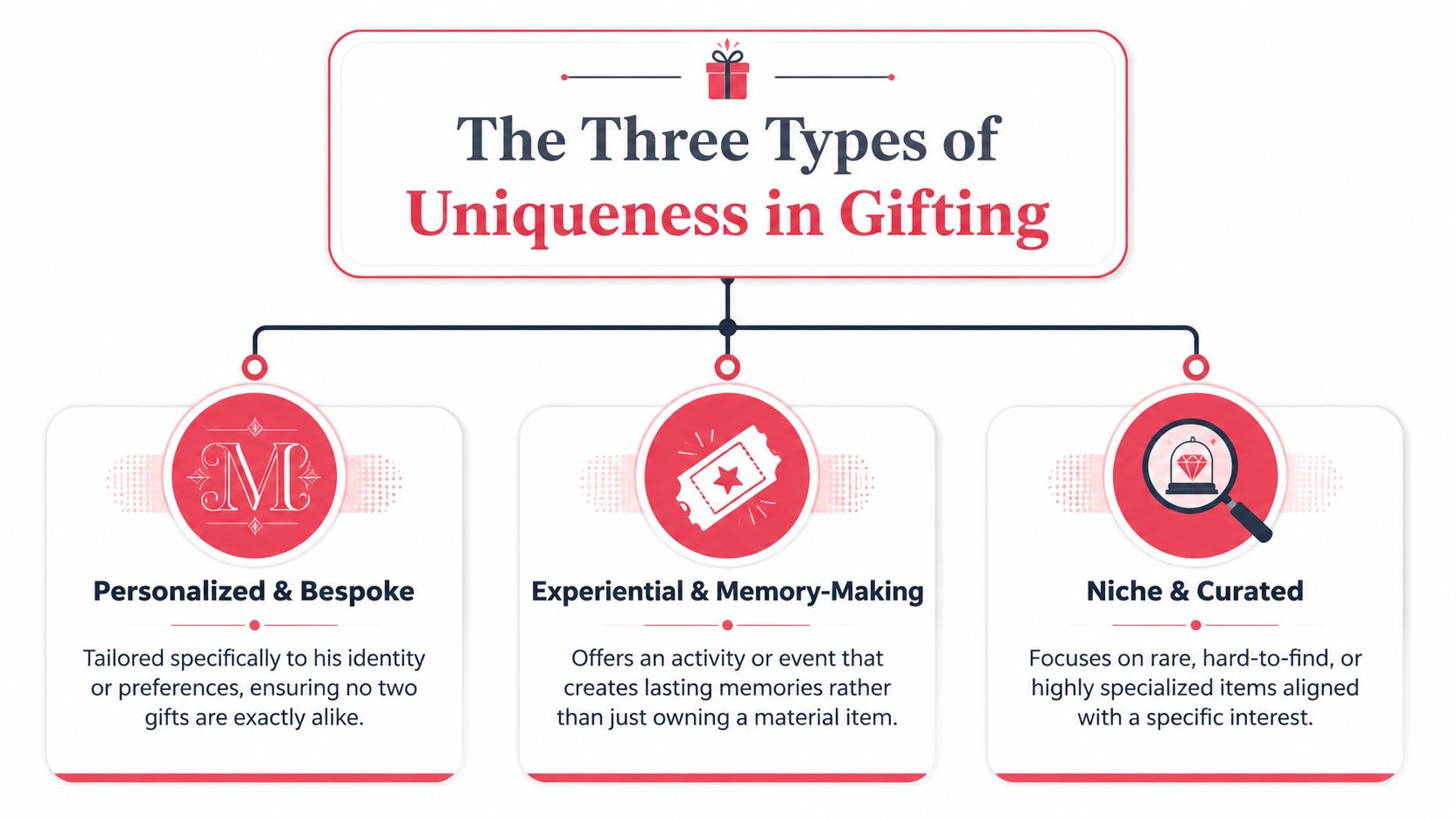
Practical uniqueness
This is the gift that earns its place through repeated use.
A practical gift isn't boring when it's chosen well. It's unique because it solves a recurring annoyance in a cleaner, smarter, or more enjoyable way than what he already has. Think of organization tools that reduce friction, portable gear he carries, or home items that improve a routine he repeats every day.
Practical uniqueness works best for men who value efficiency, reliability, or craftsmanship over surprise.
A quick test helps here:
| Question | If the answer is yes |
|---|---|
| Will he use it every week? | It's likely practical value |
| Does it replace something annoying or outdated? | It may feel meaningfully useful |
| Would he buy this for himself eventually? | You're helping, not cluttering |
Emotional uniqueness
A gift becomes a story.
An emotionally unique gift says, "I know what matters to you." It may reflect a shared memory, a family milestone, an inside joke, a personal transformation, or a relationship moment that no mass-market item could capture. These gifts often last because they hold information, not just function.
Practical rule: If a gift could be handed to almost anyone and still make equal sense, it probably isn't emotionally unique.
Examples include a custom story, a framed memento, a carefully assembled memory box, or something personalized in a way that reflects his actual life rather than just adding initials.
Social uniqueness
Some gifts stand out because they spark conversation.
This type of uniqueness is about novelty, taste, and presence. It's the gift he shows friends, puts on display, brings out at gatherings, or uses as a talking point. Social uniqueness isn't fake or superficial by definition. It plays a different role. It helps him express identity outwardly.
That can work well for the collector, the host, the stylish dresser, or the hobbyist who enjoys rare and curated things.
The key distinction people miss
Many shoppers confuse novelty with meaning. They're not the same.
A weird gadget may be new but forgettable. A plain-looking item may be very personal. When you're shopping for unique Christmas gifts for men, your task isn't to avoid normal things at all costs. It's to decide whether he most values daily usefulness, emotional depth, or social distinction.
Once you know that, the shopping process gets much easier.
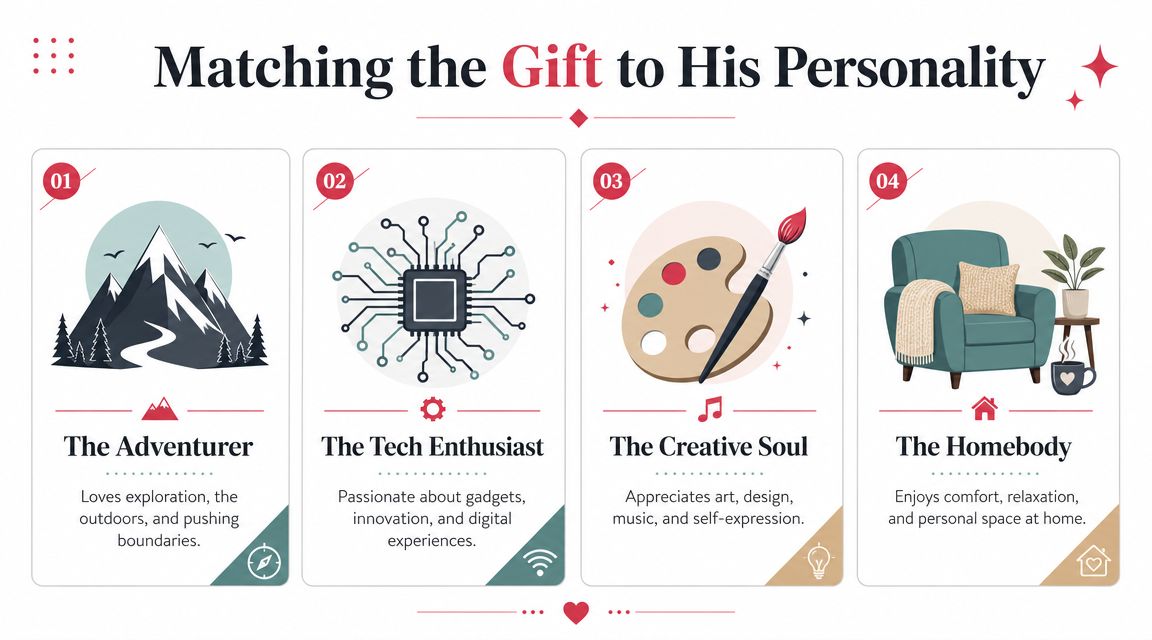
Matching the Gift to His Personality
A gift lands better when it matches how he moves through the world. Personality matters more than category. Two men can both enjoy technology, but one wants function while the other wants play. Two men can both enjoy home life, but one wants comfort while the other wants sentiment.
Broad "gift ideas for men" lists tend to flatten people too much.
The tinkerer and techie
For men who like systems, tools, gadgets, and optimization, practical uniqueness usually wins.
As Esquire's men-with-everything gift guide reflects through its emphasis on tech, electronics, and gear, this part of the market values items that combine utility, portability, and repeated use. That's why a good decision rule is to judge these gifts by feature density per dollar rather than novelty alone.
Look for gifts that do at least one thing clearly better than the cheap version he already owns.
- Charging and power needs matter if he's always on the move
- Organization tools make sense if his desk, car, or bag is a controlled mess
- Durability and portability matter more than visual flair for everyday carry
If you're unsure, ask yourself whether the gift reduces friction in his day. That's often what this personality type values most.
The storyteller and sentimentalist
Some men don't ask for sentimental gifts, but they keep them the longest.
This personality type values emotional uniqueness. He likes objects with context. Family history, travel memories, private jokes, and milestone moments all carry weight here. If he tends to retell stories, keep old ticket stubs, save photos, or display meaningful objects, don't default to a gadget just because it feels safer.
What resonates most is often something that says, "I noticed this mattered."
A useful gift improves a routine. A meaningful gift preserves a moment.
The adventurer and outdoorsman
This type can lean practical, social, or both. The deciding factor is how he talks about his interests.
If he talks about performance, durability, and preparedness, buy for utility. If he talks about the identity of the hobby, the places he's been, or the experiences he wants to collect, then the gift may work better as a memory-maker or a conversation piece.
Try this comparison:
| Personality cue | Better gift direction |
|---|---|
| He loves gear specs | Practical uniqueness |
| He loves the stories from the trip | Emotional uniqueness |
| He loves showing people his latest find | Social uniqueness |
The connoisseur and hobbyist
This person is often the hardest to shop for because he already knows the category better than you do.
Don't try to out-expert him with a random purchase. Either go very specific within his niche, or move outside the object itself and choose something that reflects his identity more personally. Hobbyists often appreciate curation, but they also appreciate being seen accurately.
A gift doesn't need to be expensive to do that. It just needs to feel informed.
Vetted Gift Concepts That Deliver Real Uniqueness
A short list of good concepts is more useful than a long list of random products. The point isn't to cover every possible man. It's to show how a few gift types map cleanly to the three kinds of uniqueness.
For emotional uniqueness
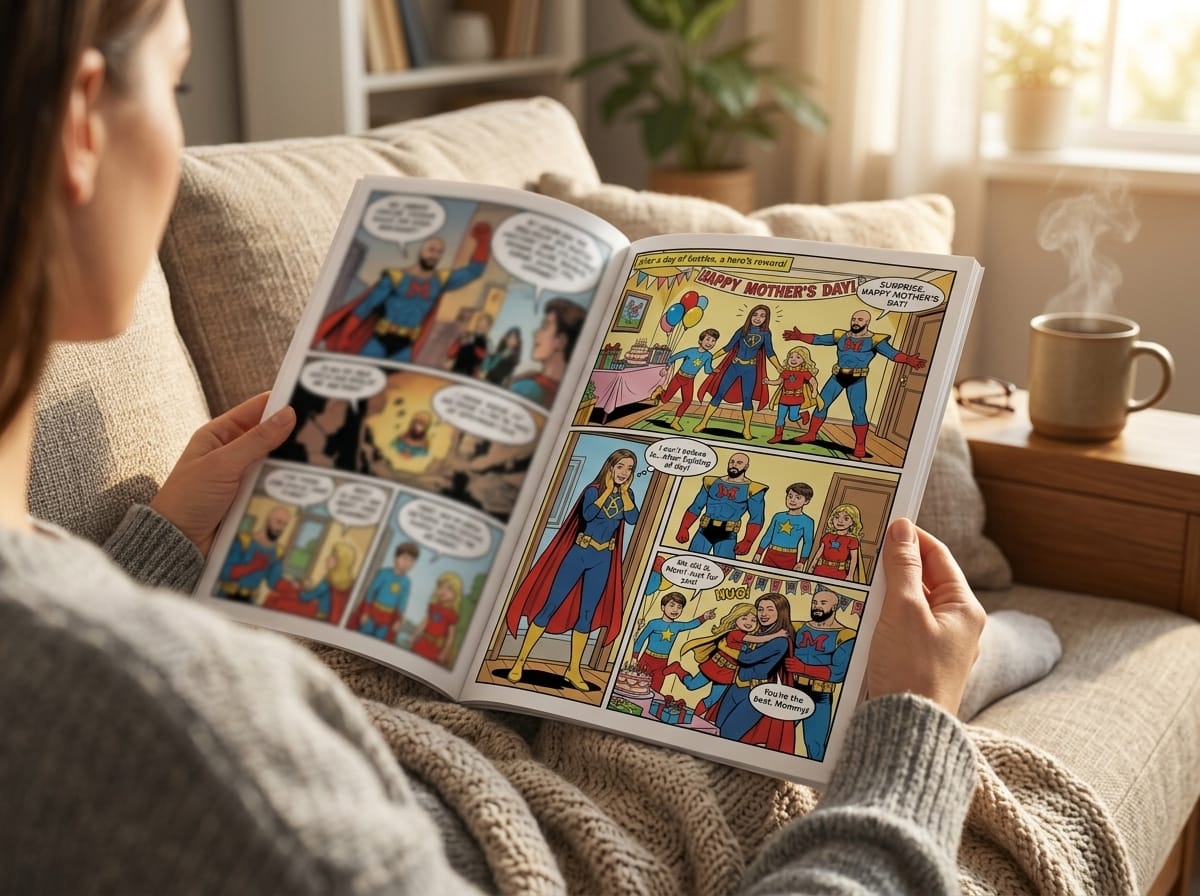
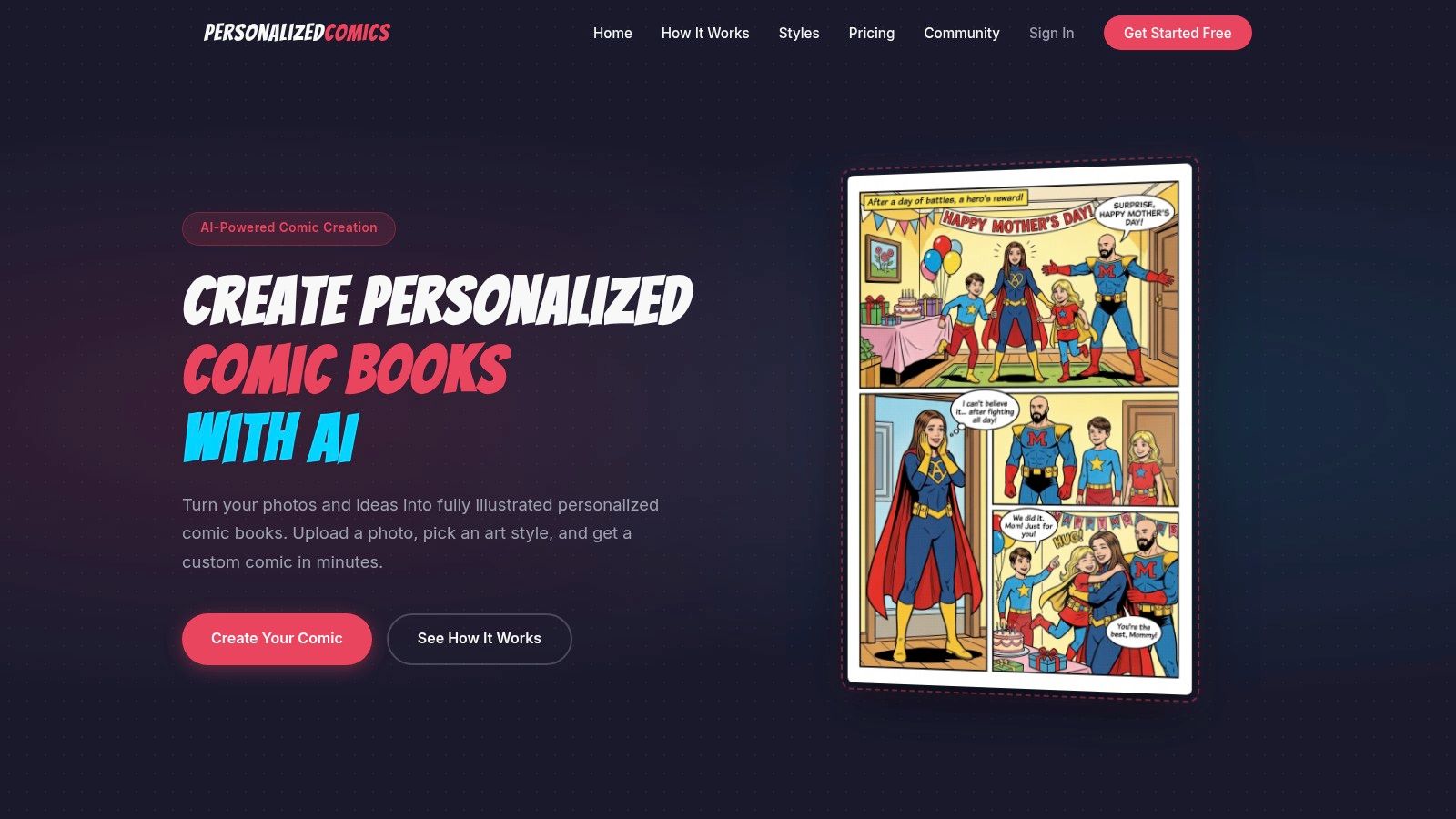
A personalized illustrated story works especially well when you want the gift to hold memory, personality, and shared history in one object.
A custom comic or illustrated narrative is stronger than a generic gadget in one important way. It creates recipient-specific utility. Instead of being a one-to-many product, it becomes a one-to-one artifact. Photos, milestones, private jokes, favorite settings, and meaningful people can all be folded into one story. That makes it harder to substitute and more likely to be kept.
One option in this category is PersonalizedComics' personalized gift ideas for him. The platform lets you turn photos and story ideas into a fully illustrated comic in different art styles, with both digital creation and a physical print option available. That's a good fit for the man whose best gifts are tied to identity, memory, or a shared narrative.
This kind of gift is especially useful when a normal product feels too generic but a fully handmade project isn't realistic for your schedule.
For practical uniqueness
The best practical gifts tend to answer a repeated need.
That doesn't mean "buy something useful" in a vague sense. It means identify the part of his day that has small, repeated friction. Maybe he always runs out of power. Maybe his travel setup is messy. Maybe he has tools, but no good way to organize or carry them. Maybe he likes cooking but hates guesswork.
The gift concept here is not "tech gadget." It's a tool that removes irritation from a routine.
A few strong examples of practical thinking:
- A charging-focused item if he travels, commutes, or works in multiple places
- A storage or organization upgrade if he has gear but no clean system
- A rugged daily-use tool if he values function over display
- A hobby support item that improves an activity he already does often
Notice what's missing: random novelty. If it won't be used again after Christmas week, it's probably not practical uniqueness.
For the man who doesn't want more stuff
Some men already own the standard categories. More gadgets won't help. More accessories won't help. Another bottle, blade, wallet, or multi-tool may just create clutter.
In those cases, the anti-stuff approach is often smarter. Give an experience, a class, a day built around his interests, or an object whose value is primarily memory rather than possession.
Good examples include:
- A workshop or lesson tied to a real interest
- A planned outing with a strong personal connection
- A sentimental custom item that earns display space because it tells a story
- A shared experience package presented in a thoughtful way
When he already has enough objects, uniqueness comes from relevance, not rarity.
For social uniqueness
Some gifts are successful because they fit his public identity. He may be a host, a collector, a style-conscious dresser, or the person who likes introducing friends to something unusual.
For him, good gift concepts often have one of these qualities:
- Display value
- Conversation value
- Taste value
That could mean a niche collectible, a beautifully designed item tied to a hobby, or something curated with obvious point of view. Here, originality matters, but only if it still feels coherent with who he is.
Planning Your Purchase Budgeting and Timelines
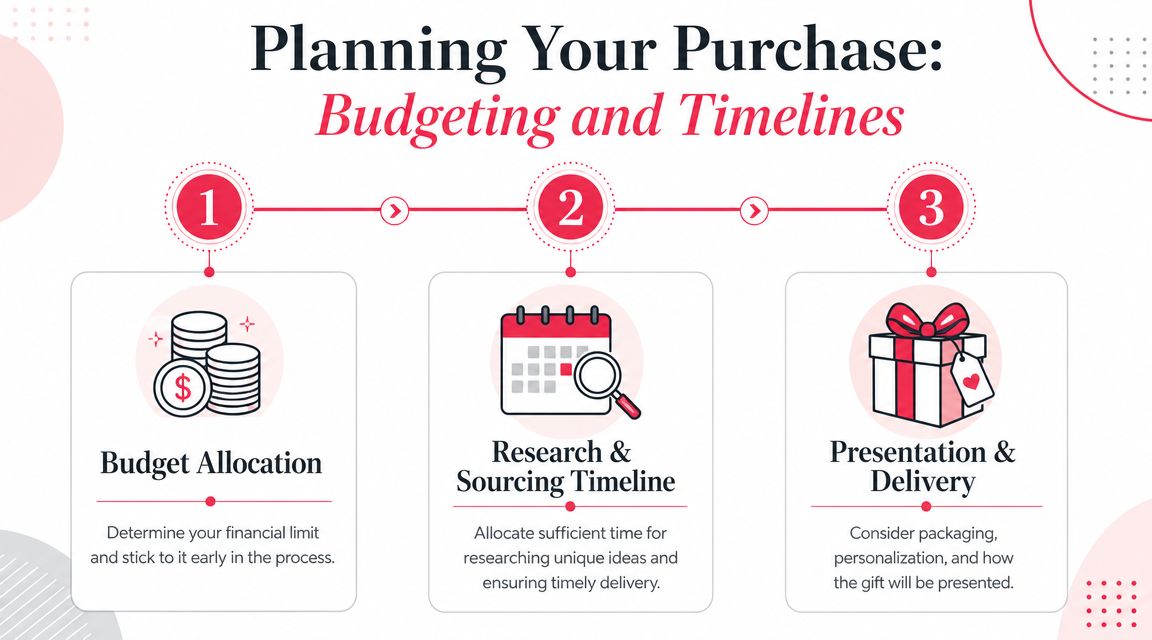
A thoughtful gift can fail for boring reasons. You wait too long. You skip the personalization details. You overspend on the object and forget the presentation. Good gift choices need a little project management.
The holiday shopping window has been intense for years. A useful benchmark is that during Black Friday 2014, UK internet sales reached £810 million in a single day, which was the highest online spend ever recorded in the UK at that time. The larger lesson still holds. Holiday buying compresses into a few peak periods, so planning early gives you more room for thoughtful choices, especially with customized gifts.
Budget by purpose, not by pressure
Instead of starting with a round number and shopping upward, start with the role the gift needs to play.
| Gift goal | Smart budget mindset |
|---|---|
| Solve a daily problem | Spend on durability and function |
| Mark a relationship or milestone | Spend on personalization and presentation |
| Avoid clutter | Spend on the experience itself or on how it's delivered |
This keeps you from overpaying for novelty.
Build a simple Christmas 2026 timeline
If you're shopping for Christmas 2026, give yourself more margin than you think you need.
- Early planning phase. Decide the type of uniqueness first. Practical, emotional, or social.
- Research phase. Compare a small number of strong options, not dozens.
- Personalization phase. Gather photos, names, dates, shared references, or sizing details.
- Order phase. Place custom orders earlier than standard retail items.
- Presentation phase. Wrap, frame, print, or package the gift in a way that suits the idea.
A personalized gift usually needs more than a quick checkout. You'll need time to choose details well.
What to gather before ordering
People often delay because personalization sounds bigger than it is. Usually you only need a few strong inputs.
- For custom story gifts gather photos, relationship moments, favorite phrases, and meaningful milestones
- For experience gifts gather schedule availability, comfort level, and whether he'd prefer private time or a shared outing
- For practical gifts gather the exact frustration you're solving, plus any compatibility or use-case details
Buy the gift early enough that you still have time to make it personal.
Presentation That Elevates the Experience
Presentation changes how a gift is received.
The same item can feel rushed or carefully considered depending on how you hand it over. This matters even more with unique Christmas gifts for men, because the whole point is that the gift feels chosen, not merely purchased.
A practical item benefits from context. If you're giving something utility-focused, include a short note explaining the problem you noticed it solves. That turns a functional object into evidence of attention. "You always travel with three chargers" is more meaningful than silent wrapping.
Emotional gifts deserve staging. A custom story, photo-based item, or keepsake shouldn't be stuffed in a generic bag if you can help it. Pair it with a frame, protective sleeve, storage box, or display stand so it enters his life as something worth keeping.
Experiential gifts need a physical reveal. Print the confirmation, write the plan by hand, or package the clue in a way that builds anticipation. If the gift is a class, trip, or outing, the presentation does part of the emotional work that a wrapped object usually handles.
A few easy upgrades make a big difference:
- Add a note that explains why you chose it
- Use themed packaging that connects to the hobby or memory
- Create a reveal moment instead of handing over a receipt
- Include one small companion item if the main gift is digital or experiential
People remember the feeling around a gift, not just the thing itself.
Conclusion Give a Story Not Just an Object
The best unique Christmas gifts for men usually fit into one of three lanes. They solve a problem, preserve a memory, or express identity in a visible way.
That sounds simple, but it changes everything. Once you stop chasing "different" for its own sake, you start making better decisions. You notice whether he values usefulness, sentiment, or novelty. You stop buying from category labels and start buying from understanding.
That's what makes a gift feel personal.
A thoughtful present doesn't need to be flashy. It needs to make sense for him. Sometimes that means a practical tool he'll use all year. Sometimes it means a keepsake that captures a chapter of his life. Sometimes it means choosing no extra stuff at all and giving an experience instead.
If you want one guiding principle, use this: give something that says, "I know who you are."
For more ideas on turning a meaningful memory into a present, this guide on how to create a book for a gift offers a strong next step.
Frequently Asked Questions About Gift Giving
What if my first-choice gift is out of stock
Don't replace it with the nearest equivalent just to check the box. Go back to the type of uniqueness you were aiming for. If the original was practical, find another item that solves the same repeated problem. If it was emotional, switch formats and keep the story. If it was social, find another item with similar display or conversation value.
How can I figure out what he likes without ruining the surprise
Use observation before interrogation.
Look at what he already uses, talks about, repairs, displays, or saves. Notice what he complains about. Notice what he repeats. If you need help from someone close to him, ask narrow questions instead of broad ones. "Does he already have a good travel setup?" works better than "What does he want for Christmas?"
Is a gift card ever okay
Yes, but only when it's still thoughtful.
A gift card works best when the category itself is the message. A niche hobby shop, a favorite local experience, or a place tied to an existing interest can still feel personal. A generic card to a huge retailer often feels like you outsourced the decision.
What if he says he doesn't want anything
Believe him partly, not entirely.
He may not want more objects. That doesn't mean he wouldn't value convenience, sentiment, or a shared experience. This is often where anti-stuff gifts work well.
How do I avoid buying clutter
Ask one blunt question before purchasing: does this gift deserve space in his life after December?
If the answer is uncertain, choose something consumable, experiential, or personal enough to justify keeping.
What if I don't have a big budget
Thoughtfulness scales down well. Price doesn't create meaning by itself. A simple gift with strong personal context often beats an expensive generic purchase. Clear intent, useful function, and careful presentation do a lot of the work.
If you want a gift that feels personal without making it yourself from scratch, PersonalizedComics offers a way to turn photos, memories, and ideas into a custom illustrated comic you can give as a keepsake. It's a strong fit when you want the present to tell a story, not just fill a box.
Filed under Gift Guides