That’s why a custom book works so well.
When you create a book for a gift, you’re not just assembling pages. You’re turning private memories, running jokes, old photos, and real relationships into an object someone can keep. The strongest version of that idea isn’t another generic photo album. It’s a narrative gift. A book that has a beginning, middle, and payoff.
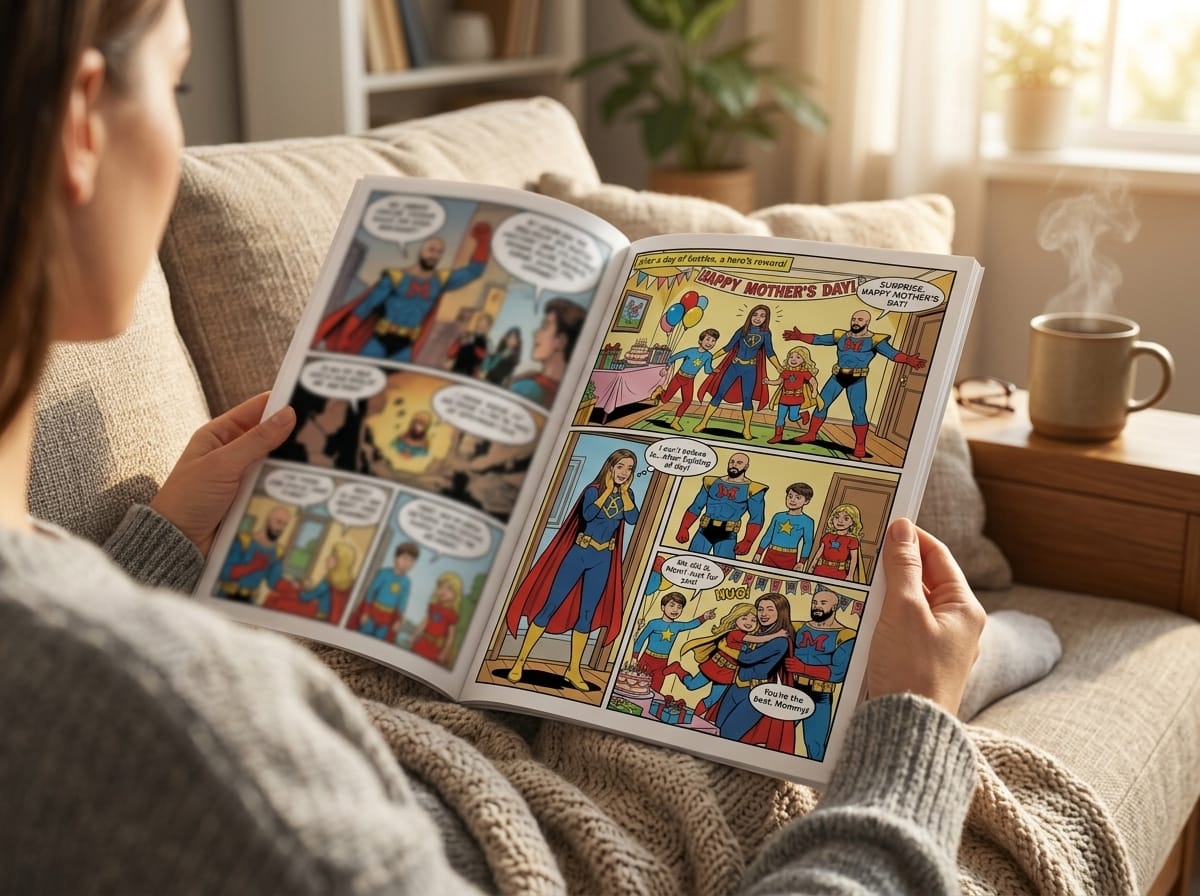
That’s where comic books have a real advantage. They let you tell a personal story with motion, dialogue, character, and style, even if you can’t draw. For gift-making, that changes everything.
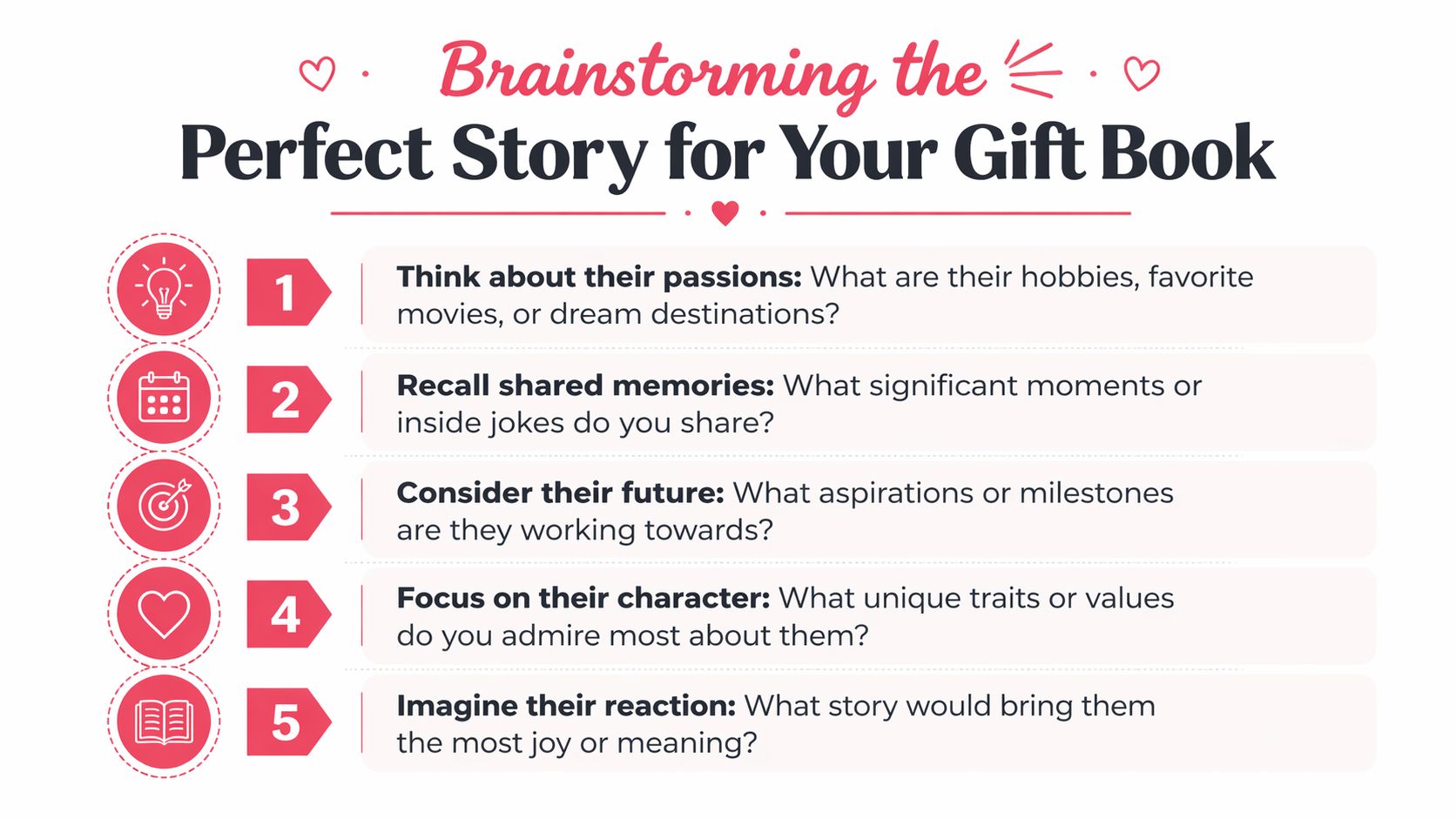
Brainstorming the Perfect Story for Your Gift Book
Most weak gift books fail before the design stage. The problem isn’t the cover or the paper. The problem is that there was never a clear story to begin with.
A good gift book starts with one question. What feeling should the recipient have when they reach the last page? Laughter works. Relief works. Nostalgia works. Pride works. If you know the feeling, the story gets easier to shape.
A lot of people begin with content. They open their camera roll, dump in favorite photos, and hope a theme appears. In practice, that creates a scrapbook without momentum. The better approach is to choose a core narrative first, then gather material that supports it.
Start with the emotional center
For an anniversary, the story might be “how we kept choosing each other through chaos.” For a graduation, it might be “all the versions of you that got here.” For a parent, it could be “the little things you did that I didn’t appreciate until now.”
That emotional center tells you what belongs and what doesn’t. A funny missed-flight story might be perfect in a travel comic gift, but wrong in a tribute book meant to honor someone’s resilience. Good editing starts here.
The larger personalized book category keeps growing because people respond to custom narratives, not just custom objects. The personalized story books for kids market reached USD 1.48 billion in 2024, and the 0-3 years segment held a 31.4% share, which shows how early people value stories that create emotional connection and support development, according to Growth Market Reports on personalized story books for kids.
Raw material worth collecting
Before writing anything, gather fragments. Not polished prose. Just usable pieces.
- Shared memories: The day you met, the trip that went sideways, the recurring family ritual, the one sentence everyone in the group still quotes.
- Visual material: Old photos, screenshots, ticket stubs, handwritten notes, scans of postcards, even a picture of a favorite hoodie or room setup.
- Character details: Habits, catchphrases, food orders, obsessions, fears, talents, and tiny quirks. These are what make a gift book feel written for one person only.
- Voice clues: Text messages, card inscriptions, and memorable things they’ve said. Don’t force exact quotes unless you know them. Capture the rhythm instead.
Practical rule: If a detail could apply to five other people, it’s too generic. Keep digging until the material feels unmistakably theirs.
Book types that work before you narrow to a comic
A gift book can take several shapes. Tribute books work well for milestone birthdays. Travel books suit a shared trip. Memory books work for family celebrations. A “future chapter” book can be lovely for graduations or engagements.
Then there’s the comic book version, which is often the strongest choice when the story includes movement, humor, conflict, or transformation. A comic can turn “remember that weekend?” into something cinematic. It can exaggerate the rainstorm, dramatize the airport sprint, or turn a pet into a sidekick without losing the emotional truth.
If you want examples of story concepts that adapt well to visual storytelling, this roundup of graphic novel ideas for personal storytelling is a useful prompt list.
A simple way to choose your angle
When I’ve helped shape gift books, the cleanest ideas usually fall into one of these lanes:
| Occasion | Story Theme Idea | Key Content to Include |
|---|---|---|
| Anniversary | How your relationship became its own world | First meeting, early awkwardness, turning points, private jokes |
| Milestone birthday | The legend of them | Signature traits, favorite settings, stories friends always retell |
| Graduation | The path behind and ahead | Early interests, setbacks, mentors, future dreams |
| New parent gift | Your origin story as a family | Before baby, anticipation, first days, hopes for the future |
| Friendship gift | The chaos that made the bond | Shared disasters, group traditions, screenshots, funny quotes |
| Memorial tribute | The habits and moments that remain | Daily rituals, sayings, values, favorite places, family memories |
What works and what doesn't
What works is a narrow frame. “The five times you accidentally became the hero” is stronger than “memories together.” “Our horribly organized family vacation” is stronger than “trip highlights.”
What doesn’t work is trying to include everything.
A gift book gets more meaningful when you leave material out. You’re not building an archive. You’re building a story. Pick one through-line and commit to it. If you have too much material, save the rest for a sequel, bonus pages, or an inscription at the end.
How to Turn Your Idea into a Comic Book Narrative
The comic format is frequently dismissed for one particular reason. The perception is that it requires drawing skills.
It doesn’t. The bigger challenge is narrative clarity. You need to know which moments deserve a panel, which lines deserve a speech bubble, and which details should stay in caption boxes instead of clogging the page.
That’s why comic gifts are so effective. They force you to choose. They turn a loose memory into scenes.
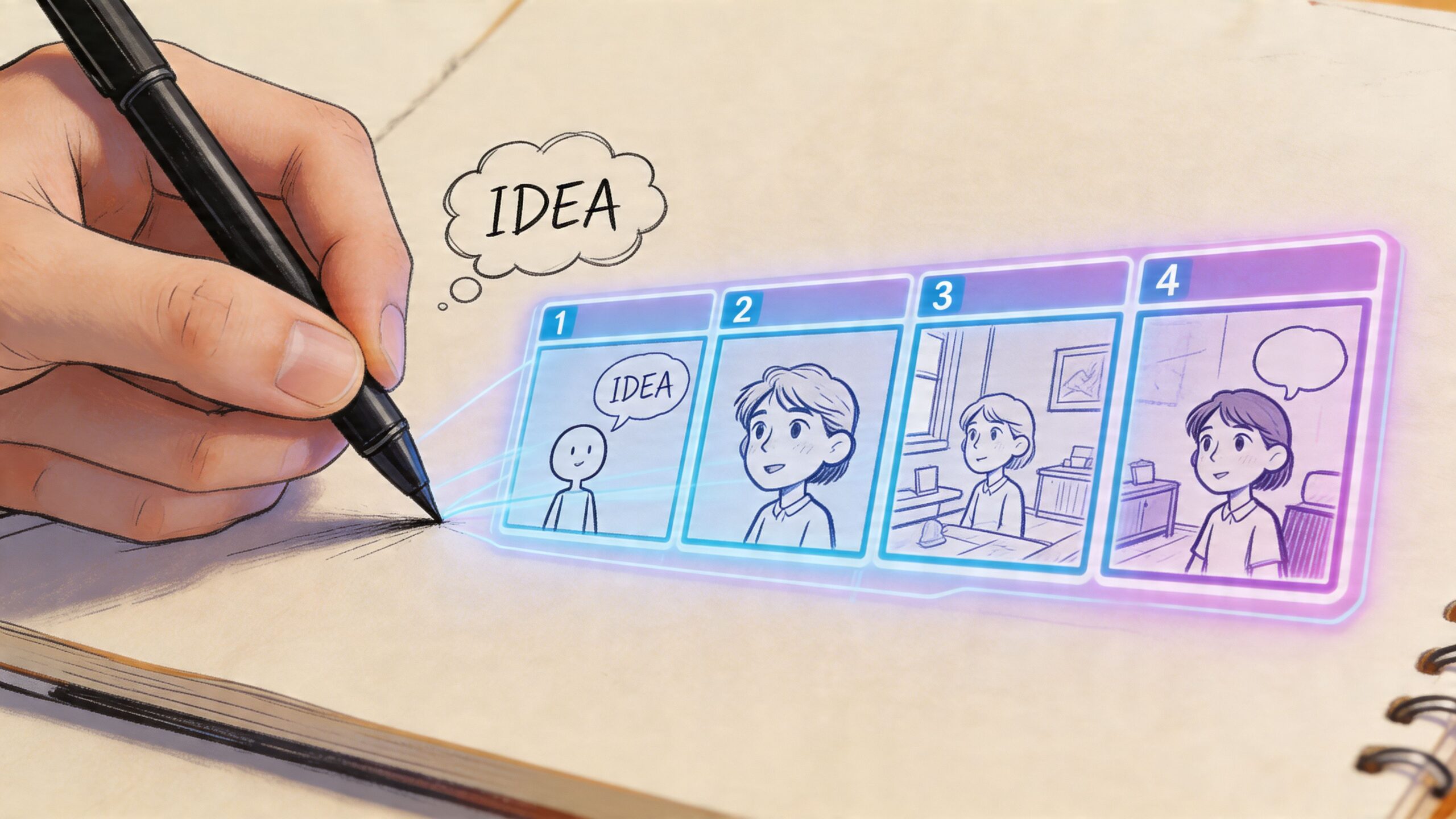
The demand is there, but completion often stalls at the art stage. Queries for “AI comic generators” grew 140% in the last year, while 65% of gift-givers want story-based books and only 12% complete them because of artistic barriers, according to Blurb’s discussion of creating a book as a gift. That gap is exactly why AI-assisted comic creation makes sense for non-artists.
Think in scenes, not pages
Start with the smallest useful unit. Not the whole relationship. Not the whole trip. One scene.
A comic scene usually answers one of these questions:
- Where are we?
- What changed here?
- What’s the funny or emotional turn?
- Why does this moment matter in the larger story?
If you’re adapting a family memory, pull out the beats. Arrival. Mix-up. Escalation. Recovery. Callback. That gives you structure before you touch the visuals.
A strong gift comic doesn’t retell every real event exactly as it happened. It captures what the memory felt like.
A practical scripting format
You don’t need screenplay software. A plain document works. Keep it scene-based and visual.
Use this structure:
Page goal
What should the page accomplish emotionally or narratively?Panel list
Describe the action in simple language.Dialogue
Keep it short. Speech bubbles get crowded fast.Captions
Use these for time jumps, context, or emotional framing.Reference material
Note the photos, locations, clothing, and props needed.
Example of a personal memory turned into a comic outline
Here’s a compact four-page outline based on a chaotic family vacation story.
Page 1
Goal: Set the trip up as overconfident and doomed.
- Panel 1: Family poses at the airport with too many bags and big smiles.
- Panel 2: Close-up of the itinerary, covered in highlights and notes.
- Panel 3: Parent says, “This trip is going to run like clockwork.”
- Panel 4: Kid drops a snack. Another family member realizes they forgot passports.
Caption: “We had a plan. The universe had other ideas.”
Page 2
Goal: Escalate the comedy.
- Panel 1: Everyone sprints through the terminal.
- Panel 2: Suitcase wheel breaks.
- Panel 3: Rain starts after arrival.
- Panel 4: Hotel clerk politely explains the booking issue.
Dialogue: Keep each bubble to one sentence. Let the visuals carry the chaos.
Page 3
Goal: Shift from disaster to bonding.
- Panel 1: Family eats convenience-store snacks on luggage.
- Panel 2: Someone starts laughing first.
- Panel 3: Rainy city street turns atmospheric instead of miserable.
- Panel 4: Group selfie under one tiny umbrella.
Caption: “That’s the part no itinerary can schedule. The moment the mess becomes the memory.”
Page 4
Goal: Land the emotional payoff.
- Panel 1: Family back home, retelling the story dramatically.
- Panel 2: Exaggerated fantasy panel showing them as action heroes surviving the trip.
- Panel 3: Quiet final shot of a printed photo on the fridge.
- Panel 4: Closing line from the recipient or narrator.
Final line: “Best terrible vacation we ever took.”
Dialogue that sounds natural on the page
People often overwrite comic dialogue. Real speech in comics should be tighter than real speech in life.
Use fragments. Interruptions. Reactions.
Good:
- “You brought six chargers.”
- “And somehow not the right one.”
- “We’re making memories.”
- “We’re making a situation.”
Less effective:
- “I believe this family vacation is rapidly becoming more difficult than I had originally anticipated.”
What to include in your prompt or brief
If you’re turning memories into illustrated pages with an AI platform, include concrete details the system can visualize:
- Who appears in the scene
- Where it happens
- Mood and tone
- Important props
- Wardrobe clues
- Facial expression or action
- Any recurring visual joke
That last part matters. Recurring jokes make gift comics feel authored, not assembled. A lucky hat, a dramatic pet, a broken suitcase, a catchphrase. Repeat it once or twice and the book gains rhythm.
The best adaptation mindset
Don’t ask, “How do I document everything accurately?”
Ask, “How do I make this memory legible, funny, and moving in panels?”
That’s the shift that turns a pile of personal material into a real comic narrative.
Designing Pages and Personalizing Your Comic's Style
Once the story works, the visual choices do the heavy lifting. At this stage, many gift books either become polished or fall apart. Good design doesn’t mean decorating every inch. It means choosing a style that matches the story, then giving each page enough room to breathe.
The useful thing about modern comic-making platforms is that non-artists can work from templates, upload photos, and guide the look of the final pages without manually illustrating every panel.
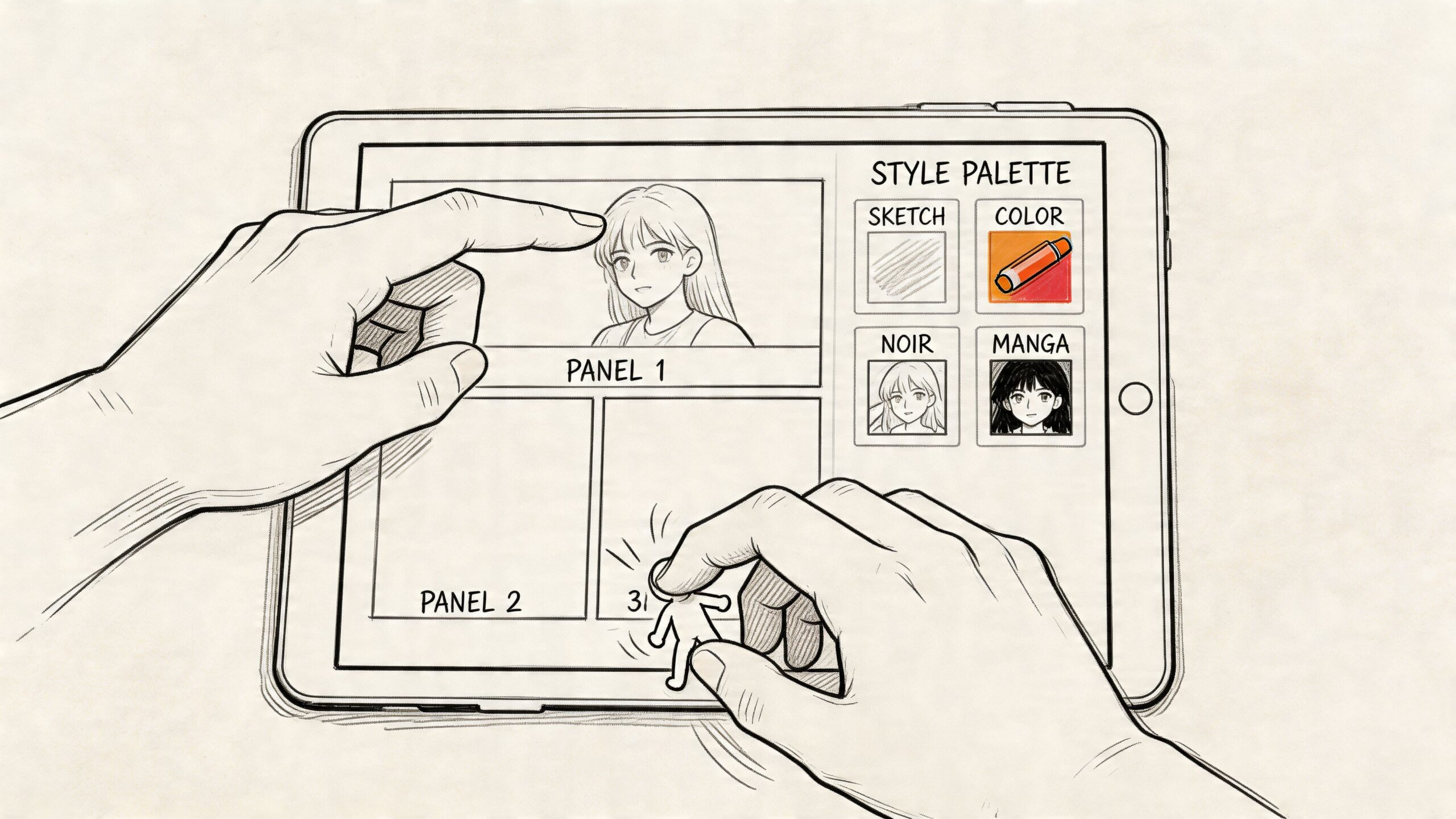
Planning before you enter the platform saves time later. User-friendly platforms see 60% faster project completion when users plan content beforehand. For clean results, use photos at a minimum of 300 DPI and avoid more than 5 to 7 design elements per page, because overloaded pages can increase abandonment by 35%, according to WonderWraps on how to create a book as a gift.
Match the art style to the emotional tone
Style is not decoration. It’s interpretation.
A romantic anniversary story can look soft and expressive. A sibling roast book might need bold comic exaggeration. A memorial tribute often works better with restrained color, less visual noise, and more spacious layouts. A fantasy-style makeover can be perfect when the recipient loves role-playing, cosplay, games, or genre fiction.
If you’re comparing visual directions, this guide to comic book style artwork and how different looks change the reading experience is useful for making the tone match the story.
Turning real people into comic characters
Gift comics become special because you’re not inventing generic heroes. You’re adapting real people.
Use photos that show:
- Clear facial features: Front-facing shots usually translate best.
- Consistent hairstyles or glasses: These small identifiers matter more than people expect.
- Typical expressions: If the recipient always gives a skeptical look or a huge open-mouth laugh, use that.
- Signature clothing or objects: A denim jacket, a chef apron, a camera strap, a red scarf, a guitar case.
You don’t need a perfect studio portrait. You do need visual consistency. If one scene shows someone with short hair and another uses a much older photo with a different look, the comic starts to feel unstable.
Design note: Character consistency matters more than hyper-detail. Readers forgive stylization quickly. They don’t forgive a main character who looks like three different people.
Page layout choices that improve readability
A comic gift should read smoothly on the first pass. If the recipient has to decode the layout, the emotional beat gets lost.
Fewer stronger panels
For most personal-story pages, fewer panels work better than crowded grids. Give the important moment room. A reveal, reaction shot, or emotional pause often deserves a larger panel.
Clear panel flow
Left-to-right and top-to-bottom reading should feel obvious. If a page needs arrows or visual rescue, simplify it.
Speech bubbles with restraint
Keep speech short enough to read at a glance. If a bubble covers the face or the punchline prop, rewrite the line.
Captions for context, not clutter
Captions are useful when you need to mark time, frame a memory, or add a reflective voice. Don’t use them to explain what the art already shows.
Common mistakes I see in DIY gift comics
Some design problems show up over and over.
- Too many visual ideas on one page: Background patterns, stickers, text effects, captions, sound effects, and extra photo inserts all competing at once.
- Every page built at the same intensity: If all pages shout, none of them land.
- Tiny text: What looked fine on a laptop becomes annoying in print.
- Style drift: One page is noir, the next is bright cartoon, the next is semi-realistic. Unless that shift is intentional, it weakens the gift.
A useful visual rhythm for beginners
If you’re new to comic pacing, alternate high-energy pages with quieter ones.
| Page type | Best use | Visual approach |
|---|---|---|
| Action or comedy beat | Chases, reveals, disaster moments, reactions | Larger gestures, stronger contrast, fewer words |
| Reflection beat | Letter-like moments, gratitude, transitions | Cleaner backgrounds, captions, softer expressions |
| Relationship beat | Shared glance, teamwork, callback joke | Medium shots, balanced panel spacing |
| Finale beat | Tribute ending, punchline, emotional close | One dominant panel plus a short final line |
What polished pages usually have in common
They make a few confident choices and repeat them consistently. One visual language. One readable text hierarchy. One clear character design. One emotional destination.
That’s enough.
When people struggle to create a book for a gift, they often assume the answer is more customization. It usually isn’t. The answer is more selectivity. Choose the right style, the right photos, and the right moments. Then stop adding.
Your Final Checklist for Production and Printing
A gift book feels finished long before it’s ready. That’s the dangerous part.
The last stage is where small mistakes become permanent. A typo in the closing line, a page in the wrong order, inconsistent clothing on the main character, muddy print files, or a weak binding choice can flatten an otherwise thoughtful project. Before you send anything to print, slow down and run a real quality check.
Story and page review
Read the book once for emotion, then once for mechanics.
On the emotion pass, ask whether the ending lands where you intended. If the gift is supposed to feel affectionate and funny, does the final page do that, or does it drift into summary mode? If the book is meant as a tribute, does the strongest line appear too early?
On the mechanics pass, check these items:
- Page order: Make sure reveals happen after setup, not before it.
- Names and dates: Verify spellings, especially on dedications and title pages.
- Dialogue clarity: Read every bubble out loud. If you stumble, rewrite.
- Character consistency: Hair, clothing, props, and facial cues should stay stable unless the scene changes in time.
- Image quality: Watch for pixelation, awkward crops, and dark photos that may print muddier than they look on screen.
Read the comic once on screen and once in a print-like view. Problems hide differently in each format.
Digital gift or physical copy
A digital version works well when you’re short on time, sending the gift long-distance, or planning a reveal over email or message. It also helps if you want multiple family members to see it immediately.
A physical copy has more presence. People hold it, flip back through it, leave it on a shelf, and show it to others. In gift terms, that matters. In the personalized gift market, high-quality handmade or professionally bound books can carry a 2-3x higher perceived value, and details like waxed thread and paper weights in the 80-120 GSM range contribute to durability and tactile quality, according to PaperCraftPanda’s handmade book gift tutorial.
If you’re comparing print decisions for a custom comic, this practical guide on how to print a custom comic book well covers the trade-offs clearly.
Print decisions that affect the final feel
You don’t need to obsess over every spec, but a few choices matter a lot.
Paper feel
Heavier stock usually feels more substantial in hand. For an intimate keepsake, that tactile quality changes how the recipient perceives the object.
Cover finish
Gloss can make colors pop, especially for bright or playful comics. Matte often feels more refined for sentimental, literary, or tribute-style books.
Binding
Cheap binding weakens the gift. A book meant to be kept should open comfortably without feeling disposable. If you’re making a handmade version, proper materials and neat tension make a visible difference.
Last-minute checks worth doing
- Print a sample page at home: This catches tiny text and contrast problems.
- Inspect the first and last pages: Openings and endings get remembered most.
- Check bleed and margins: Don’t let speech bubbles drift too close to the trim.
- Leave yourself buffer time: Rush creates avoidable mistakes.
A custom comic doesn’t need to be flawless. It does need to feel deliberate. Strong production is what turns a charming idea into an object that looks gift-worthy the moment it’s unwrapped.
Presenting Your Book for a Memorable Reveal
The reveal changes how the gift is remembered.
If you slide the book across a table between other packages, the moment gets smaller than it should be. If you frame the handoff with a little intention, the same book can land with real weight. That doesn’t require theatrics. It requires pacing.
I’ve seen the best reactions come from presentations that hint at the story without fully explaining it. A simple wrap band that says “Issue One.” A box with a note that reads, “For the hero of this story.” A sleeve printed with one panel from the inside pages. Those choices create curiosity before the book is even opened.
Small presentation ideas that work well
- Write a front inscription: Keep it short and specific. Mention why this story mattered enough to make into a book.
- Add one physical clue: A train ticket replica, a photocopy of an old note, a tiny map, or a photo booth strip can tie the memory to the illustrated version.
- Control the first read: Ask them to open it while you’re there, or mark the first page with a ribbon if the opening spread matters.
- Use the title as part of the reveal: A good title can get the first laugh or first tear before they’ve read a word inside.
Sometimes the best move is to read the first caption aloud, then let them take over.
There’s a reason personalized gifts leave a stronger impression than generic ones. Data shows 80% of consumers are more likely to repurchase after a personalized experience, which speaks to the emotional bond that customized gifts create, according to MyGifteee’s personalized gift statistics roundup. In real life, that same principle shows up as attachment. People keep these gifts. They revisit them.
What not to do during the reveal
Don’t over-explain every page before they read it. Don’t apologize for what you wish were better. Don’t bury the book under unrelated gifts.
Let the object do its job.
A well-made comic gift already tells the recipient they were worth time, memory, and effort. The reveal should support that message, not interrupt it.
Frequently Asked Questions About Creating a Gift Book
How long does it take to create a book for a gift
It depends on the complexity of the story and how prepared you are before you start. A short comic based on one clear memory moves much faster than a book trying to cover years of events. If you already have photos, a scene list, and a sense of tone, the project gets easier quickly.
Do I need to be a writer to make a good gift book
No. You need selection and honesty more than literary skill. The best gift books don’t sound like novels. They sound like the relationship they came from.
What if I’m not artistic
That’s exactly why the comic format is newly practical for more people. You can focus on scenes, dialogue, and visual references instead of hand-drawing every page. Your job is to direct the story well.
Is a comic book too playful for a meaningful gift
Not at all. Comics handle humor well, but they also handle tenderness, reflection, and tribute. The format is flexible. A comic can be silly, cinematic, quiet, romantic, or intimately personal depending on the pacing, art direction, and final lines.
How many memories should I include
Fewer than you think. One strong through-line beats a crowded collection. If you have lots of good material, pick the best arc and let the rest support it in small callbacks, back matter, or the dedication.
What makes a gift book feel professional instead of homemade
Consistency. Matching style, readable text, controlled page layouts, and a clean print finish do more than decorative extras. Professional doesn’t mean formal. It means intentional.
Should I make it funny or sentimental
Choose the mode that feels most natural to your relationship, then add a touch of the other. Funny books benefit from one sincere moment near the end. Sentimental books benefit from one human, disarming joke. That contrast keeps the gift from feeling flat.
What’s the biggest mistake beginners make
They confuse personalization with accumulation. More photos, more stickers, more captions, more stories, more design elements. The result is often less moving. The recipient won’t remember how much you included. They’ll remember whether the book felt like it understood them.
Is print worth it if I already have a digital version
Usually, yes, if the occasion matters and timing allows. A screen version is convenient. A printed book feels like a finished gift.
If you’re ready to turn memories, photos, and inside jokes into a polished comic without drawing everything by hand, PersonalizedComics is a smart place to start. It lets you build story-driven comic books from your ideas and images, choose from eight distinct art styles, and create premium physical copies without a subscription. For gift makers who want something more narrative than a photo album, it’s one of the clearest ways to make a book people will keep.
Filed under Gift Guides