Your 2026 Guide: How Much Does It Cost to Ship a Comic Book?
Shipping a single comic book can cost anywhere from about $4 for the slowest domestic option to over $20 for international shipping. For most U.S. sellers mailing one raw comic, the practical range is usually $4.13 to $6.75, and the price climbs fast if you want quicker service, stronger packaging, or you're shipping a graded book.
That's the first question on many minds. Then reality kicks in. You've got a comic on the table, a buyer waiting, and a small but important decision to make: do you ship as cheaply as possible, or do you spend more to reduce the chance of damage, delays, or a frustrated message later?
That decision matters more with comics than with ordinary paper goods. A reader copy can survive a basic low-cost approach. A clean back issue, signed issue, or slabbed book needs more caution. If you're mailing your own printed project, that choice matters too, especially if you've already put effort into creating and printing your own comic.
Your Comic Is Ready to Ship Now What
The usual first-time shipping moment looks the same. You sleeve the comic, put it on the desk, open a carrier site, and immediately get hit with too many choices. Media Mail. Ground Advantage. Priority Mail. Flat rate packaging. Insurance. Tracking. Suddenly the question isn't just how much does it cost to ship a comic book. It's which choice fits this specific comic.
Start with the comic, not the carrier
A cheap modern issue going to another state doesn't need the same treatment as a key issue headed across the country. New shippers often reverse that logic. They pick the cheapest postage first, then try to make the comic fit the method.
That's backwards.
The better approach is to ask four quick questions:
- What is the comic worth to the recipient? A sentimental gift and a filler issue can't be treated the same.
- How much protection does the package need? Raw books and graded slabs behave very differently in transit.
- How far is it going? Domestic shipping gives you simpler choices. International shipping adds more risk and more paperwork.
- How upset would you be if it arrived bent? That answer usually tells you whether the cheapest option is the right one.
Practical rule: If replacing the comic would annoy you, cost you money, or create a customer service problem, spend more effort on packaging before you spend more on postage.
Cheap shipping can be expensive in the wrong situation
A lot of beginners fixate on postage alone. Experienced sellers know the actual cost is postage plus materials plus the chance of something going wrong. A stiff mailer with proper support often saves more money than chasing the absolute lowest label price.
That's why the best shipping choice is rarely “the cheapest service available.” It's the service that matches the comic's value, the destination, and your tolerance for risk.
The Key Factors That Determine Your Shipping Cost
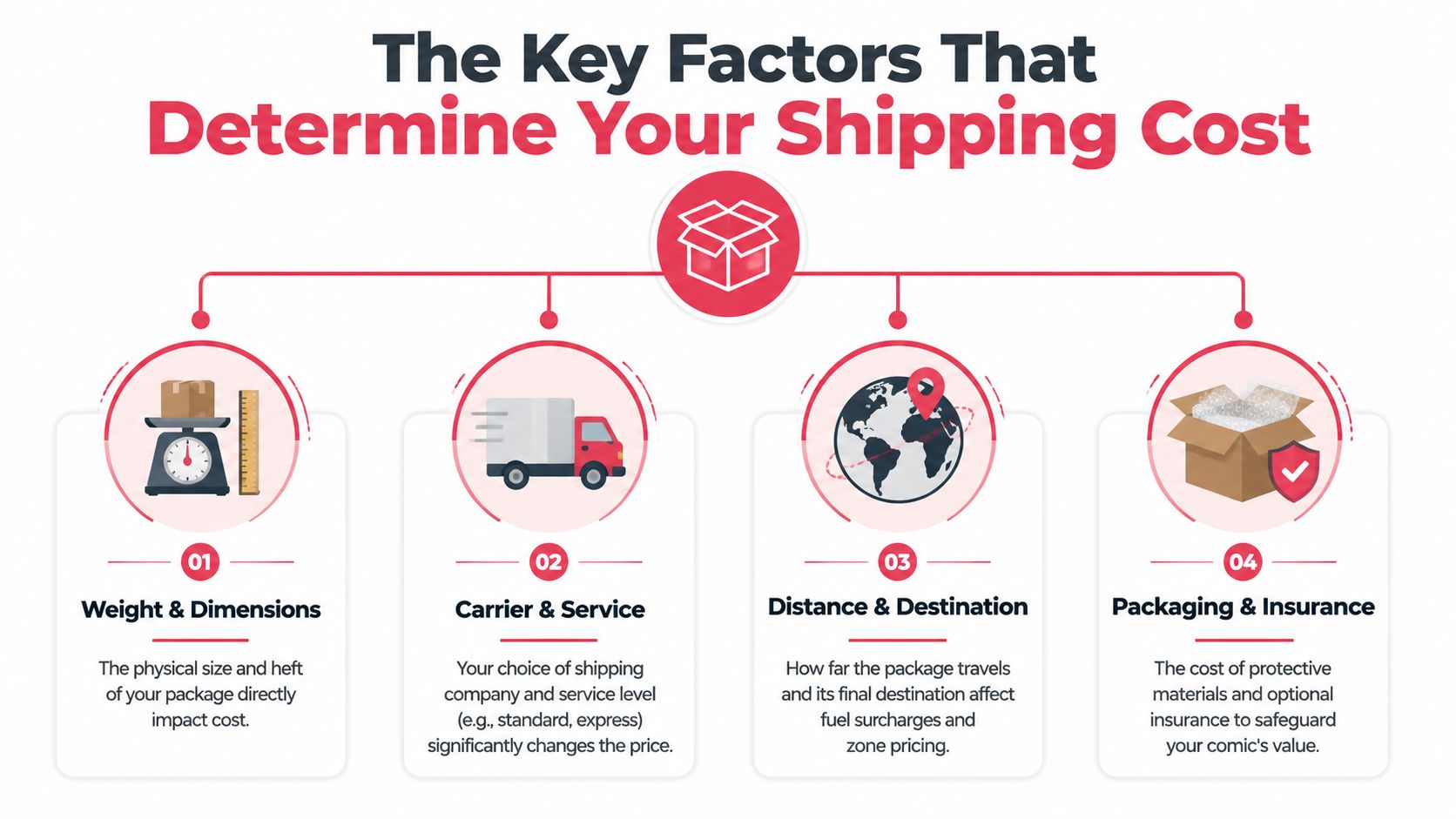
A comic shipment gets expensive in small, easy-to-miss ways. The book may cost little to mail by itself, but the full package includes the mailer, stiffeners, label, service choice, distance, and sometimes insurance. That total matters more than the base postage line.
Weight and dimensions
Comic sellers usually get surprised by packaging weight, not comic weight. One raw issue feels light in your hand. Add a bag, board, extra cardboard, a rigid mailer, and outer wrap, and the package can move into a higher price bracket faster than expected.
Size matters too. A package that stays flat and compact is easier to price and easier to protect. Once you use bulkier materials, the shipping method that looked cheap at first can stop being the best value.
That is why I tell new shippers to build the package first, then buy the label.
If you are mailing copies of your own work, especially after self-publishing a comic book, this becomes part of your margin. A small packaging change across multiple orders can add up fast.
Carrier and service
Service level changes the whole decision, not just the delivery speed. The right choice depends on what problem you are trying to solve.
A low-cost reader copy going to a patient buyer can justify a slower option. A cleaner back issue, a customer order, or anything that would be annoying to replace usually deserves a service with better tracking, faster delivery, or both. Spending a little more on the label can save you from refunds, returns, and damage complaints.
Use this as a practical filter:
- Budget first: best for inexpensive comics where speed is not a priority
- Balanced choice: best for routine orders where you want decent cost, tracking, and reasonable transit time
- Higher protection and speed: best for pricier books, gifts, or time-sensitive shipments
The cheapest label only works when the comic arrives exactly as described.
Distance and destination
Where the package is going changes both cost and risk. Domestic shipments are easier to estimate because the variables stay narrower. International shipments introduce customs forms, longer transit, and more chances for delay or rough handling.
Distance also affects how cautious you should be with packaging. A short trip in-state gives the package fewer opportunities to get bent, dropped, or exposed to weather. A cross-country or cross-border shipment needs more margin for error.
Packaging and insurance
Packaging is where experienced shippers save money the smart way. Good protection does not mean overpacking every order. It means matching the materials to the comic.
A raw modern issue can often ship safely in a rigid mailer with proper support. A higher-grade book may need stronger reinforcement. A graded slab needs more structure and padding because the case itself can crack or shift if the box takes a hit. Insurance is the same kind of judgment call. It makes more sense when the replacement cost would hurt.
Here is the breakdown:
| Cost layer | What changes it | Why it matters |
|---|---|---|
| Base postage | Weight, size, and service | Sets the carrier price |
| Protective materials | Mailer, cardboard, sleeves, padding | Reduces bends, corner wear, and crushing |
| Optional coverage | Tracking level and insurance | Helps protect higher-value shipments |
| Destination complexity | Domestic or international | Affects transit time, paperwork, and total cost |
Once you look at shipping this way, the price stops feeling random. You are choosing a level of risk, protection, and speed for that specific comic.
Comparing Your Top Domestic Shipping Options
You have a comic packed, labeled, and ready to go. The next call is simple on paper and easy to get wrong in practice. Do you save a couple of dollars, or do you pay more for better transit time and a little more peace of mind?
For domestic comic shipments, the usual choice is between USPS Media Mail, USPS Ground Advantage, and USPS Priority Mail. I would not treat them as a price list alone. Each service fits a different kind of book, buyer expectation, and risk tolerance.
When Media Mail makes sense
Media Mail is the budget-first option. If your shipment qualifies and the comic is a low-dollar raw issue, a reader copy, or a personal send where speed is not a concern, it can be the cheapest path.
That lower price comes with a clear trade-off. Delivery is slower, and many sellers are not comfortable using the cheapest service for a collectible item unless the value is modest. If the buyer is price-sensitive and the book is easy to replace, Media Mail can be a reasonable call. If either of those is not true, I would look at the next tier.
Why Ground Advantage is the default for many comic sellers
Ground Advantage is often the practical middle ground for single-comic orders. It usually costs more than the cheapest option, but not so much more that it scares off a buyer. For many sellers, that balance is the point.
This service tends to fit the widest range of shipments. A standard raw comic sold online, a small order going to a repeat customer, or a book that is not rare enough to justify premium postage often lands here. You are paying for a better balance of cost, speed, and buyer confidence.
If you are shipping books you created yourself, that same judgment matters. Fulfillment is part of the customer experience, especially if you plan to self-publish a comic book and ship direct to readers.
Buyers remember bent corners, cracked slabs, and late deliveries more than they remember saving two dollars on postage.
When Priority Mail earns the higher price
Priority Mail is the option to consider when the comic is worth more, the buyer wants it fast, or the order needs a stronger presentation. I use it more often for higher-value raw books, time-sensitive orders, and shipments where the customer has already paid enough that cheaping out on postage creates the wrong impression.
The key point is not that Priority Mail is always safer. Packaging still does the primary protection work. Priority makes more sense when speed matters and the order value gives you room to spend more on shipping without regretting it later.
USPS comic book shipping service comparison 2026
| Service | Estimated Cost | Delivery Speed | Best For |
|---|---|---|---|
| USPS Media Mail | Lower-cost option | Slower domestic service | Low-value raw comics where keeping postage down matters most |
| USPS Ground Advantage | Mid-range option | Standard domestic shipping | Most single raw comic shipments |
| USPS Priority Mail | Higher-cost option | Faster domestic shipping | Higher-value books, urgent orders, or buyers with faster-delivery expectations |
The best choice depends on the comic in front of you. A $5 reader copy and a $200 key issue should not ship the same way, even if they weigh about the same. Start with the book's value, then ask how much delay or damage would cost you.
Real World Shipping Cost Examples
The price spread gets real the moment you pack two different orders on the same day. One buyer pays for a $6 reader copy going three states over. Another buys a graded key issue headed across the country. The postage decision should not be the same for both.
One raw comic going to a domestic buyer
This is the first shipment many new sellers make. A single bagged-and-boarded comic usually stays light enough that the shipping choice comes down to two questions. How much is the book worth, and how upset will you be if delivery drags out longer than expected?
For a low-value reader copy, the cheaper option can make sense if your packaging is stiff and the buyer knows the delivery window may be slower. For a cleaner issue, a small key, or anything sold to a picky collector, Ground Advantage is usually the safer business decision. It often costs more than the cheapest route, but that extra spend can be easier to justify than dealing with a complaint over delays or rough handling.
I tell new sellers to match the service to the risk. If replacing the comic would be annoying but manageable, keep the cost down. If replacing it would hurt, spend a little more and reduce the chances of a bad outcome.
A small stack for one buyer
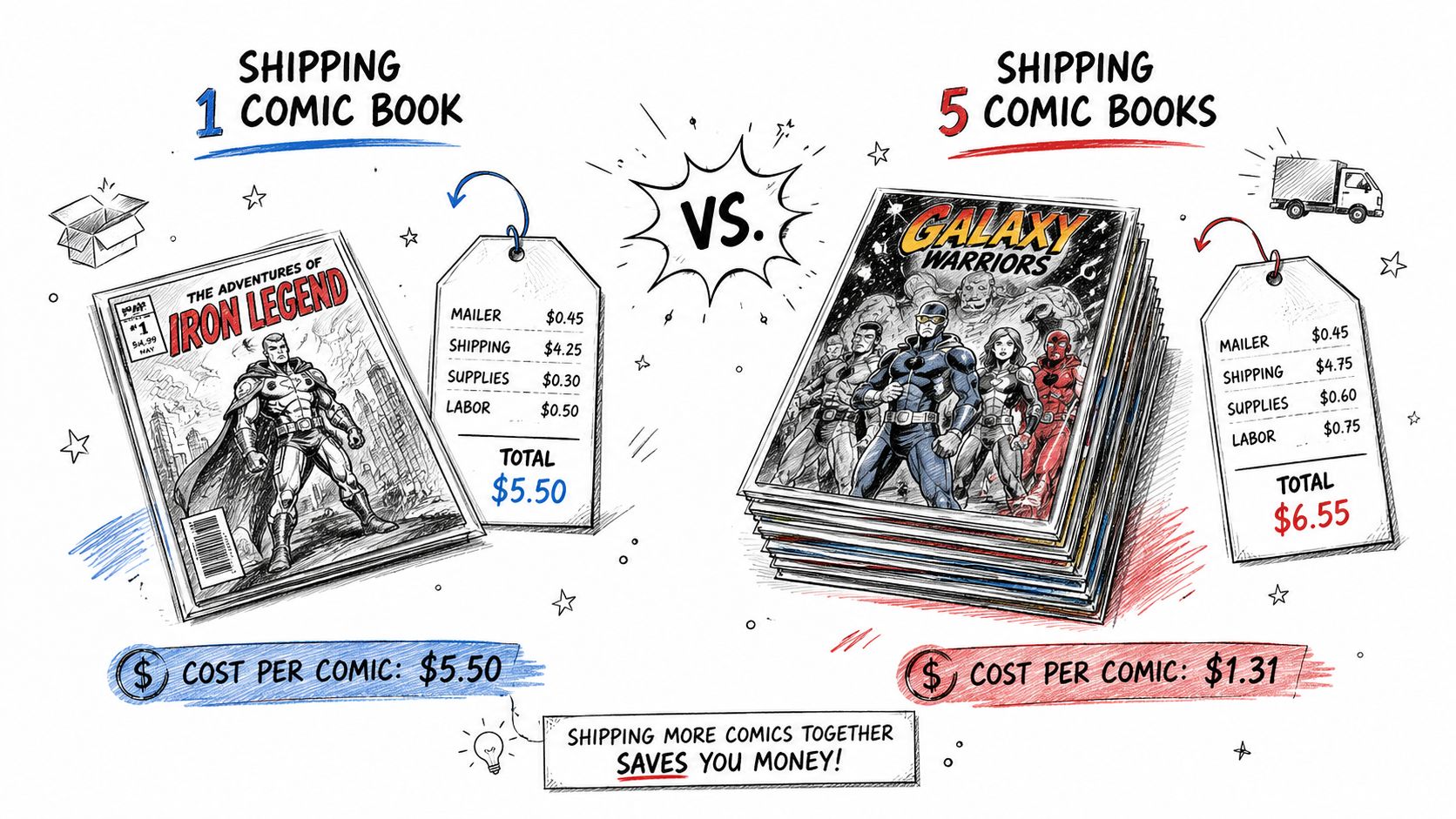
Shipping begins to work in your favor. Five comics in one well-packed shipment usually cost less per book than mailing five separate packages, even after you add thicker cardboard or a better mailer.
The trade-off is package size. As the stack gets thicker, your postage goes up and your packaging has to do more work to prevent corner blunting, spine stress, and shifting inside the box or mailer. Still, combined shipping is often the better call because one protected package is easier to manage than several cheap ones.
That matters if you sell themed bundles, short runs, or personalized books with collector appeal. If a buyer orders a custom issue along with standard comics, pack them as one protected order when possible, especially if the custom comic book cover adds presentation value you do not want damaged in transit.
One graded comic
A graded comic changes the math fast. The slab weighs more, takes up more space, and has hard edges that can crack or chip if the outer packaging gives way.
This is the shipment where undercharging hurts sellers most often. Raw-comic habits do not carry over well to slabs. A cheap mailer that works for a single floppy can become an expensive mistake once a graded case starts shifting around inside the package.
Build this order around protection first. Use padding that limits movement, keep pressure off the slab corners, and expect postage to land higher than a raw book shipment. For a lower-end slab, that higher cost may feel annoying. For a valuable graded book, it is usually the right trade.
If you're shipping a graded comic, build the package around impact protection first. Then choose postage.
Smart Tips for Lowering Your Shipping Costs
A new seller usually loses money on shipping in one of two ways. They underpack a comic and pay for the damage later, or they overpack a cheap book and let the postage eat the sale. The lower-cost choice is the one that protects the book well enough for its value, then stops.
Use packaging that fits the job
Match the package to the comic, not to your nerves.
A low-value raw comic can travel safely in a rigid mailer or a tight cardboard sandwich without a lot of extra bulk. A more valuable issue deserves better edge support, cleaner immobilization, and materials that keep the book from sliding around. Both approaches can be right. The mistake is using slab-level packaging for a $5 book, or bargain packaging for a book you cannot afford to replace.
If you sell gifts or collector-focused books, presentation also affects how the shipment feels when it arrives. That is one reason sellers put more care into projects with a custom comic book cover, even when the postage target stays the same.
Combine books when one package makes sense
Shipping one comic is expensive relative to its price. Shipping two to five together often works out better, as long as the stack stays secure and does not force you into oversized packaging.
That trade-off matters at checkout. If a buyer is considering another issue, combined shipping can be the nudge that closes the order. It also reduces your material cost per comic because you are building one protected shipment instead of several separate ones.
A few habits help:
- Offer combined shipping clearly: Buyers add more when they know you will not charge full postage on every extra book.
- Set free-shipping minimums carefully: The threshold should protect your margin, not just sound attractive.
- Pack by order value: A cheap reader lot and a high-grade collector bundle should not get the same packing treatment.
Watch the weight breaks
Small packaging choices can push a shipment into a higher rate tier. Extra cardboard, oversized mailers, and too much filler are common culprits.
This is one of the easiest places to save money without increasing risk.
Use enough rigidity to prevent bends and corner wear, then stop adding material. A well-cut mailer with snug support usually beats a larger package stuffed with padding. After a few shipments, you start to see where the waste is. That is how experienced sellers keep costs down without exposing the book to damage.
Navigating International Comic Book Shipping
A $4 domestic shipment can turn into a frustrating international order fast. You print the label, the package leaves on time, and the buyer still writes back asking why they owe extra fees before delivery.
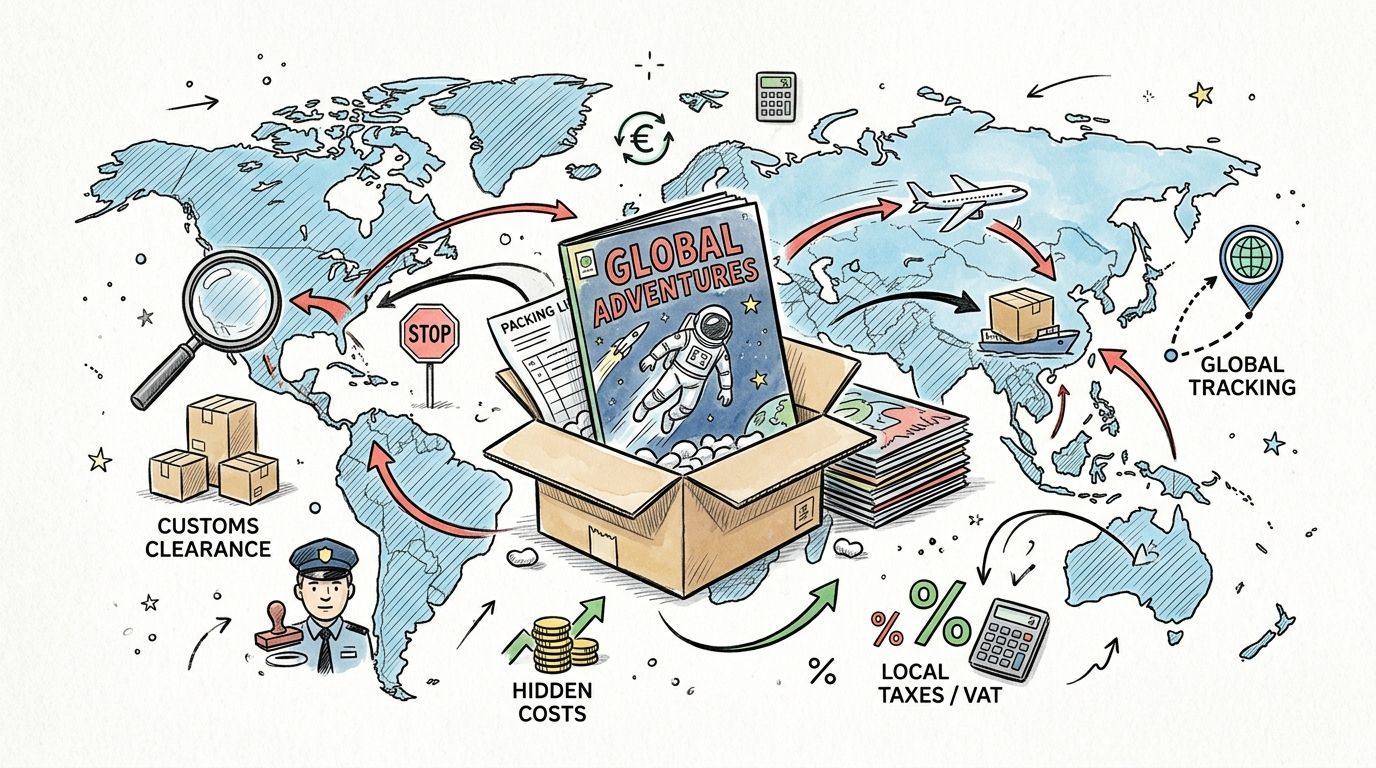
International shipping has more decision points than domestic shipping. Postage is only one part of the buyer's total cost. Customs declarations, taxes, import fees, tracking limits, and longer transit routes all affect whether the order feels reasonable or overpriced.
The first choice is not carrier. It is risk tolerance.
If the comic is a low-value reader copy, the goal is usually to keep total cost low enough that the buyer will still place the order. That often means lighter packaging, within reason, and a service level that balances tracking with affordability. If the comic is a higher-grade key issue, the calculation changes. A cheaper label is not a win if weak packaging, limited tracking, or a long handoff chain puts the book at risk.
Clear communication prevents a lot of problems. Tell the buyer exactly what your shipping charge covers. Tell them import taxes or local delivery fees may be collected in their country. Also write customs descriptions accurately. "Comic book" is better than a vague label, and the declared value should match the sale.
Packaging deserves more attention on international orders because the package gets handled more times. I use the same basic protection standard as domestic shipping, then add margin for the longer trip. That can mean a stronger mailer, firmer support boards, and tighter fit inside the package so the book does not shift during transit. The trade-off is simple. More protection adds weight, and more weight can raise the rate.
Combined orders often make international shipping feel more reasonable. One comic can look expensive to ship on its own. A small stack spreads that shipping cost across multiple books, as long as the package stays compact and well supported. That is usually the point where international shipping starts making more sense for both seller and buyer.
The best method depends on the order in front of you. For a cheaper comic going to a reliable destination, the right answer is often the most affordable tracked option that still gives the buyer realistic delivery visibility. For a valuable book, pay for better tracking, stronger packing, and enough insurance to cover a bad outcome.
If you set expectations early and pack for the full trip instead of the first leg, international comic shipping is manageable. The mistake is treating it like domestic shipping with a higher label price.
If you're making your own comic and want something worth shipping in the first place, PersonalizedComics makes it easy to turn photos and story ideas into a polished custom comic book without drawing skills. You can create pages in multiple art styles, order a physical premium copy, and build a one-of-a-kind comic that feels giftable, collectible, and ready for the mail.