From Scroll to Screen The Modern Manga Phenomenon
Manga feels modern because we often meet it in modern places. You see it on bookstore shelves, in school bags, in fan art, in cosplay, in anime adaptations, and in the way creators storyboard movement for webcomics and games. Even people who've never read a full volume usually recognize manga faces, action lines, or the right to left page flow.
That familiarity can hide something important. Manga did not appear all at once as a finished style. It grew through many creative decisions made by artists, printers, editors, and readers over a very long stretch of time. When people ask about the origin of manga, they're usually asking two different questions at once. They want to know where the visual storytelling came from, and they want to know when manga became the form we recognize on shelves today.
Those are not the same moment.
One answer lives deep in the past, in handscrolls and picture traditions that taught artists how to guide the eye through motion, gesture, and sequence. Another answer sits in the age of newspapers, magazines, and postwar publishing, when manga became a modern commercial medium with standardized page design and mass readership.
Manga is both ancient in its storytelling instincts and modern in its printed form.
That's why its pages feel so alive. A manga artist doesn't only draw a character. They direct attention. They control time. They decide whether your eye rushes through a fight scene or lingers on a silent expression.
If you've ever loved that sensation, the breathless turn of a page, the sudden close-up, the joke that lands in a tiny reaction panel, you're responding to a tradition with deep roots. And if you want to make comics yourself, studying those roots gives you more than trivia. It gives you tools.
Unfolding the Ancient Roots of Manga
A reader in medieval Japan held a paper scroll in both hands and revealed the story a little at a time. That physical motion matters. Before manga lived on printed pages or phone screens, Japanese artists were already teaching viewers how to follow action in sequence.
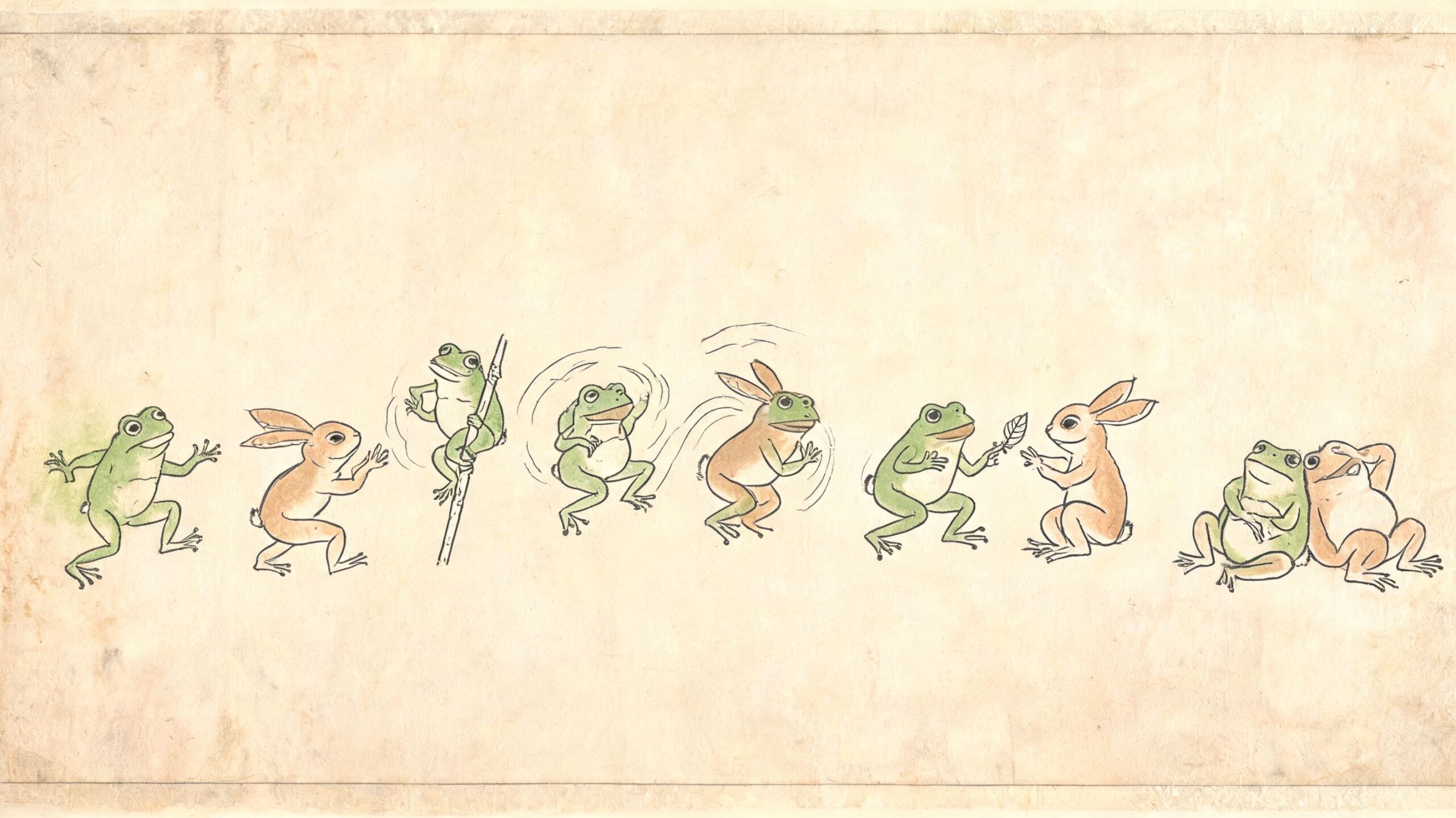
One of the clearest early examples is Chōjū-jinbutsu-giga, often translated as the Handscrolls of Frolicking Animals, created around the 12th and 13th centuries. Art historians return to these scrolls again and again because they show animals moving, teasing, chasing, and performing with a lively sense of timing.
Why a scroll matters
A handscroll does not look like a tankōbon volume, but it solves one of the same storytelling problems. How do you control what the viewer sees first, what they see next, and how long they stay with each moment?
As the scroll opens, the image unfolds in stages. The reader does not receive the whole scene at once. That delay creates rhythm. A joke can build. A chase can gather speed. A gesture can land with more force because the eye meets it at the right moment.
Film offers a useful comparison. A scroll works like a slow manual edit, with each newly revealed section acting like the next shot. If you want to make comics yourself, even with a tool like PersonalizedComics rather than a pen and brush, this lesson still applies. Good visual storytelling begins with controlled reveal. You decide what appears now and what waits half a second longer.
The early grammar of motion
Readers sometimes hear “ancient scroll” and picture a static illustrated manuscript. That misses what made these works so influential. Their importance lies in arrangement.
In seed form, several manga habits are already there:
- Expressive bodies that show emotion through posture and movement
- Sequential rhythm that carries the eye from one action into the next
- Comic exaggeration that makes behavior readable and funny
- Attention to ordinary life, not only heroic or religious subjects
These are practical tools, not museum trivia.
If a scene in your comic feels flat, the fix is often simple. Show change across images. A raised hand, a turned head, a stumble, a pause. Manga inherited that logic from artists who understood that movement lives between pictures as much as inside them.
Practical rule: To make a scene feel alive, ask “What changes from image to image?”
Edo period sketch culture and Hokusai
Centuries later, another strand of manga's ancestry grew through Edo-period visual culture. Ukiyo-e artists refined bold line, strong silhouettes, and scenes drawn from daily experience. Among them, Hokusai Katsushika matters for both vocabulary and attitude.
Hokusai popularized the term manga through his Hokusai Manga sketchbooks, published in the 19th century. In that context, the word referred to spontaneous or casually observed drawings, often described as “drawings caught on the spot.”
That phrase opens a useful door for modern readers. Hokusai's pages feel alert. He watches people work, stretch, laugh, travel, and interact with the world around them. The energy comes from observation.
What Hokusai contributed
His sketchbooks were not modern serialized manga, yet they helped shape habits that still define the medium.
His pages include:
- Scenes of daily life, treating ordinary people as worthy subjects
- Settings and environments, showing how setting supports character
- Mythic creatures and spirits, feeding a long tradition of the strange and fantastic
That range still feels familiar in manga. A story can move from school life to supernatural terror, from kitchen comedy to epic battle, without breaking its visual logic.
For creators, Hokusai offers a reassuring lesson. You do not need extraordinary subject matter to begin. Start by noticing. A hurried walk to class, a sibling's glare, the clutter on a desk. Even if you use PersonalizedComics to build scenes without drawing from scratch, the same principle holds. Observation gives images conviction.
A useful way to read the past
It is tempting to ask whether Chōjū-jinbutsu-giga was the first manga. A more useful question is, “Which older art forms gave manga its visual instincts?”
That shift clears up a lot of confusion. Manga did not appear in one sudden invention. It formed through a long chain of experiments in pacing, gesture, humor, and close observation.
That should feel encouraging to anyone who wants to create. Manga began with artists testing ways to make images move in the reader's mind. You can practice the same craft now, whether you sketch by hand or build your first comic with digital tools.
The Birth of Modern Manga After World War II
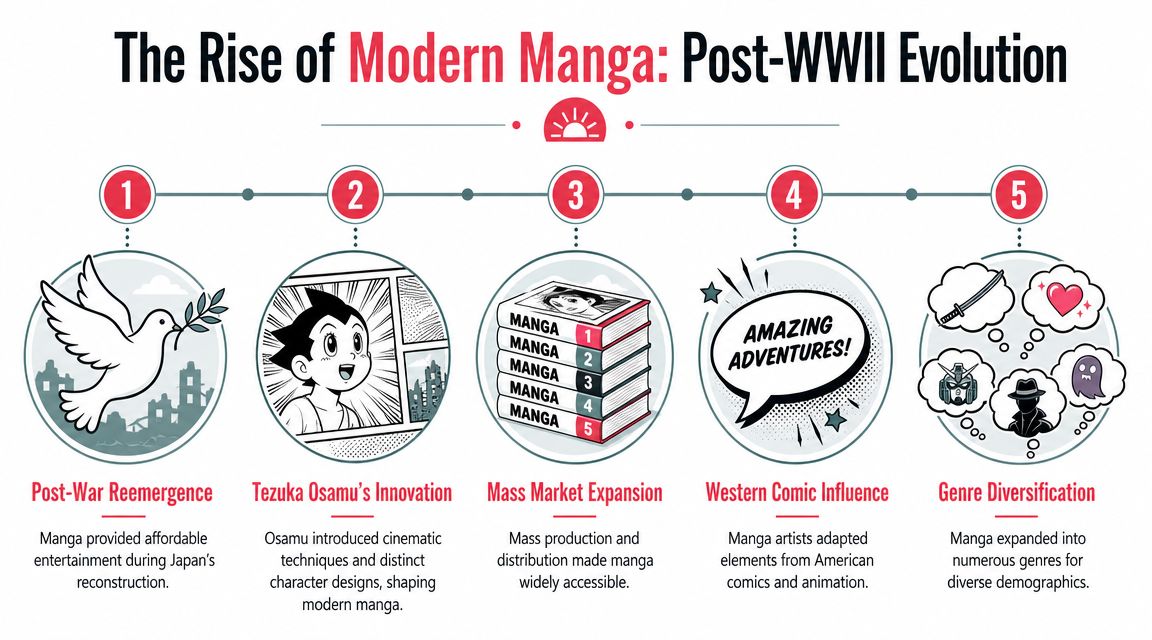
A child in postwar Japan could rent a comic for a few coins, carry it home, and enter a world far larger than the room around them. That scene helps explain why this period matters so much. Modern manga did not grow only from artistic talent. It grew from a country rebuilding its habits of reading, entertainment, and everyday imagination.
Before World War II, artists such as Rakuten Kitazawa had already pushed Japanese cartooning toward modern newspaper formats and recurring characters. After the war, those earlier experiments met new printing networks, wider readership, and intense demand for affordable storytelling. What followed was the form many readers now recognize as manga in the modern sense: serialized, fast-moving, emotionally direct, and designed for mass circulation.
A medium rebuilt in a changed country
Postwar Japan needed cheap, portable forms of entertainment. Manga fit that need beautifully. It could be printed widely, read quickly, shared easily, and enjoyed by children and adults alike.
Artists were also looking outward. Film, American comics, and animation offered new ideas about framing, pacing, and visual drama. Scholars at the Lambiek Comiclopedia entry on Osamu Tezuka note how strongly cinema and animation shaped his approach, and that influence mattered far beyond one creator. Manga pages began to act less like illustrated jokes in boxes and more like sequences that guided a reader through time.
That shift is easier to feel than to define. Older comics often present action as a series of snapshots. Postwar manga increasingly arranged images so the reader sensed movement between panels, much as a film viewer senses motion between frames.
Tezuka's breakthrough
No figure stands closer to this turning point than Osamu Tezuka. His 1947 work Shin Takarajima (New Treasure Island) is often treated as a landmark because it showed how comic pages could carry the momentum of a movie while still using the special strengths of drawn storytelling.
Tezuka used several techniques that became foundational:
- Close shots and long shots to control intimacy and scale
- Panel sequences that break action into beats so movement feels continuous
- Expressive character acting that makes emotion readable at a glance
- Scene construction influenced by film so readers feel placed inside the moment
For beginners, this can sound technical, but the effect is simple. A page no longer just reports that a character ran, hesitated, or panicked. The page makes you experience that rhythm.
That is one reason Tezuka still matters to creators today. He showed that manga style is not just a matter of drawing faces a certain way. It is a way of controlling attention.
Why readers felt the change
The true revolution was in how the page handled time, emotion, and motion.
A single look could stretch across several panels. A burst of action could accelerate through quick cuts. A quiet pause could feel heavy because the spacing around it invited the reader to linger. Manga became flexible in the way music is flexible. Tempo could change while the piece still held together.
This point helps clear up a common confusion. New readers often reduce manga to surface traits such as large eyes, black-and-white pages, or spiky hair. Those features vary across eras and genres. The deeper inheritance lies in pacing, framing, and emotional clarity. If you want to compare how visual styles shift across comics traditions, this guide to different comic art styles gives helpful context.
The magazine boom
Artistic change alone did not create modern manga. Publishing systems did a huge amount of the work.
As manga historian Frederik L. Schodt explains in Manga! Manga! The World of Japanese Comics, postwar magazine culture trained readers to follow stories over time, week after week, building habits of anticipation and discussion. Serialization changed what artists wrote because each installment had to satisfy in the moment and pull readers onward.
A weekly or recurring rhythm tends to reward:
- Strong chapter endings
- Characters readers can recognize instantly
- Clear panel flow
- Emotional turns that create anticipation
That pattern is still visible today. Many manga chapters end on a reveal, a decision, or a fresh problem because serialization taught artists to treat endings like magnets.
The modern manga system
By the time manga matured in the postwar decades, several pieces were reinforcing one another:
| Element | What changed |
|---|---|
| Page design | Artists used dynamic sequencing, shifting viewpoints, and stronger rhythm |
| Character acting | Faces and bodies carried more precise emotional cues |
| Publishing rhythm | Serialization built reader loyalty and shaped chapter structure |
| Audience range | Manga expanded across age groups and interests |
This matters for creators, not just historians. Modern manga emerged from practical decisions about how to guide a reader, sustain attention, and make stories memorable under real publishing conditions. Those are still the same problems comic makers solve now.
You can apply that lesson even if you do not draw by hand. Tezuka and his successors refined ways of pacing a reveal, framing a reaction, and ending a scene on tension. Tools such as PersonalizedComics let beginners practice those same choices through layout, sequencing, and story construction. The technology is new. The craft problem is old.
Decoding the Visual Language and Genres of Manga
You can enjoy manga without naming its mechanics, but the mechanics are what make it so readable. Manga has a visual grammar. Once you notice it, pages become easier to analyze and, if you make comics yourself, easier to build.
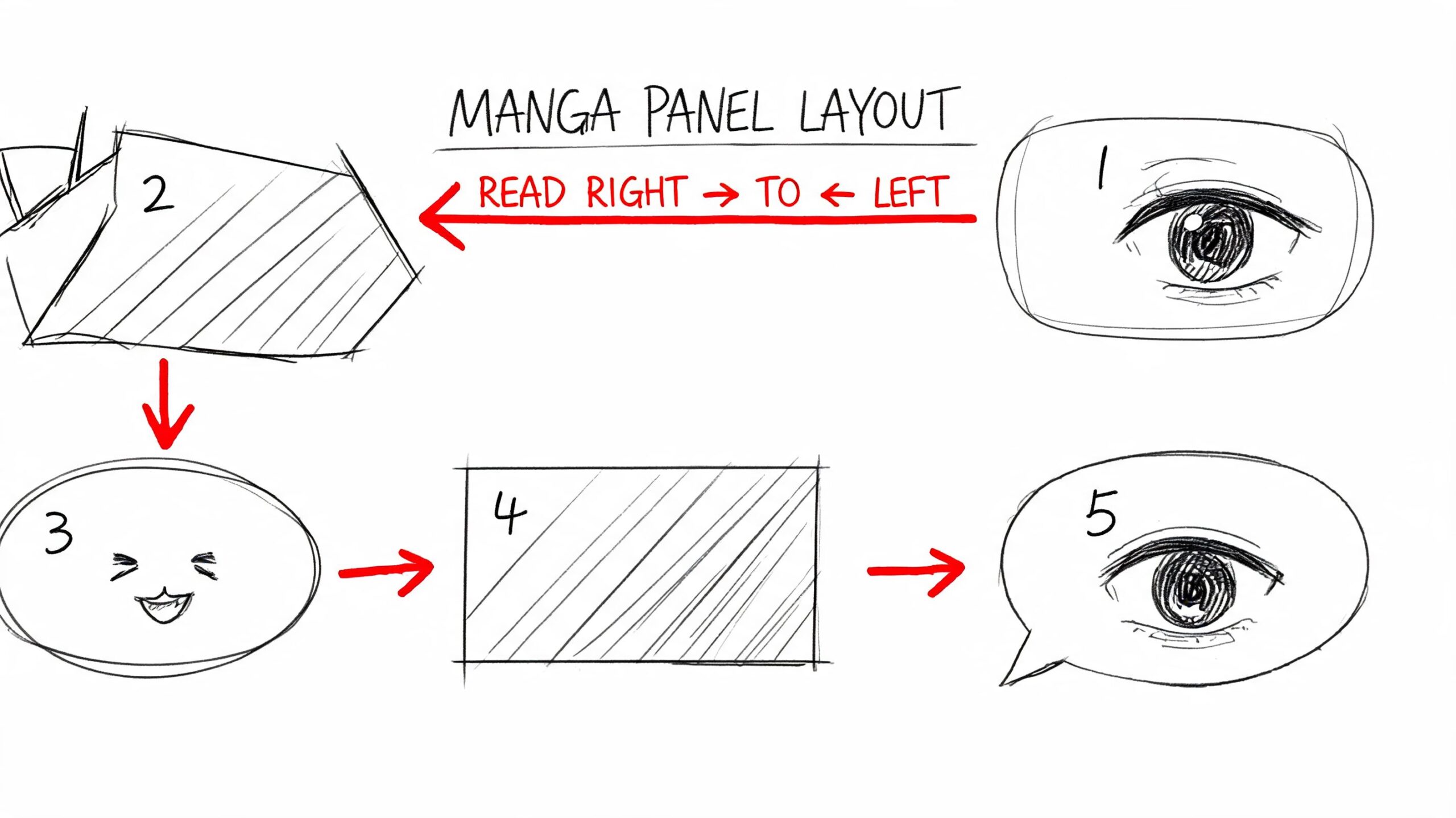
One of the first hurdles for new readers is orientation. Manga is typically read from right to left, and that affects panel order, page rhythm, and how speech flows across the page.
How the page guides your eye
A manga page doesn't just contain drawings. It tells your eye where to go next. Panel size, shape, and placement all affect the reading experience.
Here are some of the most useful cues to notice:
- Large panels slow you down. Artists often use them for reveals, emotional pauses, or moments of awe.
- Small panels speed things up. They're good for reactions, quick exchanges, or bursts of action.
- Diagonal or irregular compositions add intensity. The page feels less stable, which can heighten conflict.
- Open space can be dramatic. Empty areas give emotion room to breathe.
Many readers absorb these rules unconsciously. Creators can use them deliberately.
Symbols that carry emotion
Manga also uses visual shorthand. A sweat drop, a simplified shocked face, a sudden chibi reaction, or a burst of background lines can communicate mood faster than literal realism. These devices aren't signs of lesser art. They're efficient storytelling tools.
They work because they translate feeling into form. Instead of writing “she feels embarrassed,” the artist can show posture, expression, and visual tone all at once.
If you want to compare how manga differs from other traditions, this guide to different comic art styles is a useful companion. It helps clarify which choices belong specifically to manga and which belong to comics more broadly.
A good manga page doesn't decorate emotion. It structures emotion.
Genres and demographics
Readers also get confused by genre labels because many manga terms describe target demographics, not strict content categories. A battle series and a sports story can both belong to the same demographic space if they're aimed at similar readers.
Here's a practical overview.
| Genre | Target Audience | Common Themes | Art Style Hallmarks |
|---|---|---|---|
| Shonen | Young boys | Friendship, rivalry, growth, adventure | Energetic action, strong motion cues, expressive reactions |
| Shojo | Young girls | Relationships, self-discovery, emotional intensity | Elegant linework, decorative effects, emphasis on feeling and atmosphere |
| Seinen | Adult men | Psychological tension, work, politics, complex conflict | Heavier mood, varied realism, more controlled pacing |
| Josei | Adult women | Adult relationships, identity, daily life, career concerns | Nuanced expressions, grounded scenes, emotional subtlety |
These categories are helpful, but they aren't cages. Many readers cross freely between them, and many works blend conventions.
What style really means in manga
People often describe manga as if it has one look. It doesn't. The medium includes airy romance, rough action, dense realism, broad comedy, horror, slice of life, fantasy, and experimental work. What connects these isn't a single face shape. It's a family resemblance in storytelling habits.
That family resemblance includes:
- Attention to pacing
- Clear emotional signaling
- Strong control of viewpoint
- Purposeful sequencing from panel to panel
If you keep those four ideas in mind, manga becomes much easier to read and much easier to make.
How Manga Storytelling Conquered the World
A teenager in Paris watches an animated series after school, then goes looking for the comic it came from. A reader in Brazil borrows a translated volume from a friend and learns to follow panels from right to left. A creator with no drawing background studies the rhythm of those pages and realizes, "I can use this structure in my own story."
That is how manga spread. Not through a single breakthrough, but through repeated moments of discovery.
Manga moved across borders through television, translated books, fan communities, bookstores, libraries, and later digital platforms. Each route introduced a different part of the form. Screen adaptations often carried the first emotional spark. Printed manga taught readers how the page itself works, with pauses, reaction shots, compressed time, and sudden bursts of motion.
Gateways into global fandom
For many international readers, anime served as the first invitation. The characters, emotional intensity, and long-form arcs created attachment before readers ever picked up a volume. Once they did, many found that manga offered something slightly different from animation. The page lets you control tempo with your own eyes. You can linger on a silence, rush through an action sequence, or reread a facial expression that changes the whole scene.
Fan communities helped teach those reading habits. Friends explained visual symbols. Online forums shared recommendations. Local clubs and early scanlation circles gave readers a way to compare notes and build confidence with unfamiliar conventions.
That matters because comics are learned partly through community. A new reader rarely needs every symbol explained in advance. They need a doorway, a few guides, and a reason to keep going.
Why manga traveled so well
Manga adapts easily to different readers because its storytelling tools are flexible. The same visual grammar can support sports drama, romance, horror, cooking competitions, historical epics, office life, and quiet family scenes. That range gave publishers many entry points and gave readers many chances to find a series that felt made for them.
Its page design also travels well. Clear expressions, deliberate pacing, and strong scene-to-scene flow help readers follow emotion even when some cultural references need context. In art-history terms, manga carries local detail and broad readability at the same time. That combination is rare.
A helpful comparison appears in these comic strip classics from earlier newspaper traditions. Side by side, the contrast becomes easier to see. Many classic strips deliver a gag or beat quickly. Manga often stretches a moment, almost like a film editor adding extra frames so the feeling has time to settle.
Global readers adopted manga partly for its novelty, but they stayed because the medium works so well.
From niche shelf to mainstream presence
As publishers recognized sustained demand, manga became easier to find in ordinary places. That shift changed the audience. Readers no longer needed a specialty shop or a friend with imports. They could encounter manga in chain bookstores, school libraries, and digital catalogs alongside other books.
Availability changed creation too. Once a form becomes visible, people begin borrowing its methods. Artists around the world started using manga pacing, facial compression, decompressed scenes, and genre structures in their own comics. Some drew by hand. Some worked digitally. Some now build stories with modern tools that handle layout and character consistency for them.
That last point matters for anyone reading this as a future creator. Manga's global success was never only about style. It was about readable sequences, emotional timing, and point of view. Those are skills you can practice even if drawing still feels intimidating. Tools like PersonalizedComics can help you test those same principles by focusing on story beats, scene order, and mood first.
Manga now feels both rooted and portable. It carries Japanese history, publishing traditions, and visual habits. Yet it also gives readers everywhere a set of storytelling techniques they can study, borrow, and make their own.
Applying Manga Principles to Your Own Comics
Studying the origin of manga becomes most useful when it changes how you make a page. You don't need to draw like a master to use manga principles. You need to think like a director.
The most practical lesson from manga history is this: great comics are built from choices about sequence.
Start with pacing, not drawing
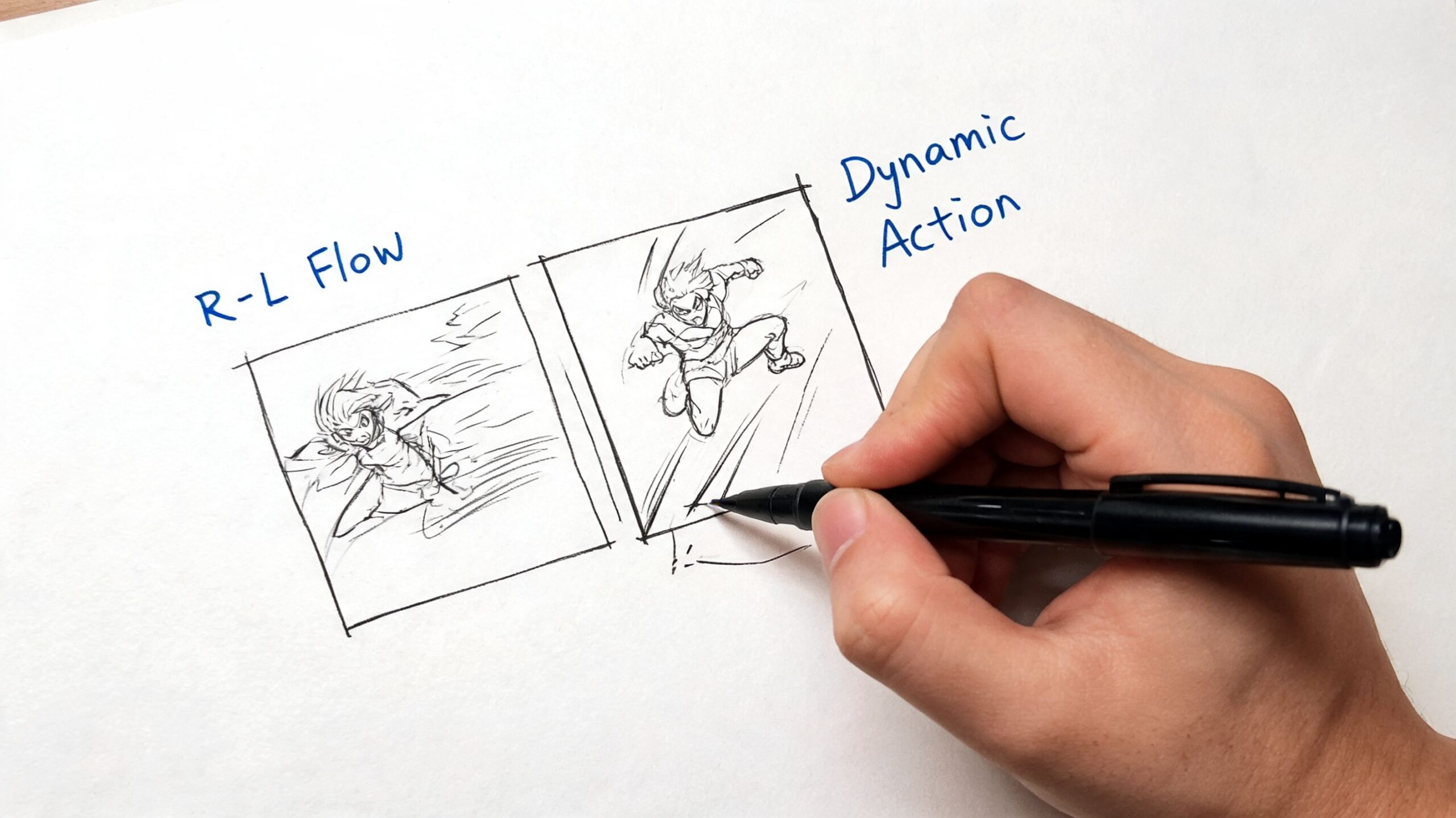
A beginner often starts by obsessing over character design. That's understandable, but manga history points elsewhere. The page works first because of flow.
The standardized use of speech balloons and 4 to 6 panel grids in manga was heavily influenced by the syndication of American strips in the 1920s, and after World War II Tezuka sold over 400,000 copies of his 400-page Shin Takarajima by fusing that grid format with cinematic angles, according to the Wikipedia history of manga summary.
What should you take from that?
Not “copy old pages exactly.” Take the underlying lesson instead. Readers respond to pages that balance clarity with excitement.
A simple page planning method
When you outline a comic scene, break it into beats.
Arrival beat
Where are we, and who is present?Change beat
What shifts in the scene? A new emotion, a new threat, a new idea?Reaction beat
Who feels that change, and how do they show it?Push beat
What sends the reader into the next moment?
This works for action, comedy, romance, and slice of life. A confession scene can use the same structure as a chase scene. The emotional texture changes, but the sequencing logic stays strong.
Creator's shortcut: If a page feels flat, the problem usually isn't the art first. It's that each panel isn't changing the situation enough.
Use size and silence on purpose
Manga artists are masters of controlled emphasis. You can borrow that immediately.
Try these page decisions:
- Give big moments more room. A confession, reveal, transformation, or shock deserves a larger panel.
- Use small panels for tempo. Rapid reactions or quick motions feel sharper in tighter spaces.
- Let silence exist. A character looking away can be more powerful than another speech balloon.
- Separate narration from dialogue. Narration can set mood or time. Dialogue should sound like something a person would realistically say.
Creators who build visual stories from real faces often also enjoy guides on adapting reference into stylized characters, like this article on how to turn a photo into an anime character.
Borrow the old masters' mindset
Ancient scroll artists understood continuous movement. Hokusai valued observed life. Modern manga creators refined pacing and viewpoint. You can translate all of that into practical habits even if software or AI handles the final rendering.
Here's a compact checklist:
| Focus | Ask yourself |
|---|---|
| Flow | Does the eye move naturally from panel to panel? |
| Emotion | Can a reader understand the feeling before reading every word? |
| Contrast | Have I varied close moments and wide moments? |
| Momentum | Does each panel create a reason to read the next one? |
You don't need perfect anatomy
That's worth saying clearly because many aspiring comic creators quit too early. Manga's real strength isn't flawless draftsmanship in every case. It's selective emphasis. A well-timed expression, a good panel transition, and strong scene direction can do more than a beautifully rendered but lifeless page.
If you're using modern creative tools, focus your energy where manga history says it matters most:
- Choose the emotional beat of each page
- Decide what the reader sees first
- Control how quickly the page is read
- Make reactions visible
Those are directing choices. They are available to anyone willing to think in sequence.
Your Story in an Ever-Evolving Tradition
The origin of manga isn't a single starting gun. It's a chain of inventions. Handscroll artists discovered how sequence could carry humor and motion. Edo artists such as Hokusai gave the medium a name and a spirit of observed life. Modern publishers and cartoonists turned those older instincts into a mass form. Postwar creators pushed the page toward cinema. Global readers then carried manga into new languages, markets, and communities.
That long history matters because it changes how we define participation. Manga is not a sealed museum object. It is a living method of storytelling. Every creator who learns to pace a reveal, stage a reaction, or guide a reader's eye is working inside that tradition.
You don't need to be born into the industry to belong to it. You don't need perfect brushwork, or years of anatomy training, to think in manga terms. You need curiosity about sequence, emotion, and rhythm. The rest can be learned.
So if you've ever wanted to make a comic, start smaller than “masterpiece.” Build a page. Stage a moment. Let one panel lean into the next. That's how this tradition has always moved forward. One image, then another, then another.
If you're ready to turn that inspiration into pages, PersonalizedComics makes it easy to create your own comic without drawing skills. You can choose a manga style, turn photos or character ideas into illustrated scenes, write your dialogue and plot, and generate complete pages with panels, speech bubbles, sound effects, and narration. It's a practical way to apply the storytelling principles behind manga while focusing on what matters most: your characters, your pacing, and your story.
Filed under Comics & Culture