That's normal. Funny comics rarely begin as polished scripts. They begin as a tiny mismatch: the wrong person in the wrong job, a boring task treated like an action movie, a pet interpreting a harmless errand as betrayal. Once you know what kind of mismatch you're building, the comic starts writing itself.
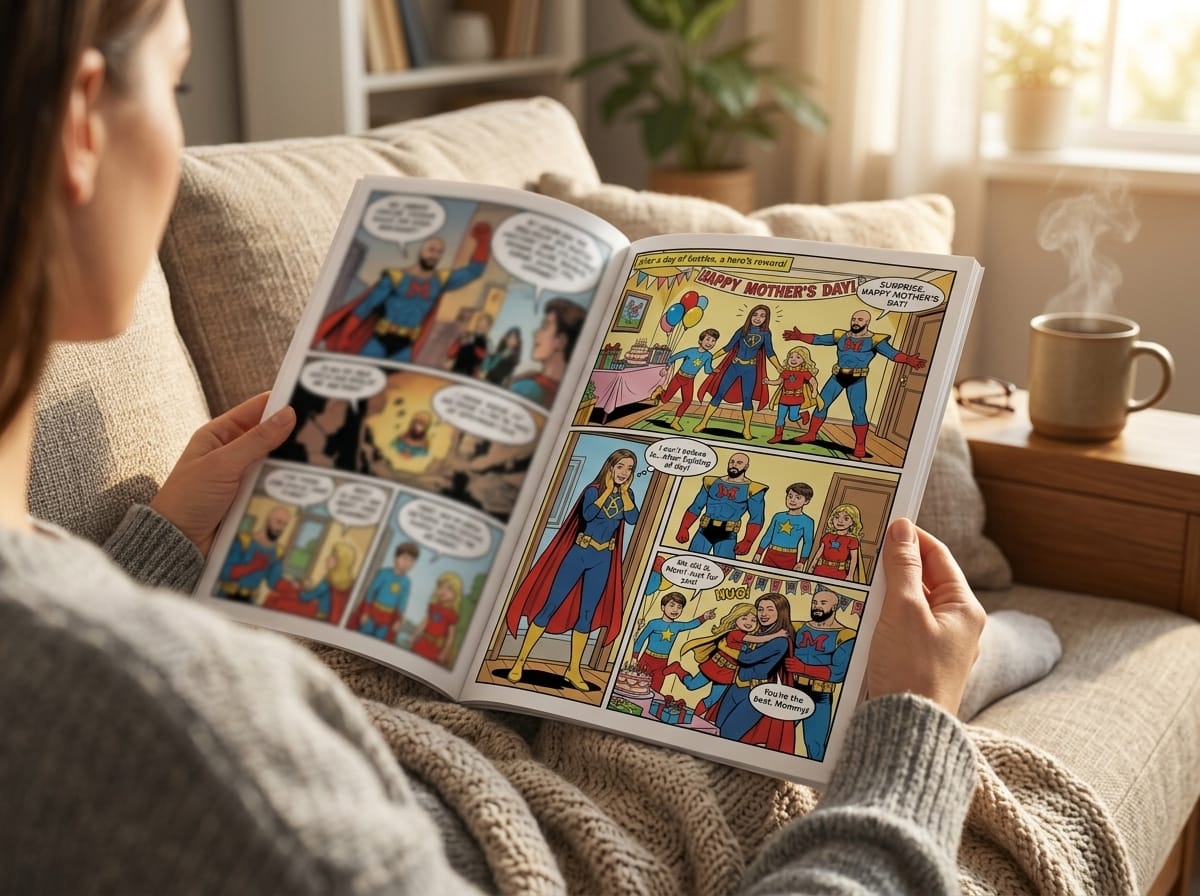
That's why funny comic ideas work best when they're more than prompts. A prompt gives you a seed. A creative brief gives you something you can make. If you're using PersonalizedComics, that difference matters because the platform already handles the hard production steps. You can choose from manga, classic American, graphic novel, noir, watercolor, cyberpunk, retro pop, or fantasy, upload real photos, and turn a rough concept into finished pages without drawing from scratch.
Comics have been built on visual humor for a very long time. Richard F. Outcault's The Yellow Kid appeared in 1895, and a scholarly review notes that comics and data graphics have influenced each other for more than a century, which is a useful reminder that visual joke formats have always evolved through experimentation with image, timing, and contrast in this history of comics and statistical graphics.
So skip the overthinking. Start with a premise that gives you tension, contrast, and a clear visual payoff.
1. The Unexpected Role Reversal
A role reversal works because the joke lands before anyone speaks. If a dog is walking a human on a leash, or the company CEO is nervously asking the intern for permission to use the coffee machine, the comic already has momentum.
This idea gets stronger when you cast real people. Put your highly organized friend into the role of chaotic new hire. Turn the family grill master into a character who burns toast and orders takeout. PersonalizedComics makes that especially funny because the faces are recognizable, which turns a generic gag into an inside joke with stakes.
Best version of the premise
Use a reversal with built-in competence conflict. The person should be good at the original role and terrible at the new one.
- Office version: The boss asks the intern, “Do I submit my lunch break request through payroll or through vibes?”
- Family version: The child runs the household with a clipboard while the parent asks for screen-time approval.
- Pet version: The cat leads obedience school and dismisses every dog as “too eager.”
For pacing, give this one 3 to 4 pages. Page one establishes the swap. Page two shows failed attempts to maintain dignity. The last page lands the biggest humiliation.
Style and dialogue choices
Graphic novel and noir are great here because seriousness makes the reversal funnier. A dramatic spotlight on a confused executive holding a visitor badge is better than a loose, casual treatment.
Practical rule: The more seriously the world treats the reversal, the funnier the comic becomes.
Sample dialogue:
“As your supervisor, I need you to stop calling every meeting a ‘surprise recess.’”
If you want more short-form setups before scripting pages, browse these comic strip idea angles.
2. The Exaggerated Everyday Struggles
Some of the best funny comic ideas come from refusing to treat ordinary life like ordinary life. Furniture assembly becomes a war campaign. Waiting for food delivery becomes a wilderness survival story. Monday morning becomes a monster movie.
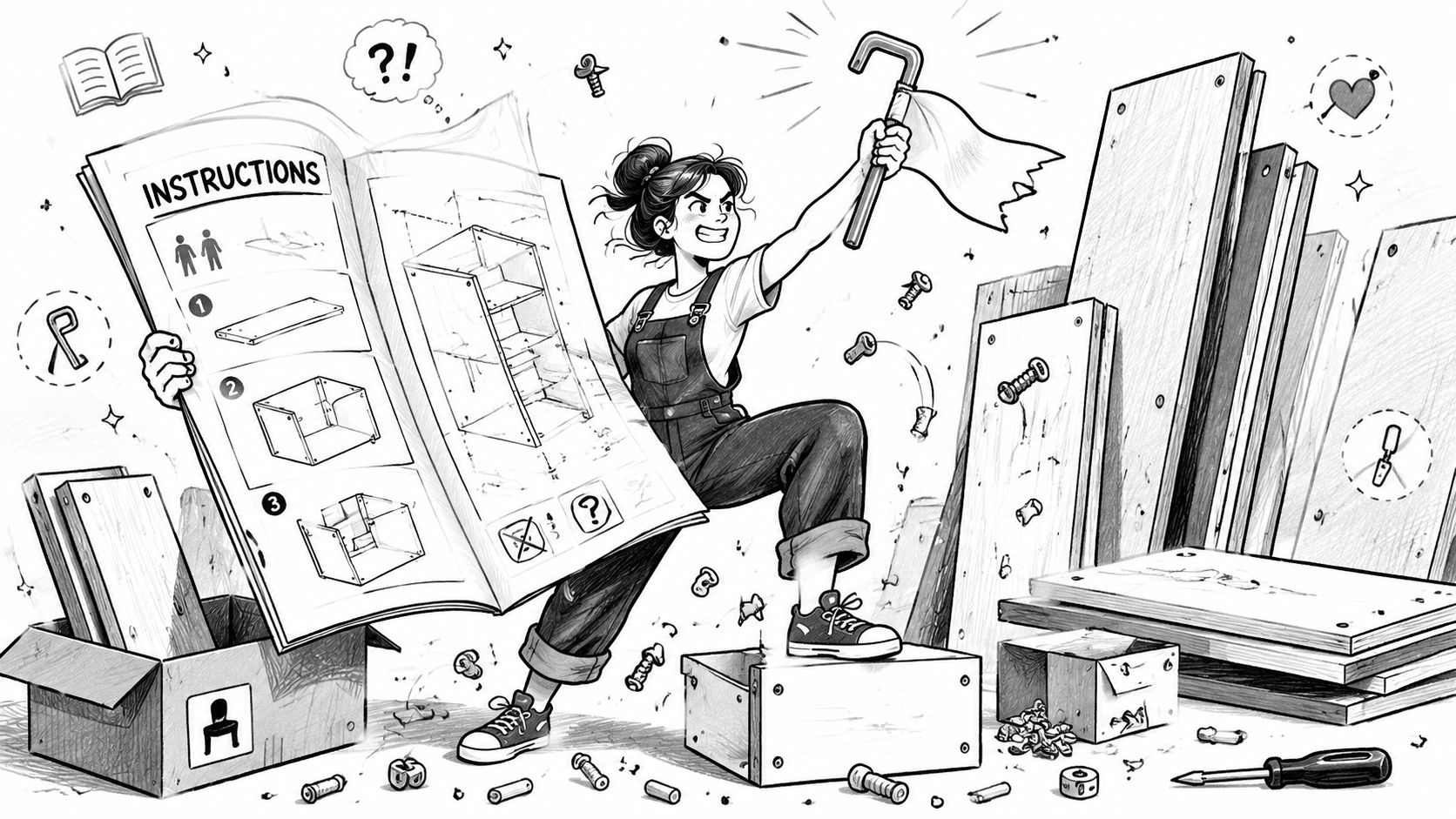
This premise works because readers recognize the situation instantly. They've been there. The trick is escalation. Don't start absurd and stay flat. Start mildly annoying, then keep raising the emotional importance of the task until it feels ridiculous.
How to escalate without losing the joke
Think in levels.
- Level one: A person opens the instruction booklet and frowns.
- Level two: They spread parts across the floor like battlefield strategy.
- Level three: The missing screw becomes “the final key to the kingdom.”
- Level four: The family dog is framed as either a traitor or the chosen ally.
Graphic novel and manga both help here. Manga gives you extreme reactions and speed lines. Graphic novel style gives the comic mock-epic weight.
Sample dialogue:
“Day three. We've identified the left shelf, the fake left shelf, and an object that may be emotional sabotage.”
What doesn't work is using a mundane task that has no emotional charge. “Someone washes one plate” usually isn't enough. “Someone tries to leave a warm bed on a freezing morning and treats it like a summit climb” is immediately playable.
3. The Superhero Origin Story Parody
Superhero parody survives because the structure is so recognizable. You already know the beats: accident, transformation, denial, costume, test run, heroic debut. That structure lets you make the power utterly useless and still have the comic feel complete.
This one benefits from commitment. Don't half-mock the genre. Treat the stupid power as destiny.
Strong powers are bad. Specific powers are funny.
A vague silly power like “being kind of lucky” won't carry a comic. A precise power like “always finding the matching sock in the dryer” gives you scenes, props, and a costume theme.
Try these:
- The Sock Crusader: senses lone socks across city blocks
- Achoo-Man: powers activate only during sneezes
- The Basilisk of Seasoning: can make any soup perfect, but only after insulting it
- Invisible When Ignored: disappears only when no one's paying attention, which creates a sad but funny loop
Fantasy and manga styles are ideal because they let you exaggerate origin lighting, costume silhouettes, and fake-epic poses.
Treat the narration like it belongs in a tragic legend. That contrast does half the comedic work for you.
Sample dialogue:
“The city didn't ask for a hero who could sense overcooked pasta. The city didn't know it needed one.”
What doesn't work is giving the character a power that's secretly too cool. If readers think, “That's useful,” you've drifted from parody into low-grade superhero fiction.
4. The Pet's Perspective Adventure
Pet comics stay fresh because the human world is full of actions that look suspicious from animal logic. Suitcases mean abandonment. Baths are state-sponsored humiliation. The vacuum is an invading machine.
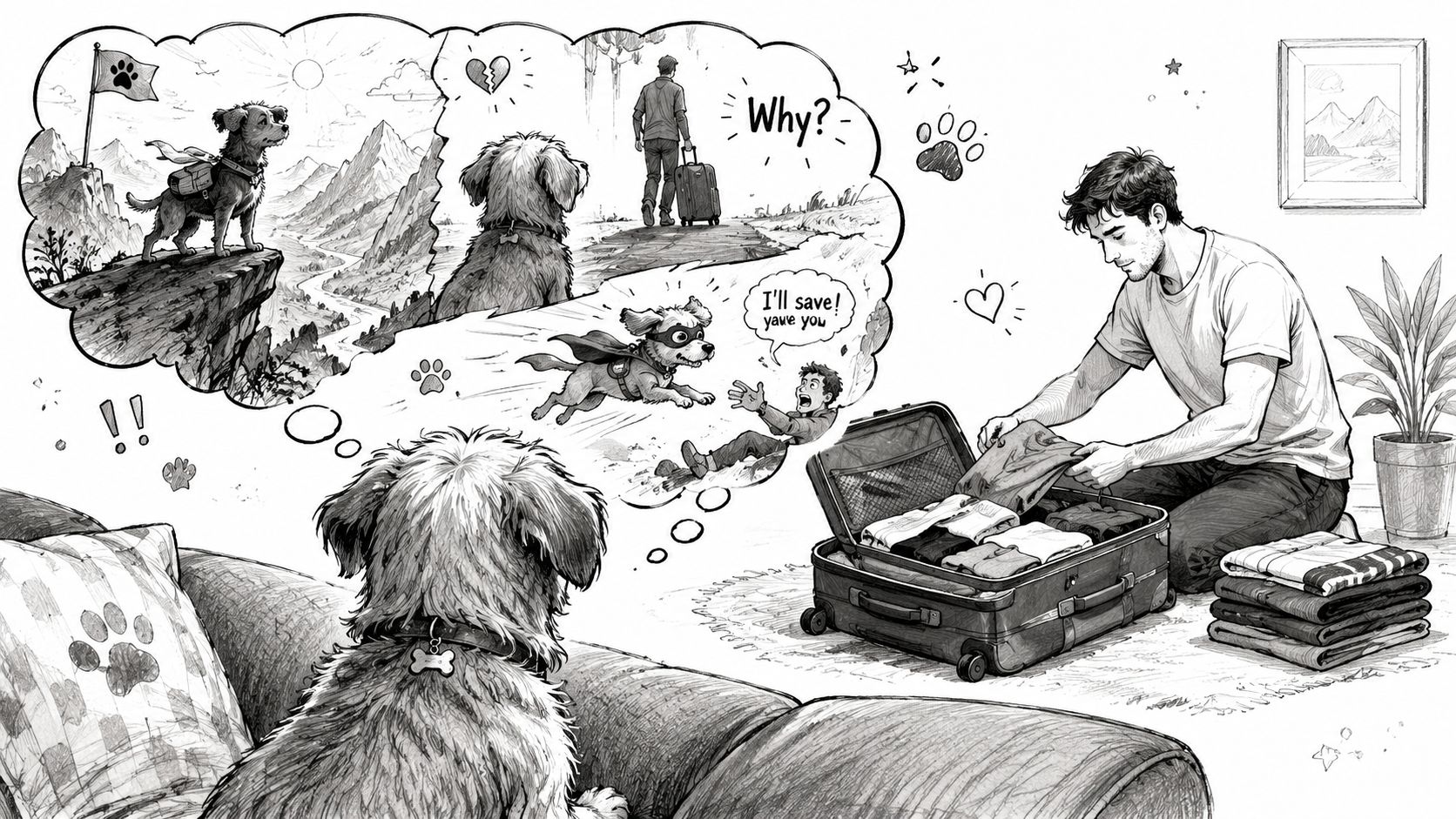
If you use actual pet photos, the comic gets a built-in audience because owners already narrate their pets' inner lives. The best version isn't “dog says goofy thing.” It's “dog develops a complete, emotionally serious theory that is totally wrong.”
Build two realities at once
The funniest pet comics run on dual-track storytelling.
- Human reality: “We're just going to the vet for a routine check.”
- Pet reality: “The council has chosen exile.”
Use different visual language for each track. Human speech bubbles can stay plain and practical. The pet's thoughts should be dramatic, poetic, or wildly self-important.
Watercolor works well for sweet, warm humor. Manga is better if your pet is a full chaos engine with giant emotional reactions.
Sample dialogue:
Human: “Buddy, it's just a bath.”
Dog thought bubble: “You cleanse the body when preparing the sacrifice.”
For longer personalized setups, these funny storyline ideas are useful starting points.
A quick trade-off. Cats usually work best with superiority humor. Dogs usually work best with betrayal or over-enthusiasm. If you reverse those instincts, the comic can still work, but you'll need sharper writing.
5. The Awkward Social Situation Escalation
Cringe comedy is precision work. Too soft, and nothing happens. Too mean, and readers back away. The sweet spot is a situation where the character makes one understandable mistake and then keeps making worse decisions to protect it.
That's why this idea is so reliable. Forgetting someone's name, waving back at the wrong person, pretending to recognize a stranger, laughing at a serious statement. These are small sparks with huge escalation potential.
Keep the character active, not passive
The awkwardness has to grow because the character chooses badly. Don't just let embarrassment happen to them. Make them build the disaster.
A good sequence looks like this:
- Mistake: “Great seeing you again.”
- Panic: They can't place the person at all.
- Commitment: They invent shared history.
- Collapse: The stranger reveals they've never met.
Graphic novel style is excellent for this because it can dramatize tiny moments. A handshake can feel like a hostage exchange. A bead of sweat can become a supporting character.
Sample dialogue:
“Of course I remember you. You're from… the place with… walls?”
Workshop note: Give the character one escape route early. Then have them ignore it. That choice is what makes the audience laugh.
What doesn't work is making everyone else cruel. Let the environment stay mostly normal. The protagonist should be the main engine of disaster.
6. The Time Period Confusion Comedy
Fish-out-of-water comedy gets better when the visitor has complete confidence. A medieval knight who thinks a smartphone is a cursed mirror is funny. A medieval knight who confidently tries to use rideshare, loyalty apps, and iced coffee while applying chivalric logic to all of it is much funnier.
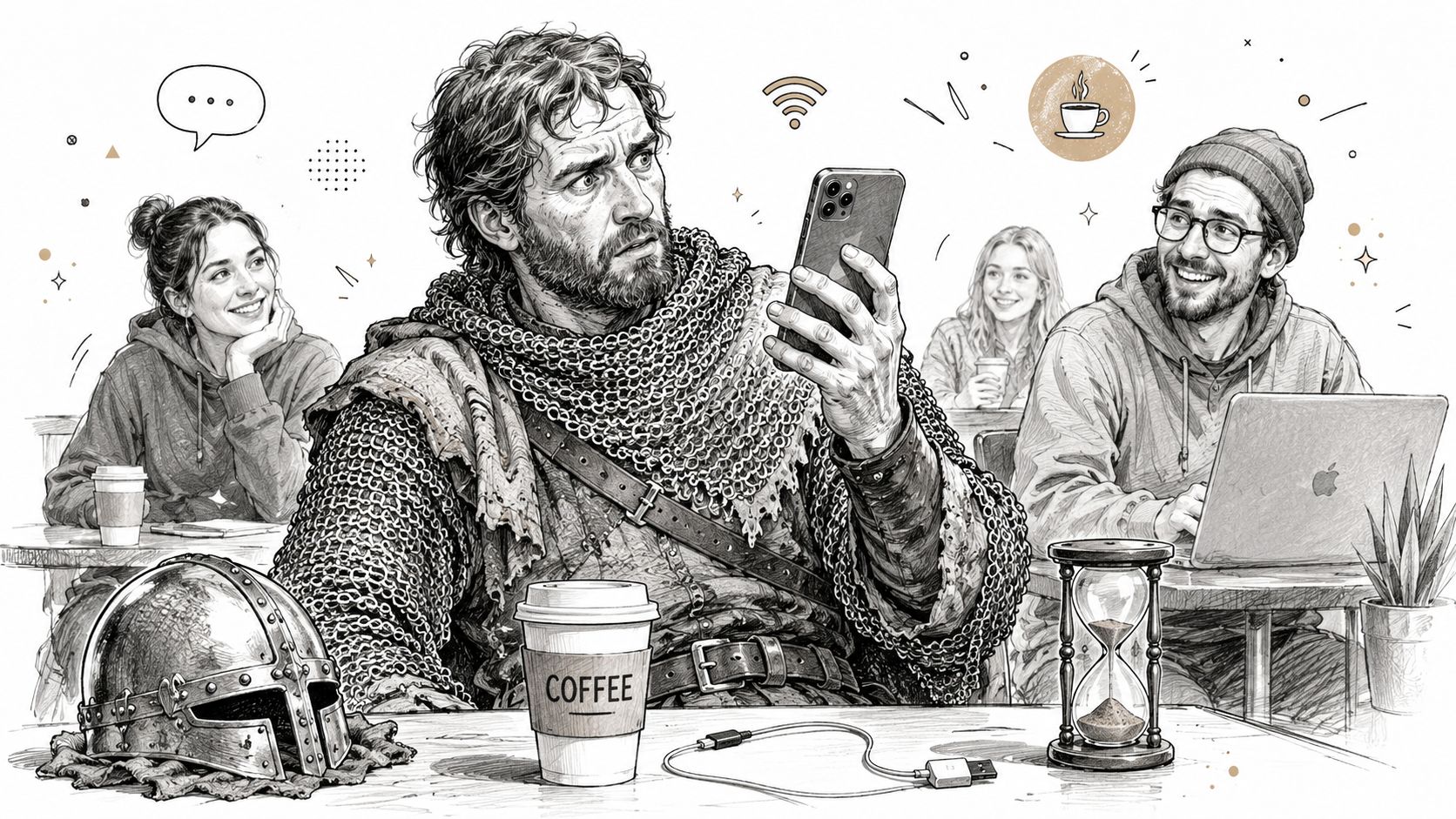
This format also gives you visual play with style. Put a retro pop or classic historical look against a cyberpunk or modern retail setting. The costume clash does immediate work before the dialogue starts.
Use object misunderstanding, not just slang misunderstanding
A lot of creators lean too hard on “old character doesn't know modern words.” That gets thin quickly. Physical object confusion is stronger because comics are visual.
Try scenes like:
- A Roman soldier confronting a self-checkout and assuming it's a tax oracle
- A Victorian guest treating an automatic hand dryer like hostile weather
- A pirate captain reading corporate org charts as naval battle maps
Sample dialogue:
“This glowing tablet demands tribute, yet offers no scribe.”
This premise also connects to a larger truth about comics as a format. The comic market is projected to grow from about USD 17.69 billion in 2025 to USD 27.01 billion by 2034, with Asia Pacific holding 53.25% of the market in 2025 according to Fortune Business Insights on the comic book market. That broad demand matters because time-clash humor travels well across audiences when the visuals do most of the work.
What doesn't work is overloading the page with references from both eras. Pick one central misunderstanding per scene.
7. The Hilariously Literal Interpretation
Literalization is one of the cleanest joke engines in comics because the image and the phrase can collide in a single panel. Someone says “break the ice,” and one character arrives with a mallet. That's enough for a strip.
The danger is predictability. If the phrase is too common and the image too obvious, readers will see the joke before the panel turn. You need either a very committed character or a setting that makes the literal action inconvenient.
Choose idioms that create movement
Good idioms generate an action scene. Better yet, they create collateral damage.
- Hit the hay: a tired farmhand punches a hay bale before bed
- Burn bridges: a project manager torches a tiny decorative bridge model in the office
- Time flies: clocks with wings swarm the ceiling during a deadline
- Piece of cake: a champion expects a trophy and receives actual dessert
Noir and graphic novel styles are great because they lend weight to ridiculous actions. Serious shading around a person solemnly attacking ice with a pickaxe is always a good visual bet.
Sample dialogue:
“I did exactly what you said. My concern is that the rink manager lacked vision.”
If you want more narrative premises that can support this kind of twist, use these funny story idea prompts.
One more trade-off. A three-panel structure is usually better than a longer sequence here. Setup, literal action, consequence. Stretch it too long and the joke starts explaining itself.
8. The Mundane Superpower Consequences
A power becomes funny when the daily maintenance is worse than the fantasy. Flying sounds great until the character develops a fear of heights. Telepathy sounds powerful until they can't survive casual small talk. Super strength sounds heroic until every doorknob becomes a liability.
This idea works best when you begin with genuine wish fulfillment. Let the character enjoy the power first. Then let ordinary life expose the hidden cost.
Consequences that create recurring scenes
Build around problems that can return in every episode.
- Super speed: constant hunger, impatience with everyone, shredded shoes
- Teleportation: arriving places emotionally unprepared, losing track of what came along
- Invulnerability: can't feel a reassuring pat on the shoulder, hugs become abstract
- Mind reading: can't sit through family dinner without hearing mental nonsense
Graphic novel style gives this concept weight. It can carry humor and a little melancholy at the same time.
Sample dialogue:
“I saved the train, yes. I also sneezed through three walls and now I owe the bakery an explanation.”
There's also room here for longer serial storytelling. A market report from Global Insight Services estimates the comic book market at USD 10.7 billion in 2024 and projects growth to USD 29.6 billion by 2034, while also stating that superhero comics hold 45% share in that breakdown, followed by manga at 30% and independent comics at 25% in its comic book market outlook. That's useful creatively because it confirms what many creators already feel in practice. Superhero language is familiar, but subverting it keeps the premise from feeling generic.
What doesn't work is making every consequence dark. Keep the problems inconvenient first, existential second.
9. The Nostalgia Parody Update
This one can be brilliant, but it's the easiest to mishandle. Nostalgia parody only works if you understand what the original thing felt like, not just what it looked like.
The joke isn't “old character uses app.” The joke is friction between original values and present-day behavior. A square-jawed action hero discovering his franchise now requires branding meetings, vulnerability content, and reaction clips has comic potential. A beloved cartoon gang dealing with wellness culture, algorithm pressure, or smart-home glitches can work for the same reason.
Don't imitate. Translate.
Take the original emotional engine and move it into a modern system.
For example:
- An old-school team of adventurers now spends more time resetting passwords than slaying monsters
- A retro teen cast who once mastered hallway gossip now collapses under group chat politics
- A cartoon hero famous for reckless confidence now has to sign legal disclaimers before every rescue
Retro pop style is the obvious fit, but the stronger move is often mixed styling. Open with retro pop for the nostalgic setup, then shift into graphic novel or modern manga language when current reality hits.
Sample dialogue:
“In my day, villains announced themselves. Now they post teasers.”
This is also where many creators stumble into reference overload. If a reader needs to know six old catchphrases to enjoy the comic, you've narrowed the audience too much. Keep the core conflict understandable even if the reference lands harder for fans.
10. The Unfortunate Superhero Sidekick Reality
The sidekick is one of comedy's best pressure valves. Heroes get speeches, headlines, and rooftop poses. Sidekicks get debris, emotional labor, and someone else's brand guidelines.
That imbalance gives you a lot to play with. The sidekick can be loyal, bitter, practical, traumatized, ambitious, or all four at once. If you want a funny comic with some emotional bite, this is one of the strongest concepts on the list.
Play the support role honestly
The comic gets sharper when the sidekick's complaints are reasonable.
Try scenes like:
- replacing another destroyed costume on a tiny budget
- sitting in therapy and trying to explain “I'm not technically family, but I am in every dangerous flashback”
- watching the hero take credit for the exact plan the sidekick suggested ten panels earlier
A diary format works well here. So do journal captions, voicemail transcripts, or support-group scenes.
“You can get a whole series out of one question. What does the person next to the legend actually deal with every day?”
Sample dialogue:
“I don't need more exposure. I need dental coverage and one mission without a collapsing warehouse.”
Manga style can heighten frustration. Graphic novel style makes the unfairness hit harder. The best ending isn't always rebellion. Sometimes the funniest ending is the sidekick realizing they've become more competent than the hero and being very annoyed by it.
Top 10 Funny Comic Ideas Comparison
| Premise | Implementation complexity | Resource requirements | Expected outcomes | Ideal use cases | Key advantages |
|---|---|---|---|---|---|
| The Unexpected Role Reversal | Low–Medium, simple concept, needs clear contrast | Personal photos, basic costume/setting details | High shareability and immediate laughs | Gifts, social posts, group comics | Strong personalization; instant visual joke |
| The Exaggerated Everyday Struggles | Medium, requires pacing and escalation across panels | Bold art styles (graphic novel/manga), multi-panel layouts | Broad relatability and viral potential | Relatable content, creator series, gifts | Universal appeal; rich visual gag opportunities |
| The Superhero Origin Story Parody | Low–Medium, uses familiar beats, needs clever subversion | Costume design, dramatic effects, genre art styles | Humorous parody with niche fan appeal | Cosplay tie-ins, parody sketches, gift comics | Leverages cultural familiarity; self-contained arc |
| The Pet's Perspective Adventure | Low, straightforward POV shift, needs authentic behavior | Real pet photos, warm or cute art styles | High engagement among pet owners; very shareable | Pet communities, gifts, social media posts | Massive pet-owner appeal; emotional connection |
| The Awkward Social Situation Escalation | Medium, careful timing to escalate cringe effectively | Expressive character art, multi-panel tension build | Strong engagement but can be polarizing | Workplace/friend group comics, validation pieces | Highly relatable; character-driven tension |
| The Time Period Confusion Comedy | Medium, needs clear era contrasts and visual clarity | Costume/setting design, mixed art styles for contrast | Entertaining fish‑out‑of‑water gags, educational hooks | History or sci‑fi audiences, educational comics | Instant recognition; flexible era mashups |
| The Hilariously Literal Interpretation | Low, simple setup and punchline format | Precise illustration to sell the literal gag | Quick, easily shareable jokes | Teaching idioms, short social posts, quick strips | Simple, universal humor; concise format |
| The Mundane Superpower Consequences | High, requires nuanced tone and longer arcs | Multi-page narrative, dramatic art, character development | Emotional depth with comedic elements | Graphic novel prototypes, thought‑provoking series | Fresh genre subversion; sustained engagement |
| The Nostalgia Parody Update | Medium, needs audience familiarity and satire | Retro references, mixed styles, copyright caution | High engagement with target demographics | Pop culture commentary, millennial/Gen‑X gifts | Instant emotional hook via recognition |
| The Unfortunate Superhero Sidekick Reality | High, sustained character focus and tone balance | Longer narratives, supporting cast, dramatic style | Deep emotional resonance and character growth | Serialized comics, character studies, niche fans | Unique perspective; relatable underdog storytelling |
Beyond the Prompt Bringing Your Comic to Life
Having funny comic ideas is useful. Finishing them is better. Most comics fail in the gap between “that would be funny” and “I can see the panels clearly.” The fix is structure.
A simple three-panel strip still does a lot of heavy lifting. Panel one sets the normal world. Panel two complicates it. Panel three pays off the mismatch. If the joke still feels weak, the problem usually isn't the punchline. It's that the setup didn't establish the expectation clearly enough.
From prompt to page
For bigger concepts like sidekick reality or mundane superpower consequences, expand into pages instead of cramming everything into one strip. Let page one establish the premise cleanly. Use page two or three to show the first consequence. Save the final page for either escalation or reversal.
When scripting for PersonalizedComics, think visually first. Don't write six lines of witty dialogue if one expression, one prop, and one caption can do the job. The platform can generate finished pages from your plot, style, and dialogue, so your real job is choosing what deserves a panel.
Here's a practical script rhythm that works well:
- Setup panel: show the mismatch immediately
- Reaction panel: let one character take it seriously
- Escalation panel: increase the cost, stakes, or misunderstanding
- Button panel: end on the sharpest image, not always the longest line
Better personalized comics for gifts
Funny comics become much more memorable when the reader recognizes themselves. That's where personalized storytelling beats generic prompts.
A birthday comic works well with exaggerated everyday struggle. Turn getting dressed for the party into a heroic montage. An anniversary comic fits the pet perspective angle beautifully because a dog or cat can “retell” the relationship with wildly inaccurate confidence. Graduation and new-job gifts pair naturally with superhero origin parody. The new power can be surviving office jargon, bad coffee, or professional small talk.
One specific creative gap matters a lot for gift-making. Many people want to use real photos but worry they won't translate well into stylized art, especially if the photo subject doesn't fit polished, conventional reference imagery. The provided industry notes identify that fear as a major barrier, particularly for personalized comics built from non-standard or unphotogenic photos. The practical takeaway is simple. Choose a style that flatters the person's energy, not one that chases perfection. Noir, watercolor, and retro pop can all turn strong features, wrinkles, or unusual expressions into charm instead of friction.
Funny comics in classrooms and group projects
These prompts also work well for teachers, parents, and youth groups. Literal interpretation is excellent for teaching idioms. Time period confusion can make history feel alive. Role reversal gives students a way to understand social dynamics without writing essays about them.
Another useful gap from the provided brief is dialogue that travels across audiences. If you want humor that isn't locked to one slang-heavy culture, write punchlines around behavior, status, surprise, and visual contradiction. A character taking an expression at face value often works anywhere. A joke about niche office acronyms often doesn't. That matters even more if you're making AI-assisted comics and want the dialogue to sound intentional rather than randomly quirky.
The strongest comic ideas don't arrive fully formed. They tighten when you give them a clear premise, the right visual style, and one honest human reaction. That's enough to get a page moving.
PersonalizedComics makes that jump from rough idea to finished comic much easier. You can upload real photos, choose from eight distinct art styles, script your panels, and turn a private joke, gift concept, or character idea into polished pages in minutes. New users get a free three-page preview comic, credits don't expire, there's no subscription, and you can even order a premium physical copy when you want the comic to live off-screen. Start building your own funny comic ideas with PersonalizedComics.
Filed under Comic Craft