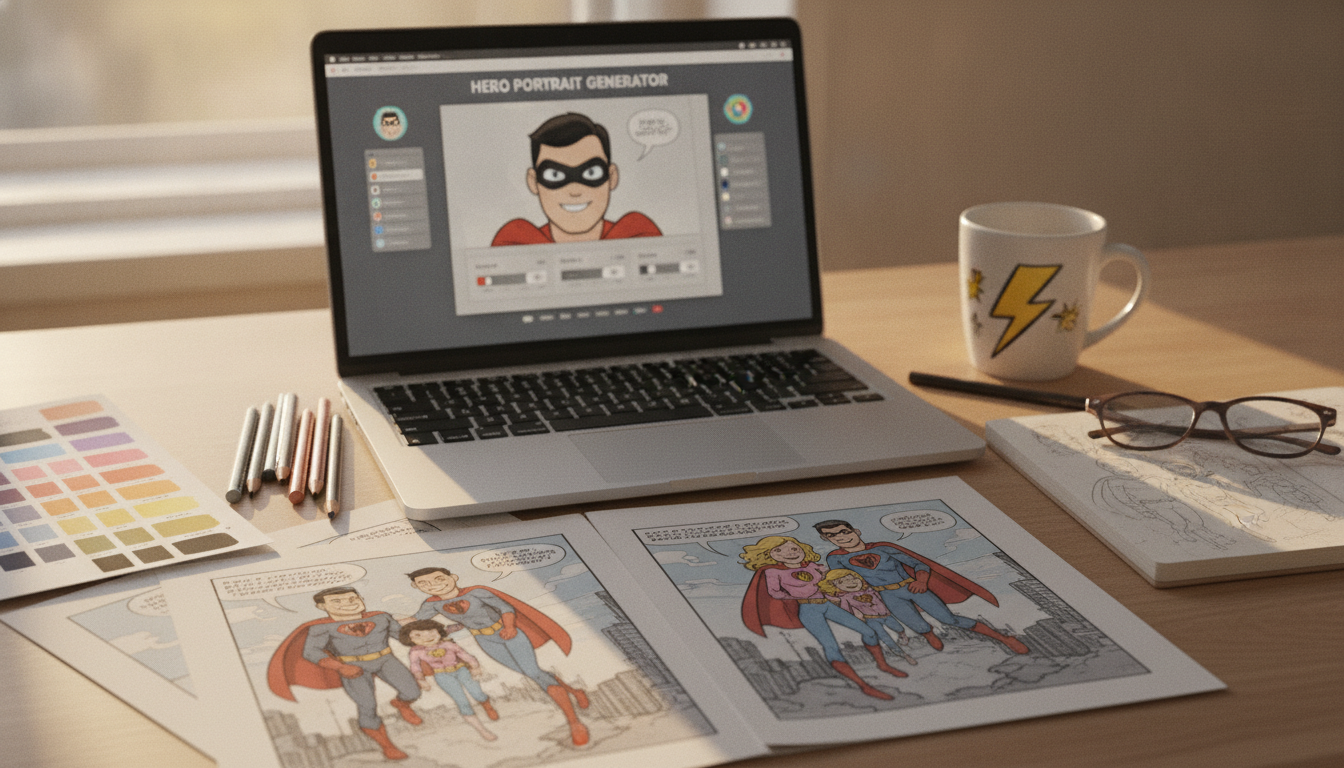
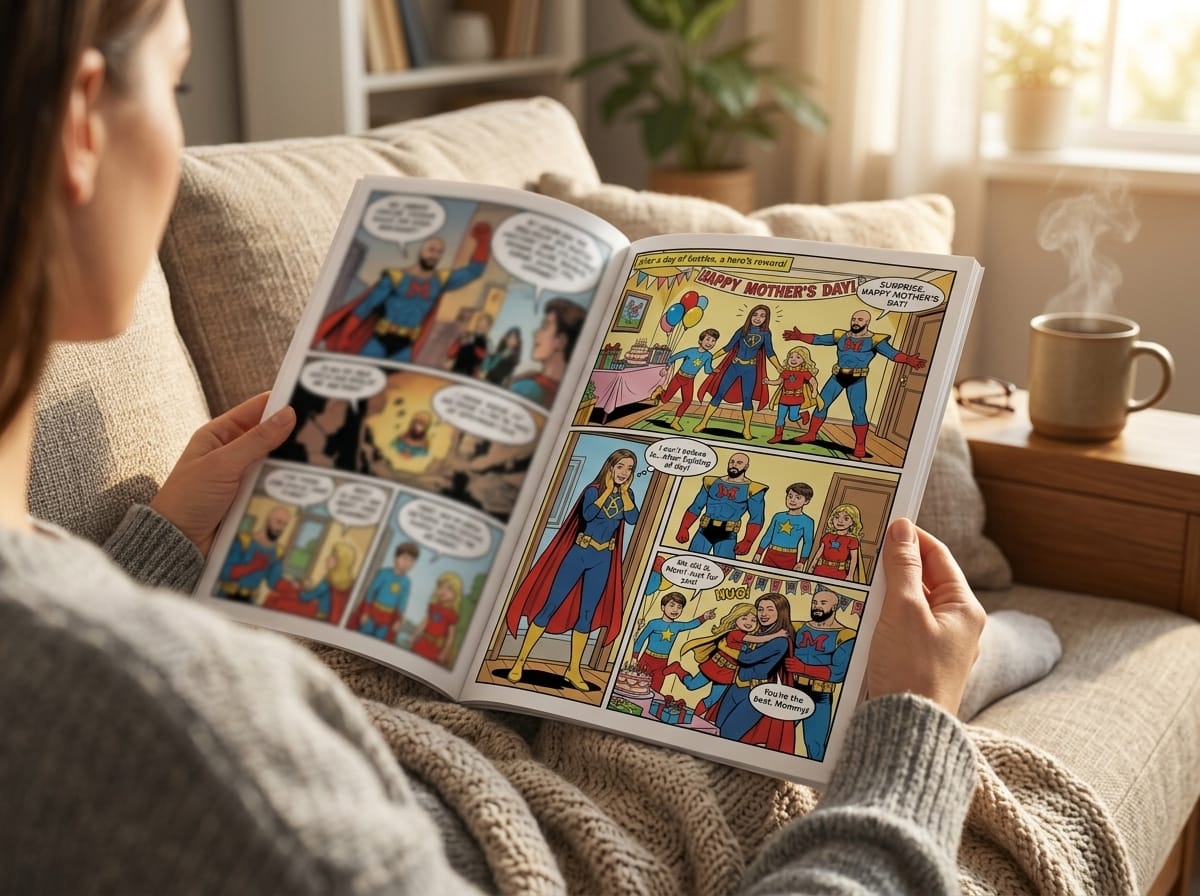
The hard part is that most gag gifts are built for a quick reaction, not a real memory. The gifts that stick usually come from a shared disaster, a running joke, a weird phrase only the two of you understand, or that one story your group still retells badly because it gets funnier every time.
That’s why a personalized comic story works so well. Instead of buying a joke, you’re packaging your friendship into a short narrative with a setup, a payoff, and visuals that make the bit hit harder. The same logic carries into milestone moments, too: it powers the best funny retirement gifts when a friend or coworker is closing out a career.
Beyond the Gag Gift A Truly Funny Gift for a Friend
A lot of “funny gift” shopping ends the same way. You scroll through pages of prank boxes, fart candles, bizarre kitchen gadgets, and joke T-shirts, hoping one of them feels personal enough to justify buying it. Usually it doesn’t.
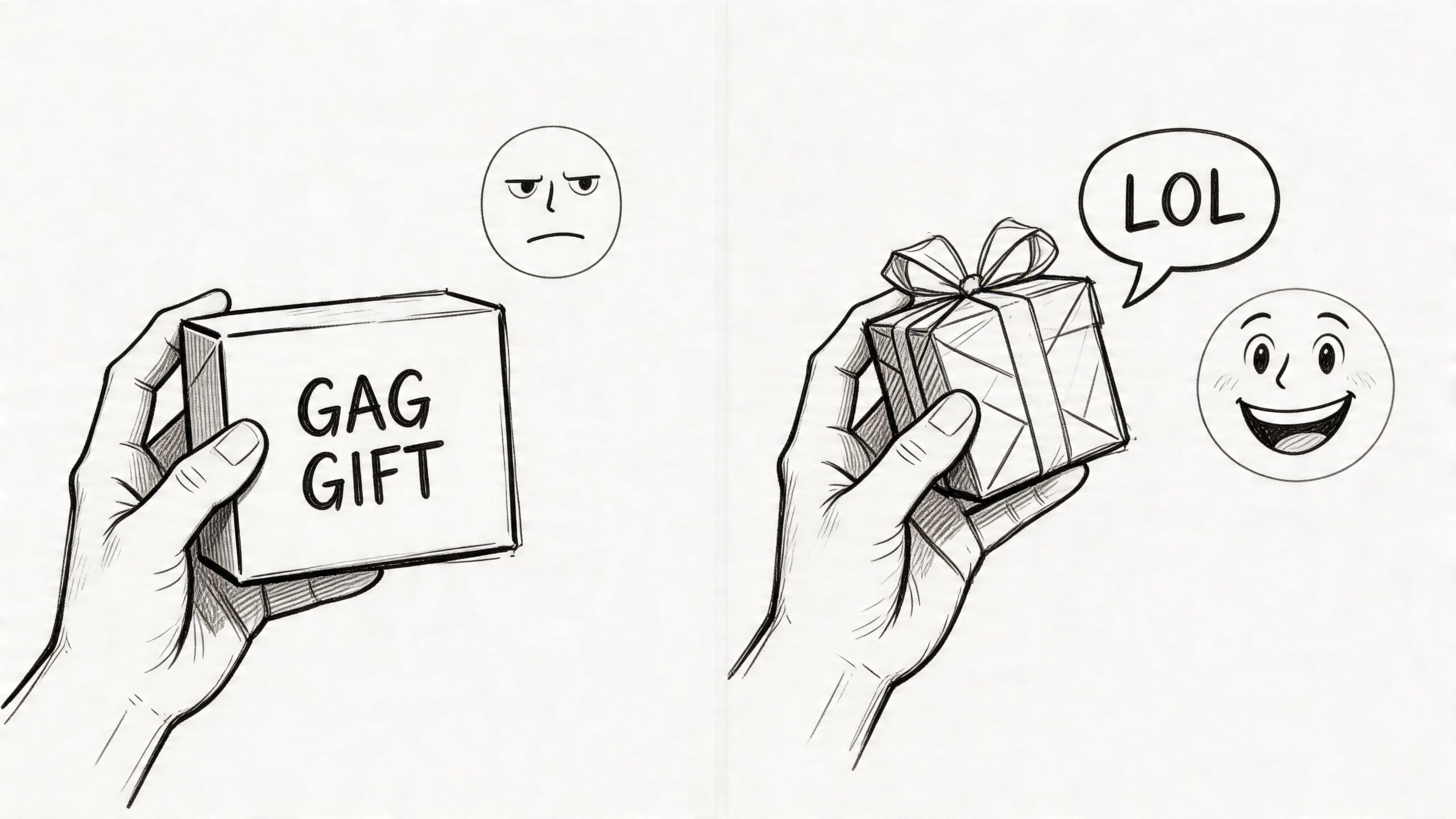
The better question isn’t “What object is funny?” It’s “What story is funny because it happened to us?”
That shift matters. 68% of gift recipients value personalization for emotional impact, and personalized items outsell generic ones by 2.5x, according to a 2025 NRF gifting trend summary discussed here. That lines up with what gift-givers already know instinctively. A joke hits harder when the receiver feels seen.
Why generic gag gifts fade fast
Most novelty gifts rely on a single beat. You open it, you get the joke, the moment passes.
A comic story does something different:
- It builds anticipation. The first panel sets up the memory or character flaw.
- It escalates the absurdity. The joke gets bigger as the pages turn.
- It becomes re-readable. Your friend can show it to other people and relive the joke.
- It feels made, not grabbed. Effort is part of the gift.
If you need inspiration beyond the usual novelty aisle, this roundup of unique personalized gifts for friends points in the right direction.
Why a story beats a prop
A fart candle can be funny. A fake parking ticket can be funny. A ridiculous mug can be funny once.
A comic can capture the exact night your friend tried to “help” and made everything worse. It can turn their chaotic group-chat personality into a superhero origin story. It can make their dramatic overreaction to a minor inconvenience feel epic in the best way.
Practical rule: If the gift could work for almost anyone, it’s probably not personal enough.
The strongest funny gifts carry two signals at the same time. “I know you well,” and “I know what makes you laugh.” A personalized comic is one of the few formats that can hold both without getting sentimental or corny.
Decoding Your Friend’s Unique Sense of Humor
Before you write a plot, pick a memory, or choose an art style, figure out what kind of funny your friend enjoys. A frequent misstep is overlooking this. They choose what they find hilarious instead of what their friend consistently responds to.
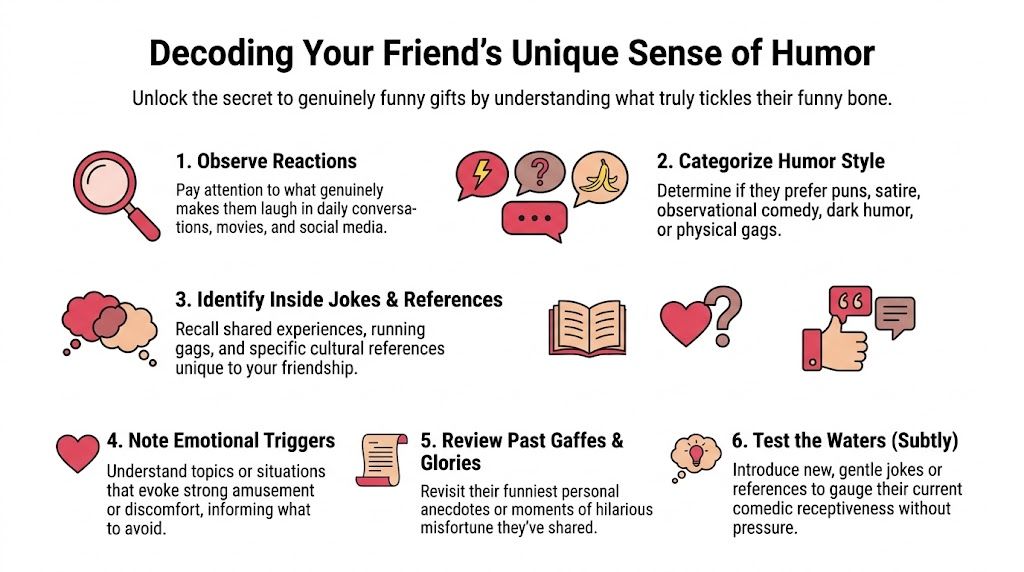
55% of millennials seek character-driven humor gifts that reflect hobbies or quirky traits, not generic jokes, based on gift trend data summarized in this Etsy market reference. That’s why “funny” isn’t enough. It has to be their kind of funny.
Look for repeat laughs
Don’t start with categories like “they’re sarcastic” or “they like memes.” Start with evidence.
Ask yourself:
What stories do they retell?
If they keep revisiting one embarrassing airport moment, one dating fail, or one cursed cooking attempt, that’s material.What clips do they send?
Their humor trail is usually obvious in group chats.What jokes do they make about themselves?
Self-aware humor is safe material. Sensitive topics they never joke about usually aren’t.What role do they play in your friend group?
Chaos goblin, deadpan commentator, accidental menace, overplanner, dramatic narrator. Those roles make comic characters easy to write.
Six humor lanes that work well in comics
Some humor styles naturally convert better into panel-based storytelling than others.
- Observational humor works when your friend has oddly specific habits. Maybe they narrate minor inconveniences like a war documentary.
- Absurdity lands when reality is already one inch away from nonsense. This is perfect for exaggerated superhero treatment.
- Slapstick fits stories with motion, accidents, clumsiness, and visual escalation.
- Dry sarcasm works best when the art plays against the dialogue. Serious visuals, ridiculous comments.
- Inside-joke humor is the gold standard for a gift because nobody else could’ve made it.
- Affectionate roast humor works only if your friend already enjoys being lightly called out.
If the joke depends on humiliation, make your friend the lovable main character, not the punchline target.
Find the story seed
The best comic ideas usually come from one of these raw materials:
| Story seed | Why it works in a gift |
|---|---|
| A shared disaster | Built-in beginning, middle, and payoff |
| A weird recurring phrase | Easy to turn into a motif or callback |
| A hobby taken too seriously | Strong character angle |
| A small flaw exaggerated with love | Makes for playful roast energy |
| A “legend” in your friend group | Gives the comic instant stakes |
Roast with affection, not edge
A roast gift fails when it punches down or exposes a sore point. Keep the joke on the behavior, not the person’s worth.
Good targets:
- Overconfidence about tiny skills
- A dramatic reaction to ordinary events
- A harmless obsession
- A famously bad but funny decision
Bad targets:
- Appearance insecurities
- Recent heartbreaks
- Money stress
- Anything they’ve asked people to stop joking about
A good test is simple. If your friend would laugh while reading it out loud to someone else, you’re in the safe zone. If they’d hide it, trim the joke.
Crafting a Hilarious Joke-Driven Comic Plot
It's common to overcomplicate the story. They try to cram ten jokes, three flashbacks, seven side characters, and a cinematic twist into a short comic. That’s how funny concepts turn into muddy pages.
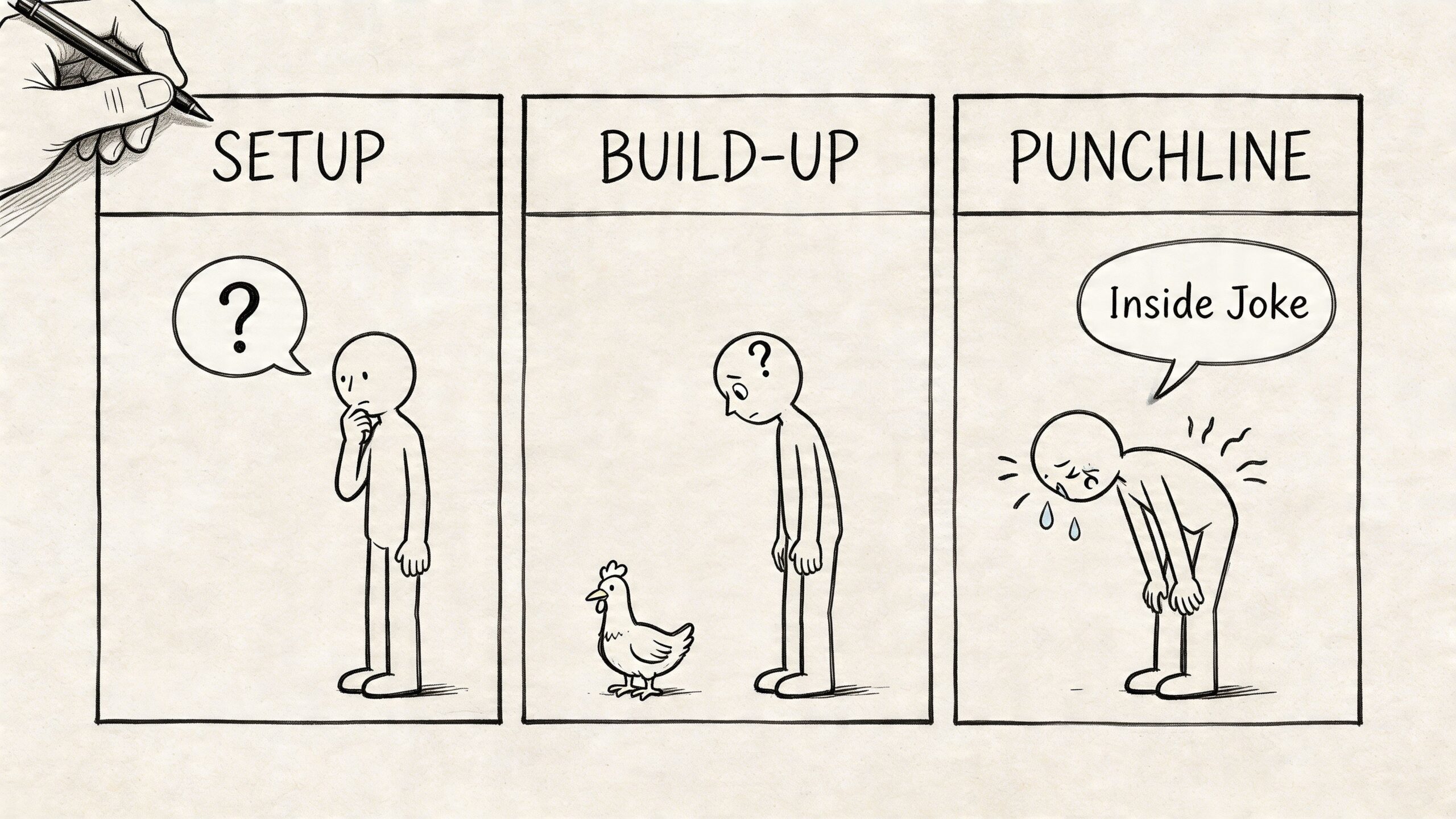
The strongest gift comics stay narrow. Data from more than 5,000 comics shows that keeping stories to 4 to 6 panels per page and focusing on one clear joke reduces continuity errors by 25% and lifts success rates from 65% to over 90%, according to this comic creation guidance reference.
That’s the standard to aim for. One premise. One emotional beat. One punchline thread.
Use a simple three-beat structure
A short comic doesn’t need a complicated plot arc. It needs rhythm.
The setup
Start by grounding the joke fast. Show who your friend is in this story world and what they want.
Examples:
- Your chronically late friend vows to arrive early “for once.”
- Your gamer friend claims they’d survive any crisis because of “strategy.”
- Your coffee-obsessed friend goes on a mission before speaking to anyone.
The setup should take almost no explanation. If a panel needs a paragraph of context, the idea isn’t ready.
The escalation
Now make the situation worse, stranger, or more specific.
Comics hold an advantage over many other gifts. You can visually heighten reality without needing a huge plot. The friend doesn’t just spill coffee. They trigger a chain reaction. They don’t just miss a turn. They enter a dramatic side quest. Their tiny flaw becomes mythic.
A good escalation often uses one of these moves:
- Literalization. Treat a joke phrase as if it’s physically true.
- Overreaction. Let a minor inconvenience become an epic crisis.
- Power upgrade. Give your friend absurd heroic abilities tied to the joke.
- Callback stacking. Repeat the same motif with bigger consequences each time.
The punchline
The last beat should feel both surprising and inevitable. That’s the sweet spot.
Maybe your “organized” friend saves the day with a color-coded binder no one respected until now. Maybe the clumsy friend accidentally solves the problem by falling into the right place. Maybe the world learns their useless niche skill was destiny all along.
The funniest endings don’t explain the joke. They reveal it in the final image or line.
Write for panels, not paragraphs
A comic script should feel lean. If your dialogue sounds like a stand-up monologue, cut it.
Use this balance:
- Speech bubbles for quick reactions, denials, boasts, and callbacks
- Captions for mock-serious narration
- Visual gags for the joke you don’t need to say out loud
- Sound effects sparingly, only where they sharpen timing
Here’s a clean plotting template that works well:
| Beat | What to include |
|---|---|
| Page 1 | Introduce your friend, their trait, and the problem |
| Page 2 | Let confidence build, then crack |
| Page 3 | Escalate into absurd territory |
| Page 4 | Deliver the payoff and one strong callback |
If you want more prompt ideas before scripting, this collection of funny ideas for a story is useful for turning a half-formed inside joke into something with shape.
Dialogue that actually sounds funny
Funny dialogue in comics usually does one of three jobs. It undercuts the visual, sharpens the character, or sets up the next beat.
Try lines like:
- “This is under control,” right before obvious collapse.
- “Statistically, I should’ve learned by now.”
- “I didn’t say it was a good plan. I said it was our plan.”
Avoid stuffing every panel with one-liners. If every line tries to be the joke, none of them land. Let one panel breathe. Let an expression do some work.
A plot stress test
Before you finalize the script, ask these five questions:
- Can I explain the whole comic in two sentences?
- Is my friend clearly the star?
- Does the joke get bigger, not just longer?
- Would a stranger understand the action even if they miss the inside layer?
- Is the last panel stronger than the first idea I had?
If the answer to the first question is no, simplify. If the answer to the second is no, rewrite. Gift comics work best when they feel like a playful legend about one specific person.
Designing Characters and Choosing the Right Art Style
Once the joke works on paper, the visuals decide whether it feels flat, charming, or unforgettable. This part matters more than people think. A funny plot with the wrong art style can lose tone fast.
The first decision is character accuracy. The second is aesthetic fit.
Start with a good photo set
If you’re turning a real friend into a comic character, use clear photos with good lighting and different angles. Modern AI diffusion workflows can reach 92% likeness fidelity when transforming photos into stylized characters, but low-resolution images under 1MP can create a 22% mismatch rate, based on this photo-to-comic benchmark summary.
That tracks with practical use. Good source photos give the system more to work with. Bad source photos create weird guesses.
A strong photo set usually includes:
- A front-facing image with a neutral expression
- A side or three-quarter angle so facial structure reads better
- A photo with their typical vibe such as glasses, favorite jacket, or hairstyle
- Clean lighting instead of dark bar photos or cropped group shots
Quick fix: If the likeness feels off, swap the photos before rewriting the prompt. Image quality causes more trouble than plot quality at this stage.
Match style to joke tone
Art style should support the humor, not compete with it. Serious-looking art can make a deadpan joke funnier. Loud pop art can help absurdity hit immediately. Noir can make a tiny friendship drama feel gloriously overblown.
For a broader visual reference, this guide to different comic art styles is worth checking before you lock in your look.
Here’s a practical comparison:
| Humor Type | Recommended Art Style | Why It Works |
|---|---|---|
| Dry sarcasm | Noir | The dramatic lighting makes understated dialogue funnier |
| Slapstick chaos | Classic American | Clear motion and exaggerated expressions read fast |
| Absurd inside joke | Retro pop | Bright, playful visuals support nonsense |
| Heroic overconfidence | Manga | Big reactions and dynamic poses heighten the bit |
| Weird friendship lore | Fantasy | Makes ordinary memories feel legendary |
| Dead-serious parody | Graphic novel | Gives fake stakes real weight |
| Hyper-online humor | Cyberpunk | Works for gamer, streamer, and tech-heavy jokes |
| Soft, affectionate comedy | Watercolor | Keeps teasing warm instead of harsh |
What works and what doesn’t
Some combinations almost always click. A dramatic noir treatment for a petty argument over snacks is funny because the visual seriousness is doing half the joke. Manga works well when your friend is expressive, competitive, or hilariously convinced they’re the main character.
What usually fails is mismatch. If the joke is quiet and subtle, a style that screams for attention can drown it. If the joke depends on visual motion, a softer or more painterly look may blunt the timing.
Use this filter:
- Choose bold styles when the joke is physical, chaotic, or exaggerated.
- Choose restrained styles when the humor is dry, awkward, or built on contrast.
Character design should also keep one or two signature traits obvious. The glasses. The permanent side-eye. The overbuilt gaming headset. The tiny coffee cup they carry like life support. Those details make the comic feel like it belongs to one person, not a generic avatar.
From Digital Draft to Physical Keepsake
The first generated draft is rarely the final gift. It can be close. It can even be great. But review is where a funny comic becomes a polished one.
Read the comic once for story and once for timing. On the first pass, check whether the action makes sense. On the second, look at where the laughs land. A panel can be technically correct and still arrive half a beat too early.
What to review before you gift it
Work through the pages with a short checklist:
Character consistency
Your friend should look like the same person across pages. Watch for drifting hair, face shape, or outfit details.Dialogue accuracy
If the joke depends on a phrase they always say, make sure it sounds like them. One wrong word can flatten an inside joke.Panel clarity
The reader should understand what happened before they read every bubble.Speech bubble timing
If the funniest line is buried in a crowded panel, move or trim text.Final-panel strength
The last image should feel gift-worthy. If needed, revise only that page until it pops.
A good review question is simple. “Would this still be funny if I stayed silent and just handed it over?”
Digital or print
Both delivery formats work. The best choice depends on your timeline and your friend’s personality.
| Format | Best for | Trade-off |
|---|---|---|
| Digital comic | Fast gifting, long-distance friends, group chat reveal | Feels lighter as an object |
| Printed comic | Birthdays, keepsakes, shelf-worthy gifts | Needs more lead time |
Digital is useful when you want to send the joke instantly or share it with a whole friend group at once. Print is stronger when you want the gift to feel tangible and collectible. A physical comic has presence. Your friend can flip through it, leave it out, and rediscover it later.
Pay attention to finish details if you print. Good paper, sharp resolution, and clean binding make the comic feel intentional. That matters because the humor is personal. The presentation should respect the effort behind it.
The Grand Reveal Creative Presentation Ideas
A funny gift for friend lands harder when the reveal joins the joke instead of acting like plain wrapping paper. You don’t need a huge stunt. You just need a presentation that extends the bit by thirty seconds.
One of my favorite approaches is the decoy gift. Put the comic inside something very boring. A binder. A plain document envelope. A fake “practical” box. Let your friend brace for disappointment, then hit them with a personalized comic starring them as the disaster hero of your shared history.
Reveal ideas that make the laugh bigger
Try one of these if you want the handoff to feel like part of the story:
The fake serious introduction
Hand it over with a straight face and say you made them “something reflective.” Then let page one do the damage.The staged reading
Read the first caption in an overdramatic voice, then pass it to them before the punchline.The nested box trick
Put the comic inside larger and larger boxes. This works especially well if your friend already expects nonsense from you.The group reveal
If the joke comes from a shared memory, give it to them in front of the people who were there. Everyone becomes part of the laugh.
Match the reveal to the friendship
A loud public reveal isn’t always the best move. Some friends love spectacle. Others prefer a quieter moment where they can read and react without an audience.
A soft reveal can be just as good:
- Slip it into a stack of normal cards
- Leave it on their desk with one cryptic note
- Open to page one and bookmark the payoff panel
The reveal should fit their personality the same way the humor does.
The best gift moments usually have a second wave. First they laugh because the idea is funny. Then they laugh again because you remembered the exact detail nobody else would’ve used. That second laugh is the keeper.
And that’s the main advantage of a comic over a standard gag item. It doesn’t just trigger a reaction. It preserves a friendship-specific story in a format your friend can revisit, show off, and quote back to you later.
And if the same friend is on your December list too, this roundup of Christmas gift ideas has 25 more ways to get ahead of the season.
If you want to turn an inside joke, shared disaster, or affectionate roast into a polished comic without drawing it yourself, PersonalizedComics makes that process simple. You can upload photos, choose from eight comic art styles, build a short story page by page, and order a premium printed copy when you’re ready. It’s one of the cleanest ways to make a funny gift feel personal, memorable, and shelf-worthy.
If you want the holiday version, our guide to funny Christmas gifts rounds up 25 ideas that actually get laughs without becoming clutter.
Filed under Gift Guides