That gap between “I have an idea” and “I can make a custom comic book” used to be the hard part. Most guides still assume you can sketch, hire an artist, or manage a long creative process without losing momentum. For many, that's exactly where the project dies.
The good news is that the barrier has changed. You can now focus on the part that matters most: the story, the people, the emotional payoff, and the feeling someone gets when they turn the page and realize you made this for them.
Turn Your Memories into Comic Book Legends
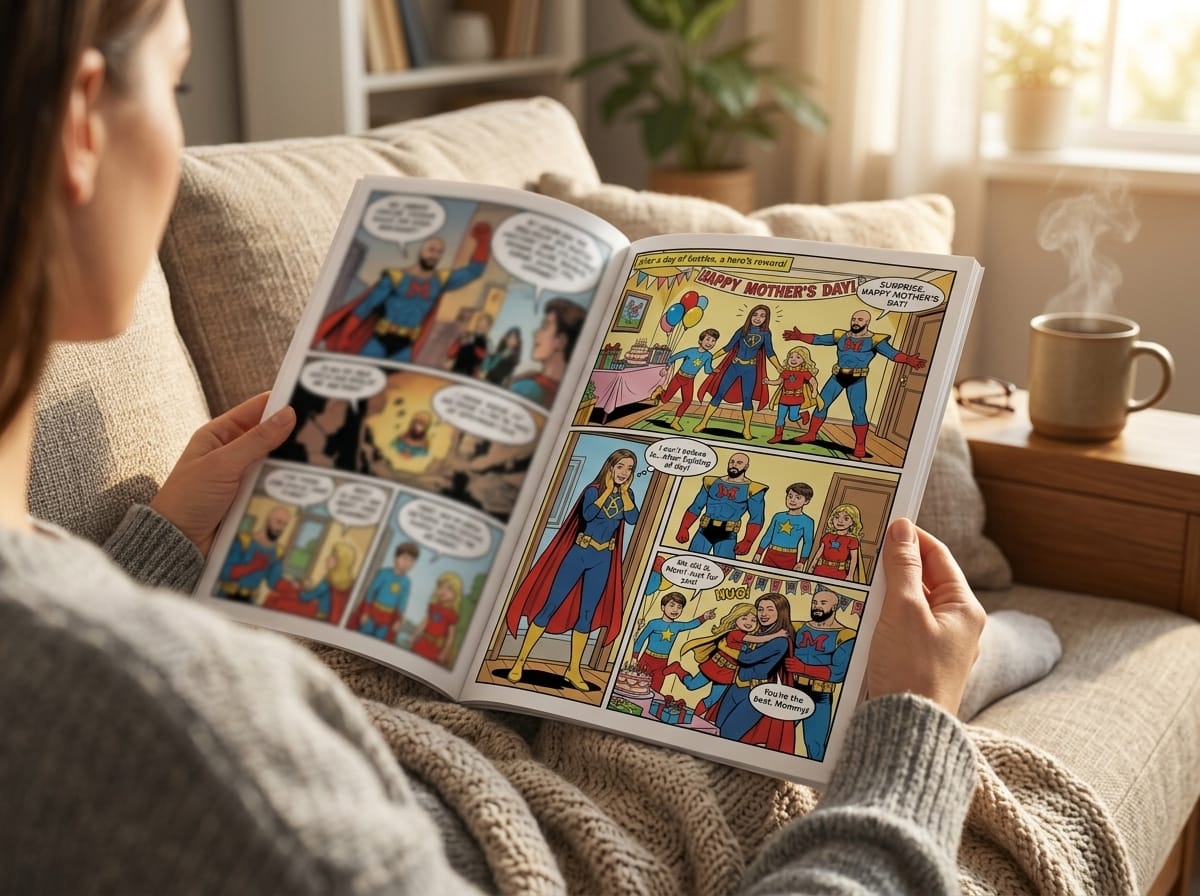
A custom comic book works because it does two jobs at once. It preserves a memory, and it heightens it. The awkward first date becomes an origin story. Your kid's obsession with dinosaurs becomes a full adventure arc. A graduation speech turns into a heroic final issue.
That emotional lift is what makes comics special. A photo captures what happened. A comic captures how it felt.
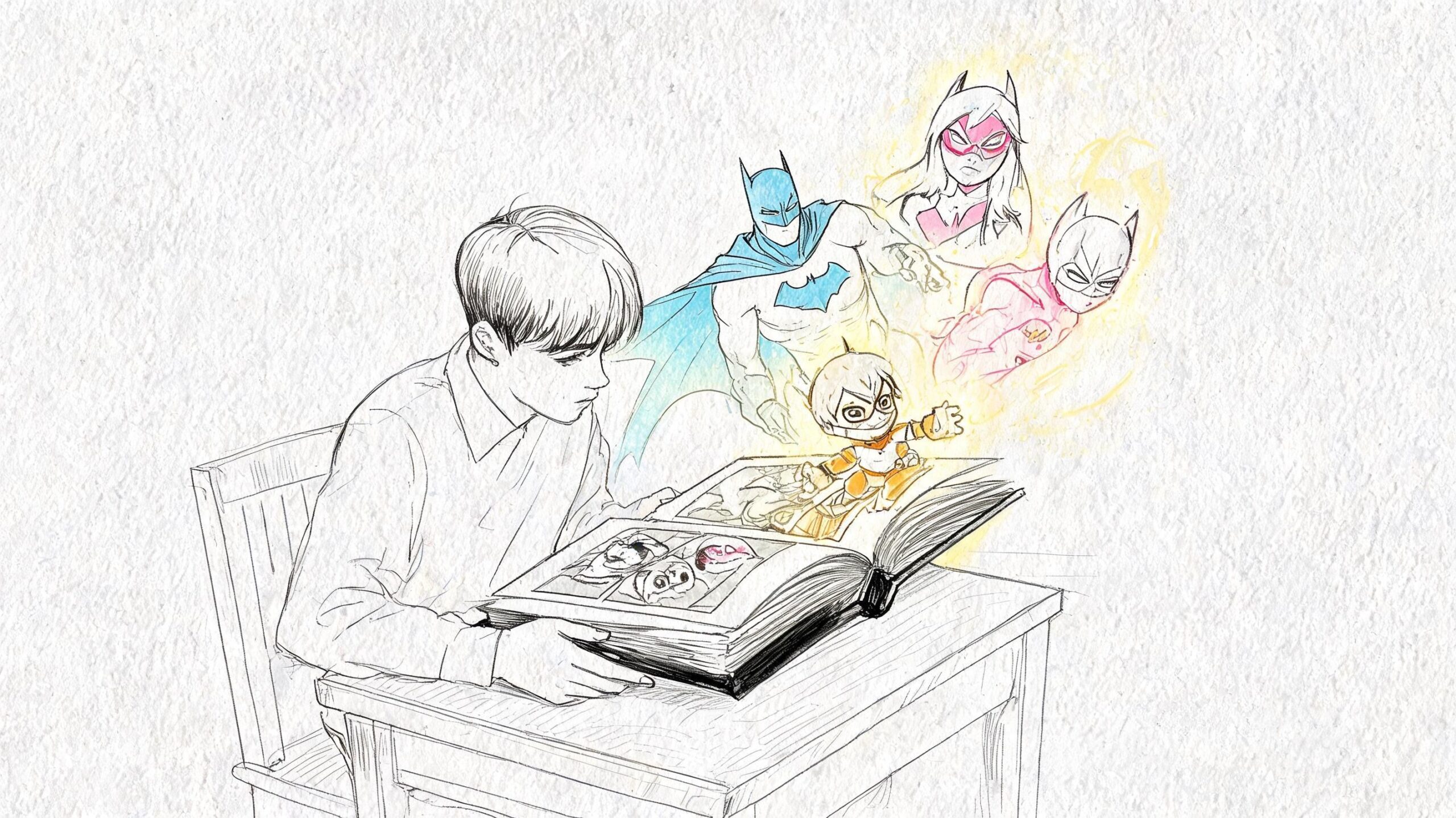
Why this used to be difficult
For years, making a personalized comic usually meant one of two paths. You either drew it yourself, or you hired someone to interpret your idea. Both can work. Both also create friction.
If you draw, consistency becomes the primary challenge. It's not just one nice image. It's the same character, the same tone, the same visual logic across multiple pages. If you hire an artist, you have to translate your memory into briefs, references, revisions, and approvals.
Current guides often assume users have drawing skills or access to artists. PersonalizedComics addresses that gap with eight pre-designed professional art styles and AI character generation from photos, so users can create cohesive comics in minutes without needing illustration skills, as described in this overview of the platform's visual consistency approach.
What makes a comic feel personal
A personal comic doesn't need a complicated plot. It needs recognition. The best ones usually include a few simple ingredients:
- A real emotional center. Maybe it's love, pride, gratitude, nostalgia, or an inside joke.
- Specific details. The orange cat. The terrible karaoke song. The blue graduation cap that kept falling off.
- A clear point of view. Tell the story like it matters to someone, because it does.
- A visual style that fits the mood. Noir works differently from watercolor. Manga feels different from retro pop.
A custom comic book becomes memorable when the reader says, “That is so us.”
That's the fundamental shift AI has created for non-artists. You no longer need to spend your energy worrying about anatomy, line weight, or panel rendering. You spend it on scene selection, pacing, and meaning.
The new role of the creator
You're not replacing creativity with automation. You're moving your effort to the highest-value part of the process.
Instead of asking, “Can I draw this?” you ask better questions:
- What moment should open the story?
- Which version of this memory is funniest, sweetest, or most dramatic?
- What should the final page make the reader feel?
That's why this format works so well for gifts, tributes, and first-time storytellers. The tool handles the technical barrier. You direct the experience.
Planning Your Story and Characters
Most weak comics fail before the first panel. Not because the visuals are bad, but because the story has no shape. If you want your custom comic book to land emotionally, spend a little time planning before you generate anything.
You don't need a full screenplay. You need a clean blueprint.
Start with one story, not a life story
The easiest mistake is trying to include everything. A better comic picks one thread and follows it.
Good starting points include:
- One event. A birthday, wedding, trip, graduation, proposal, or first day of school.
- One relationship. Siblings, partners, best friends, parent and child.
- One transformation. Someone grows, realizes something, overcomes something, or gets celebrated.
If you're stuck, use a simple beginning-middle-end structure.
- Beginning. Show the normal world or set up the situation.
- Middle. Introduce the challenge, surprise, or emotional turning point.
- End. Deliver the payoff, lesson, reveal, or celebration.
That's enough structure for a strong short comic.
Build scenes that can actually be drawn
Comics love scenes. They don't love summaries.
Instead of writing “We had a great year together,” break that into moments:
- getting caught in the rain
- moving into a new apartment
- arguing over furniture
- laughing about it later over takeout
Those are scenes. Scenes give you panels, expressions, and dialogue.
Practical rule: If a moment can be pictured, it can become a panel. If it only exists as a summary, rewrite it as an action.
Write dialogue that sounds like a person
Speech bubbles get crowded fast. Keep your lines short and natural. If a sentence sounds like a greeting card or a corporate script, trim it.
A few ways to tighten comic dialogue:
- Read it aloud. If you'd never say it that way, your character shouldn't either.
- Cut setup words. People rarely speak in complete explanatory paragraphs.
- Use narration for context. Let dialogue carry emotion and personality.
- Leave some silence. One reaction panel can do more than three extra lines.
If you want a stronger script format before generating pages, this guide on how to write a comic book script is a useful next step.
Turn real people into comic characters
When you're using real people, don't try to document every detail. Choose the details that define them.
A simple character sheet can include:
| Character | What to capture | Useful reference |
|---|---|---|
| Main person | Signature expression, hairstyle, posture | Clear face photo |
| Supporting person | Relationship dynamic, key trait, recurring joke | Casual candid photo |
| Narrator or hero version | Voice, role in story, emotional arc | Short written description |
Photos help most when they show personality, not just appearance. A stiff passport-style image may be technically clear, but a laughing candid often gives better material for a warm comic scene.
Keep the emotional target visible
Before you move on, finish this sentence: “I want the reader to feel…”
That answer helps you make every later choice. It tells you whether your comic should feel funny, heartfelt, epic, nostalgic, or playful. It also keeps you from drifting into random scenes that don't support the ending.
A clean plan saves you revision time. Above all, it gives your comic a reason to exist beyond “this looked cool.”
Bringing Your Vision to Life with AI
The practical win of AI isn't that it makes images. Lots of tools do that. Its primary advantage is that it helps non-artists produce a multi-page comic with a consistent look, repeatable characters, and an actual workflow.
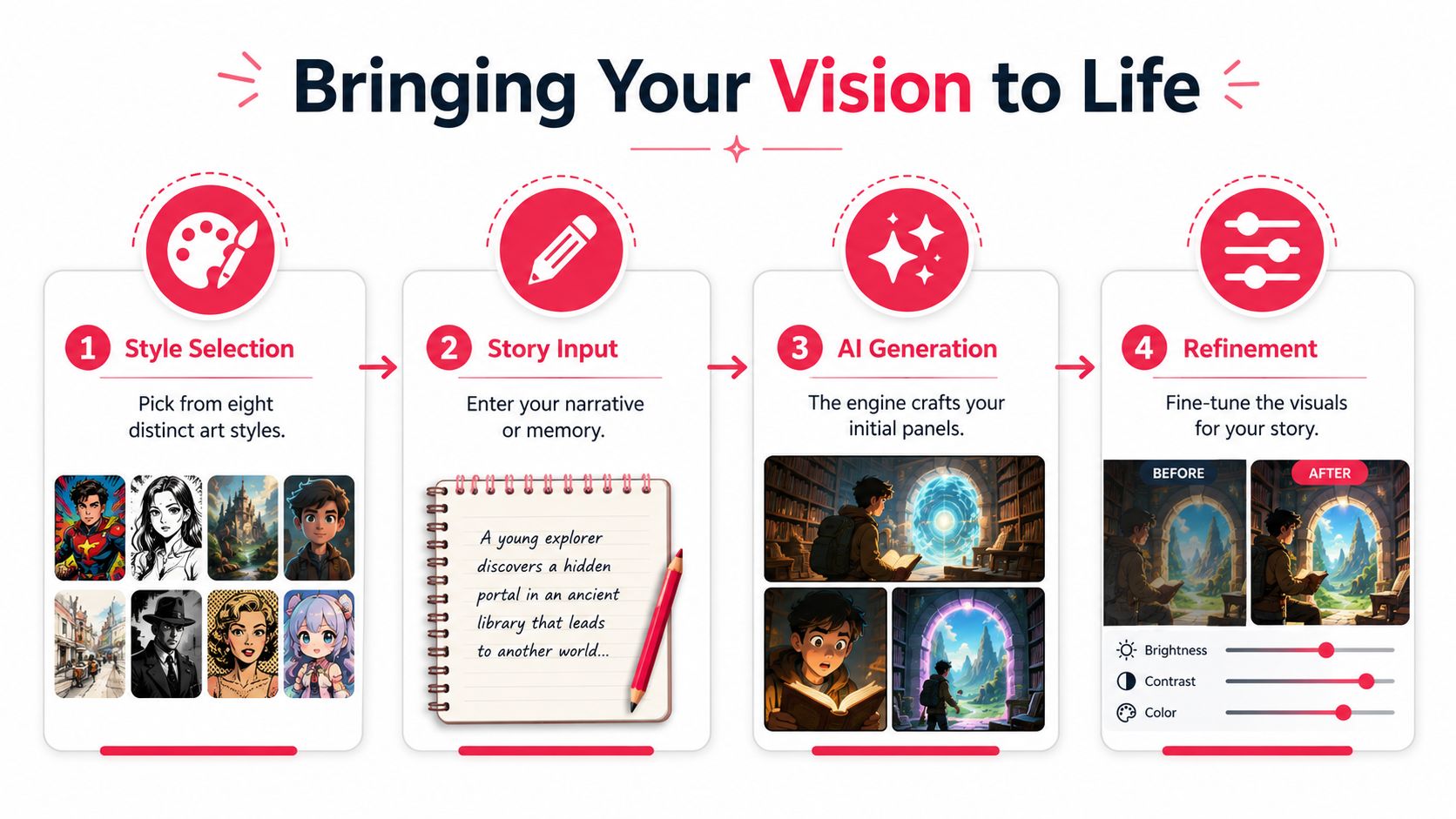
Pick the style before you generate pages
Style is not decoration. It's direction. It changes how the reader interprets the same story.
A romantic anniversary comic in noir feels moody and cinematic. The same story in watercolor feels soft and intimate. A childhood adventure in cyberpunk becomes playful in a completely different way.
Here's a simple style guide to help you choose.
| Style | Description | Best For |
|---|---|---|
| Manga | Expressive, energetic, character-forward | School stories, friendship arcs, dramatic gifts |
| Classic American | Bold, familiar comic-book language | Superhero stories, fun family adventures |
| Graphic Novel | Balanced, modern, cinematic | Memoirs, serious fiction, grounded stories |
| Noir | High contrast, shadow-heavy, dramatic | Mystery, proposals, moody romance |
| Watercolor | Soft edges, warm emotional tone | Family keepsakes, children's stories, gentle memories |
| Cyberpunk | Neon, tech-heavy, high visual energy | Futuristic stories, gaming content, stylized action |
| Retro Pop | Bright, playful, punchy | Humor, birthdays, lighthearted gifts |
| Fantasy | Mythic, magical, immersive | Quests, original heroes, bedtime epics |
If you're adapting real memories, pick the style that matches the feeling of the story, not just your favorite genre.
Feed the AI the right ingredients
The best outputs usually come from clear inputs. Don't throw in a vague idea and hope the system reads your mind. Give it structure.
Use this order:
Character input
Upload clear photos if you're using real people. Choose images that show the face well and fit the role. If you're creating original characters, describe their age, vibe, clothing, and attitude.Story input
Paste in your outline, scene notes, or page-by-page script. Keep each scene focused. One emotional beat per scene usually works better than cramming multiple turns into a single page.Tone cues
Mention whether the scene should feel funny, tense, heartfelt, triumphant, awkward, or magical. Tone affects panel composition more than many beginners expect.Visual anchors
Add setting details that matter. A diner booth, graduation stage, treehouse, city rooftop, or family kitchen gives the page identity.
For a more visual prep workflow, this article on how to turn photos into comic book art is a helpful companion.
What AI is actually saving you from
Traditional comic creation runs through a long professional pipeline: Ideation → Plot Development → Script → Pencilling/Thumbnailing → Inking → Coloring → Lettering → Editing, and that process typically takes 8 to 16 weeks minimum for professional creators, according to this breakdown of the comic creation process.
By automating the visual rendering stages, AI compresses a workflow that normally stretches across weeks into a process that can move in minutes.
That doesn't mean every first draft is perfect. It means you get to prototype quickly, see the story on the page, and refine with momentum instead of waiting through a long chain of production steps.
What works and what doesn't
A few practical trade-offs matter here.
- Works well for clear stories. A comic with a strong premise, defined characters, and obvious scene beats tends to generate cleanly.
- Works less well for overloaded prompts. If you ask for five emotions, three flashbacks, and a wardrobe change in one scene, coherence usually drops.
- Works well when you choose one visual language. Stay committed to a style across the project unless you have a deliberate reason to shift.
- Works less well when every page tries to be a poster. Comics need rhythm. Not every panel has to be dramatic.
Generate in small batches
Don't create your entire book in one giant pass if this is your first project. Start with a few pages.
Review them for:
- character consistency
- pacing
- readability
- whether the page feels like your story, not just a cool image set
That small-batch approach saves credits, catches weak scene choices early, and gives you room to adjust tone before you're deep into the project.
The strongest custom comic book creators use AI like a fast sketch room. They generate, review, tighten, and only then continue.
Editing and Polishing Your Comic Pages
The first version is usually close. It isn't usually final.
That last stretch matters because readers notice small breaks in flow more than creators expect. A speech bubble that's too long, a panel reaction that's slightly off, or a caption that repeats what the image already shows can flatten a strong page.
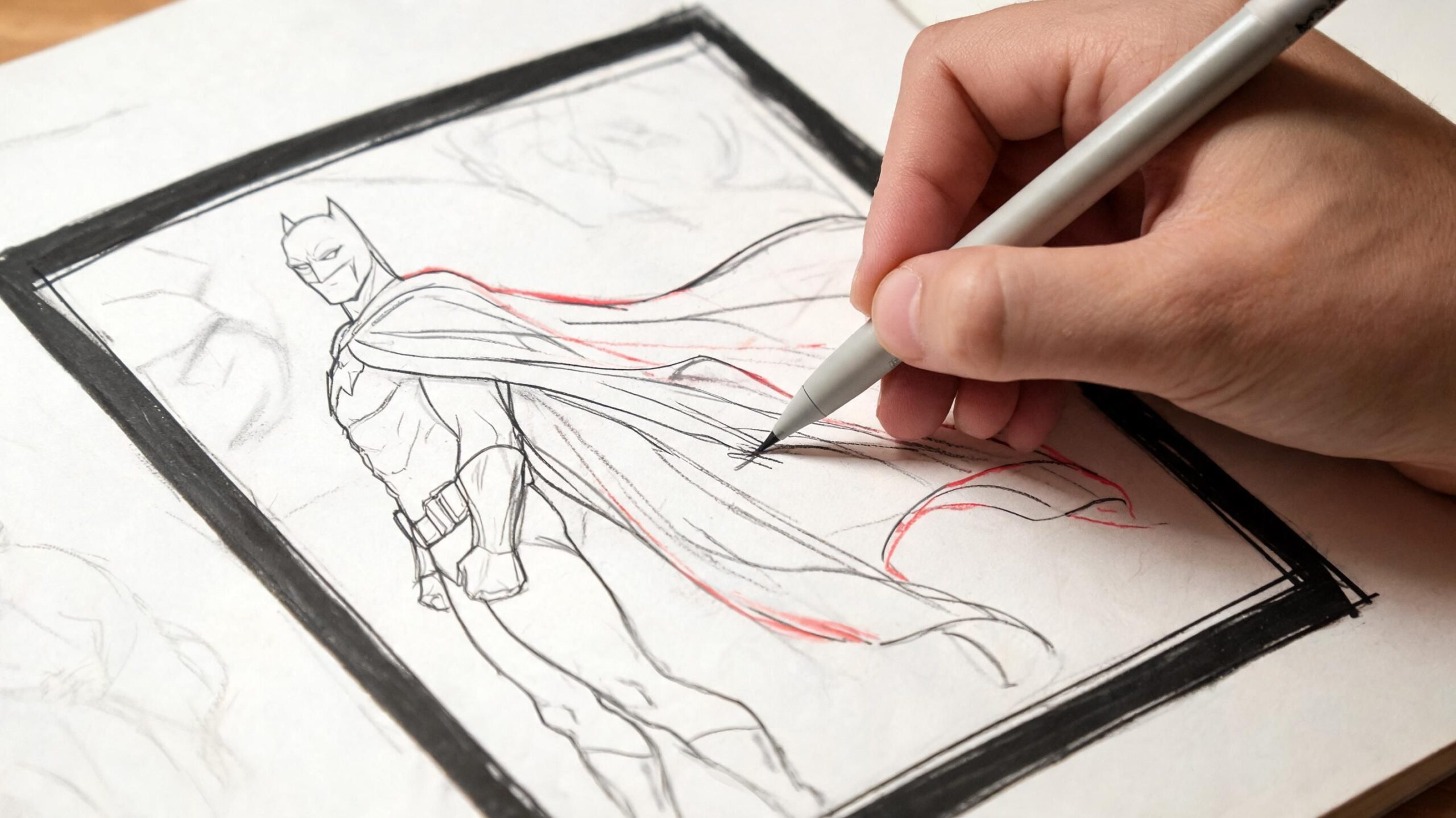
Edit like a director, not a technician
You don't need to obsess over every pixel. Focus on whether the page communicates the right thing.
Look at each page through these questions:
- Can the reader follow the action immediately
- Does each line of dialogue sound like the person speaking
- Do the expressions match the emotional beat
- Is there any panel that feels generic instead of specific
If one panel misses the tone, regenerate that panel or revise the text around it. You don't need to rebuild the whole comic every time something is slightly off.
The best polish is usually subtraction
Beginners often over-explain. They add extra captions, extra speech, extra exposition. That usually makes the page feel less confident.
Try this cleanup pass:
- Trim repeated information. If the art already shows surprise, the caption doesn't need to say “She was surprised.”
- Shorten bubble text. One crisp line usually reads better than a paragraph.
- Check transitions. Make sure one panel naturally leads to the next.
- Fix names and references. Personalized comics live or die on details being right.
When a page feels crowded, the fix is often to remove one thing, not add two more.
Watch for consistency across pages
A polished comic feels intentional from start to finish. That comes from consistency in voice, scene logic, and character presentation.
A good final review includes:
- reading the whole comic in order without editing
- marking any point where attention dips
- checking that the ending lands harder than the opening
- catching typos on a separate pass
Read it once as the creator. Then read it once as the recipient. Those are different experiences.
Keep the human fingerprint
Now, your comic stops being “AI-generated” and starts becoming yours. The inside joke in a caption. The exact phrase your dad always says. The final dedication on the last page. Those touches carry more emotional weight than technical perfection.
A polished custom comic book doesn't need to feel manufactured. It should feel considered.
Understanding Pricing and Ordering a Physical Copy
Once the digital version feels right, a familiar urge surfaces. To hold it in hand is the goal.
That physical step is where pricing clarity matters most. Custom creative products often get murky fast, especially when you're comparing commissions, design labor, revisions, and print setup. A simple page-based model is easier to understand and much easier to control.
Why page-based pricing is easier to manage
A transparent system where 1 credit equals 1 page is practical because it ties cost directly to output. You know what you're making, and you know what you're spending on. The model becomes even friendlier when credits don't expire and there isn't a recurring subscription hanging over the project.
That matters for real users. Some people make a comic in one evening. Others chip away at it between work, parenting, and life. A non-subscription model respects that reality.
It also helps that you can see the model in action before spending anything: signing up comes with a free three-page preview comic, so first-time creators can experiment before committing.
What makes a physical comic feel professional
Print quality changes how your comic is perceived. A heartfelt story with muddy color or weak binding loses some of its impact the moment it's in someone's hands.
For custom comics averaging 28 to 32 pages, digital printing with saddle-stitch binding is the optimal production method, and saddle-stitch should stay under 60 pages to avoid spine bulging, according to this printer's guide to creating a comic book.
That recommendation matters because custom comics are usually low-volume projects. Offset printing works best at 1,000+ unit volumes, where setup costs can be spread across a large run, but digital printing avoids that upfront plate expense for personalized books, as the same comic printing advice from a commercial printer helps frame for creators comparing print paths.
What to check before you order
A good physical order comes down to a short checklist:
- Page count fit. Make sure your story length suits the binding method.
- Color handling. Styles like noir, watercolor, and cyberpunk need reliable reproduction.
- Proofing. Review text, page order, and cover details before finalizing.
- Purpose. A gift copy, a keepsake, and a prototype may deserve different finishing priorities.
Production note: Premium digital printing and a color-managed workflow matter more for comics than many first-time creators realize. Style-heavy pages can shift noticeably if print handling is sloppy.
The print version is not just a souvenir. It's the payoff. When someone flips through a personalized comic and sees themselves rendered as the lead character, the format does the rest.
Creative Ideas for Your Custom Comic Book
A lot of people start with gifts, and that makes sense. Personalized storytelling already has strong commercial and cultural momentum. In one niche photo-comic product line, 15% of orders in 2021 were fully personalized comic-style stories, a sign of growing demand for user-driven comics in gift contexts, according to this market summary on personalized comic-style products.
But gifts are only one lane.
Personal stories that hit harder in comic form
A marriage proposal comic works because it lets you build suspense. Start with the ordinary version of your relationship, heighten the milestones, then land the final page with the question.
A family history comic can do something different. Instead of dumping dates and names, turn grandparents into protagonists. Show a train station goodbye, a first apartment, a tiny shop, a wedding photo recreated as a panel. Suddenly the story has motion.
A memorial tribute can also work beautifully in comic form if you keep it gentle. Focus on repeated sayings, habits, small rituals, and the role that person played in everyone's life.
Useful comics that don't feel like homework
Some of the most effective custom comic books are practical.
Try one of these:
- Teacher resource. Turn a classroom rule set into a short comic with recurring student characters.
- Youth group guide. Build a safety or onboarding comic people will read.
- Small business leave-behind. Explain your service through a character-based mini story instead of a plain brochure.
- Creator prototype. Draft the first chapter of a graphic novel before committing to a longer project.
These work because comics reduce resistance. People read stories faster than instructions.
Fun concepts that are easy to start
If you want a lighter project, use one of these setups:
| Idea | Hook |
|---|---|
| Birthday origin issue | The main character gains powers based on their quirks |
| Pet adventure comic | The dog or cat narrates the household chaos |
| Vacation mini-series | Each day becomes a new “episode” |
| Friendship one-shot | Recreate your best inside jokes as dramatic canon |
| Streamer or cosplay promo comic | Turn your persona into a recurring hero |
The best concept is often the one that already makes you smile before you start writing. That's usually the story with enough energy to finish.
A custom comic book doesn't need permission to be meaningful. It can be funny, sentimental, weird, romantic, educational, or all of that at once. It just needs a point of view and a reader who'll recognize the care inside it.
If you're ready to turn photos, memories, or a rough idea into a finished comic, PersonalizedComics makes the process approachable. You can start with a free three-page preview comic, choose from eight art styles, build pages without drawing skills, and create a polished custom comic book at your own pace without a subscription.
Filed under Making Your Comic