A card feels too small. A photo book feels a little passive. A social post disappears in a day.
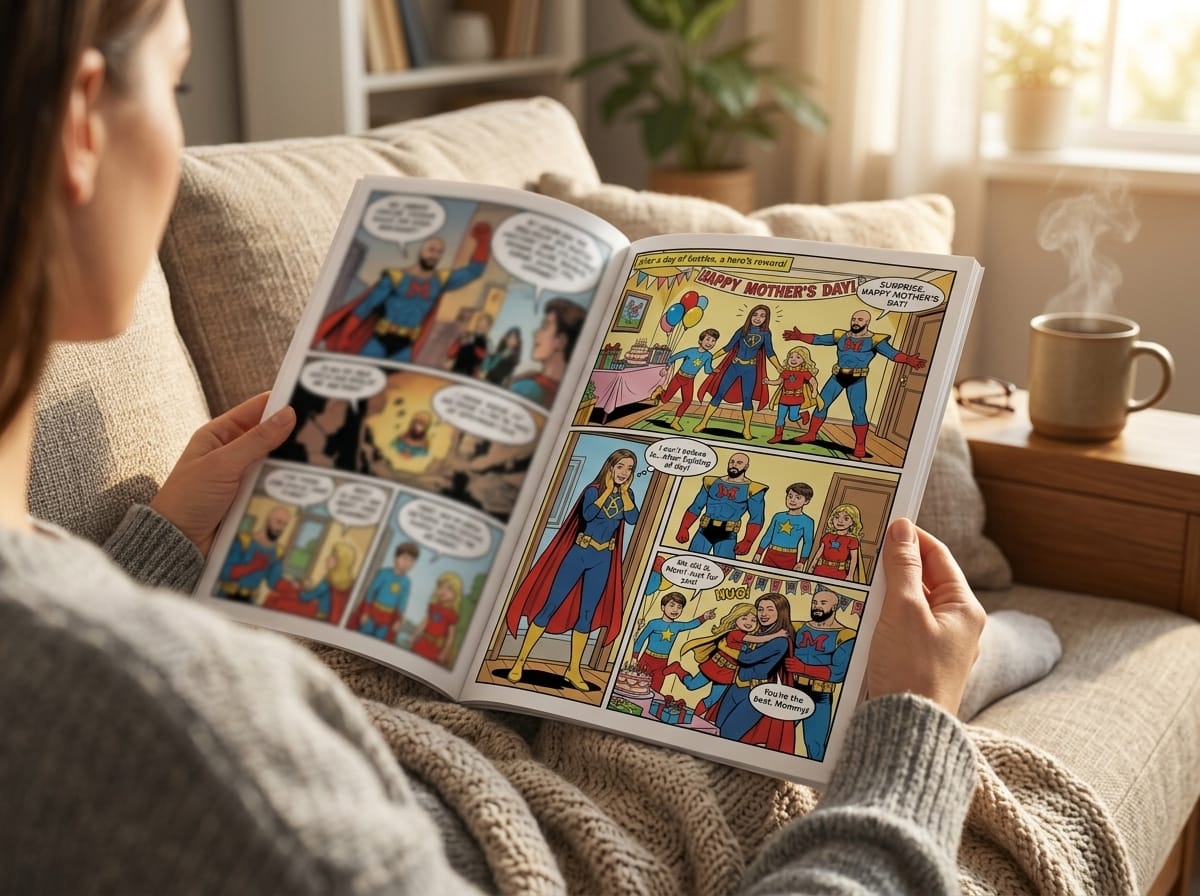
A personalized comic book solves a different problem. It doesn't just show what happened. It lets you tell what happened. You can turn a first date into a superhero origin story, make your best friend the star of a ridiculous sci-fi adventure, or give your child a story where they outsmart dragons, robots, or homework.
That idea used to belong mostly to people who could draw, hire an artist, or spend a long time learning comic layout. Now AI tools have changed the entry point. You can bring real people, real memories, and original ideas into a comic format without needing to ink a single panel yourself.
The exciting part isn't only the technology. It's what the format lets you do emotionally. Comics combine images, pacing, dialogue, silence, and surprise. They can be tender, funny, dramatic, or wildly over-the-top. A single page can hold a joke, a confession, and a visual callback all at once.
That's why a personalized comic book lands differently from a novelty gift. Done well, it becomes a story artifact. Something someone reads, laughs at, keeps on a shelf, and comes back to.
Your Story Deserves More Than a Photo Album
A lot of people start in the same place. They have a meaningful memory, but no satisfying format for it.
A photo album can preserve a trip, a wedding, or a friendship, but it usually leaves out the invisible parts. It doesn't capture the running commentary in the car, the ridiculous misunderstanding at dinner, or the dramatic version of events everyone prefers to tell now. Those are story moments, not just image moments.
That's where comics shine. A personalized comic book can show what happened and what it felt like. You can exaggerate reality on purpose. You can make your dad look like a grizzled detective solving the mystery of the missing barbecue tongs. You can turn your partner's habit of always being early into a time-travel power. The comic format gives you permission to heighten the truth without losing the heart of it.
Why stories beat souvenirs
The reason people keep special objects isn't only quality or price. It's meaning.
A framed photo says, “This happened.”
A comic can say, “This mattered, and here's why we still talk about it.”
That difference matters for gifts, family keepsakes, and creative projects. If you've ever thought, “I wish I could make something personal, but I'm not an artist,” you're exactly the kind of creator this format opens up for.
A good personalized comic doesn't need a complicated plot. It needs a clear emotional center.
That emotional center might be gratitude. It might be humor. It might be nostalgia. Once you know that, the rest gets much easier.
What beginners often get wrong
Many first-time creators assume the big challenge is drawing. Usually it isn't. The main challenge is deciding what kind of story you want to tell.
Start smaller than you think:
- Pick one moment: A proposal, graduation, inside joke, or family vacation often works better than trying to cover an entire relationship.
- Choose one feeling: Warm, funny, dramatic, adventurous, or sweet. That tone helps every later choice.
- Think in scenes: Comics move through moments. “We arrived late, spilled coffee, and laughed about it” is already a comic skeleton.
Once you stop trying to make a complete life story and start shaping one meaningful episode, a personalized comic book becomes much more approachable.
What Exactly Is a Personalized Comic Book
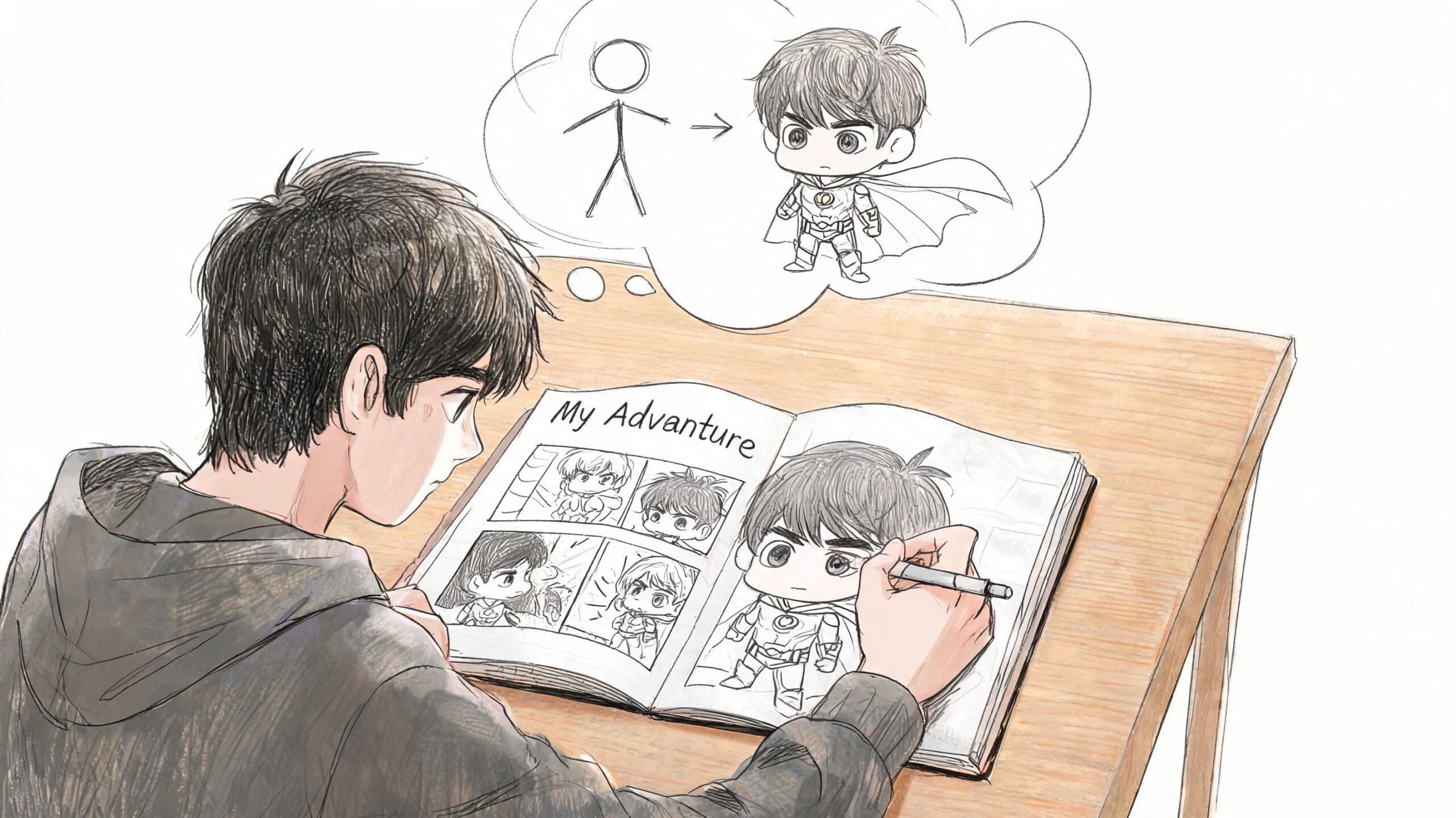
A personalized comic book is a comic where the characters, story details, and visual choices are built around real people or original characters you define. Instead of reading about a generic hero, you become the director of the whole thing. You decide who appears, what happens, how it looks, and what emotional tone the pages carry.
The easiest way to understand it is to borrow a movie analogy. You're the writer, casting director, and producer. The AI acts like a compact studio that helps turn your concept into illustrated pages.
More than a photo collage
People sometimes confuse this with a stylized photo gift. It's more than that.
A comic has a narrative structure. That means it uses panels, page turns, captions, expressions, and dialogue to guide the reader through a sequence. A photo album usually asks the viewer to supply the story. A comic builds the story directly into the reading experience.
That structure gives you creative tools such as:
- Pacing: You can slow down a tender moment with a large panel or speed up a chaotic scene with several small ones.
- Voice: Dialogue and narration let you preserve how people talk, or how they'd talk in an exaggerated fictional version.
- Visual metaphor: You can show someone “floating” with happiness or facing a giant monster made of deadlines.
More personal than a traditional comic
Traditional comics are created for a broad audience. A personalized comic book starts with a specific audience, often one person, one family, or one creator with a very particular idea.
That's part of why this format fits so many situations. The same medium can hold a romantic gift, a comedy strip about office life, or an early mockup for a serious graphic novel pitch.
The broader comic world is already large enough to support that kind of creative expansion. In North America, the comic book industry surpassed $2 billion in revenue in 2016, with graphic novels helping drive mainstream growth, according to Statista's chart on comic and graphic novel sales in the US and Canada. That matters because it shows comics aren't a niche side hobby anymore. Readers are comfortable with visual storytelling in bookstores, online shops, and everyday culture.
What usually goes into one
A personalized comic book often blends three ingredients:
| Element | What it adds |
|---|---|
| Personal reference | Real faces, memories, inside jokes, pets, places, or milestones |
| Story design | Scenes, conflict, payoff, dialogue, and emotional rhythm |
| Illustrated style | Manga, noir, watercolor, fantasy, cyberpunk, and other visual directions |
The format works because it combines memory with interpretation. You're not only preserving an event. You're giving it shape.
That's why the result feels so different from a novelty print. Even a short comic can feel cinematic, intimate, and memorable when the storytelling choices are thoughtful.
How AI Becomes Your Personal Comic Artist
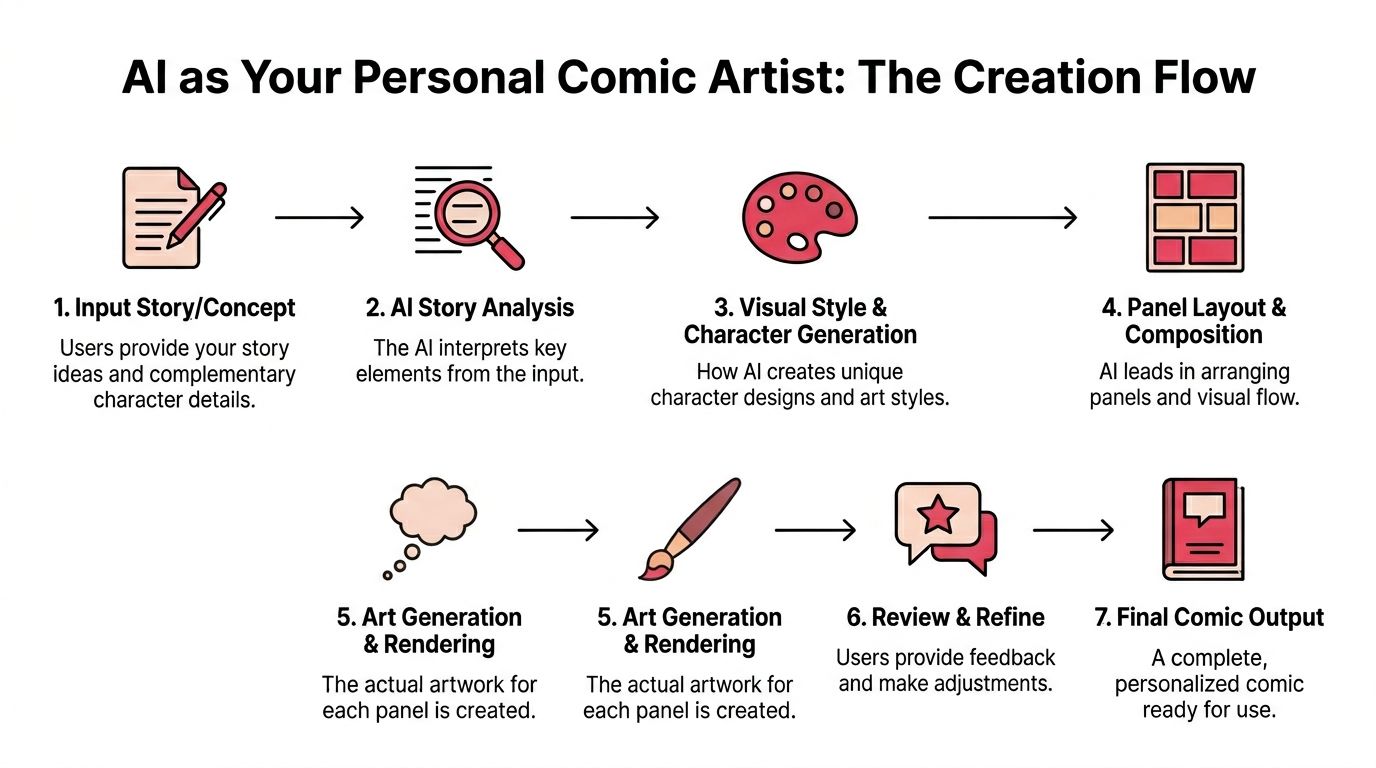
AI comic creation sounds mysterious until you break it into tasks. At a practical level, the system is helping with jobs that would usually require several people: character design, scene illustration, style matching, layout support, and production formatting.
The biggest leap is consistency. A comic isn't one isolated image. It's a chain of images that all need to feel like they belong to the same world.
The character model idea
Think of AI character training like teaching a costume department, makeup team, and storyboard artist to recognize one actor from every angle. You show the system who the character is. It studies the important visual features. Then it uses that understanding to place the character into new scenes.
Professional AI comic platforms use custom character model training, and that initial setup typically takes 10 to 20 minutes. After that, the system can generate unlimited scenes with the same character, which is especially useful for longer stories. The same workflow can reduce production time for an 8 to 12 page comic from hours to under 40 minutes, according to this video explanation of AI character model training and comic workflow.
That single point answers one of the most common beginner questions: “Will I look like the same person on every page?” On stronger platforms, that's exactly what the training stage is designed to solve.
Why consistency matters so much
Readers notice inconsistency immediately. If someone's face shape, hair, clothing, or proportions shift wildly from panel to panel, the story feels unstable. The reader stops following the emotion and starts noticing the mistakes.
That's why AI comic tools that support trained character models feel different from one-off image generators. They're not just making cool pictures. They're trying to maintain a cast.
A system may also support multiple characters in the same panel while keeping each one recognizable. That matters for family stories, team scenes, romance comics, and any project where reactions between characters carry the emotional weight.
Practical rule: If your story depends on the reader caring about the people, visual sameness isn't a luxury. It's part of the storytelling.
What the AI usually helps with
Once a character model exists, the rest of the pipeline becomes easier to understand. The AI can assist with:
- Story interpretation: It reads your prompt or outline and identifies setting, mood, and action.
- Style application: It renders the same scene in a chosen visual language such as manga, noir, watercolor, or cyberpunk.
- Pose and composition: It places characters in positions that fit the moment.
- Panel generation: It creates the scene artwork for each beat of the story.
- Refinement: It can regenerate or adjust weak panels instead of forcing you to restart the whole comic.
If you want a beginner-friendly look at planning your first project, this guide to a create your own comic book kit is a useful companion.
AI is the studio, not the author
This part is easy to miss. AI can help produce the visuals, but it doesn't automatically make a comic meaningful.
You still decide things like:
- Which moment deserves its own panel.
- Whether the tone should be sincere or playful.
- Which line of dialogue sounds true to the people in the story.
- What the final page should leave the reader feeling.
That's why the technology feels less intimidating when you treat it as a creative assistant. It handles heavy production work. You handle taste, memory, and story judgment.
Your Step-By-Step Comic Creation Workflow
Once you understand the basic mechanics, the next challenge is shaping a comic that reads well. At this stage, many beginners get stuck. They have a nice idea, but they aren't sure how to convert it into pages.
A good workflow helps because it separates creative decisions into manageable pieces. You don't need to solve story, art, dialogue, and print setup all at once.
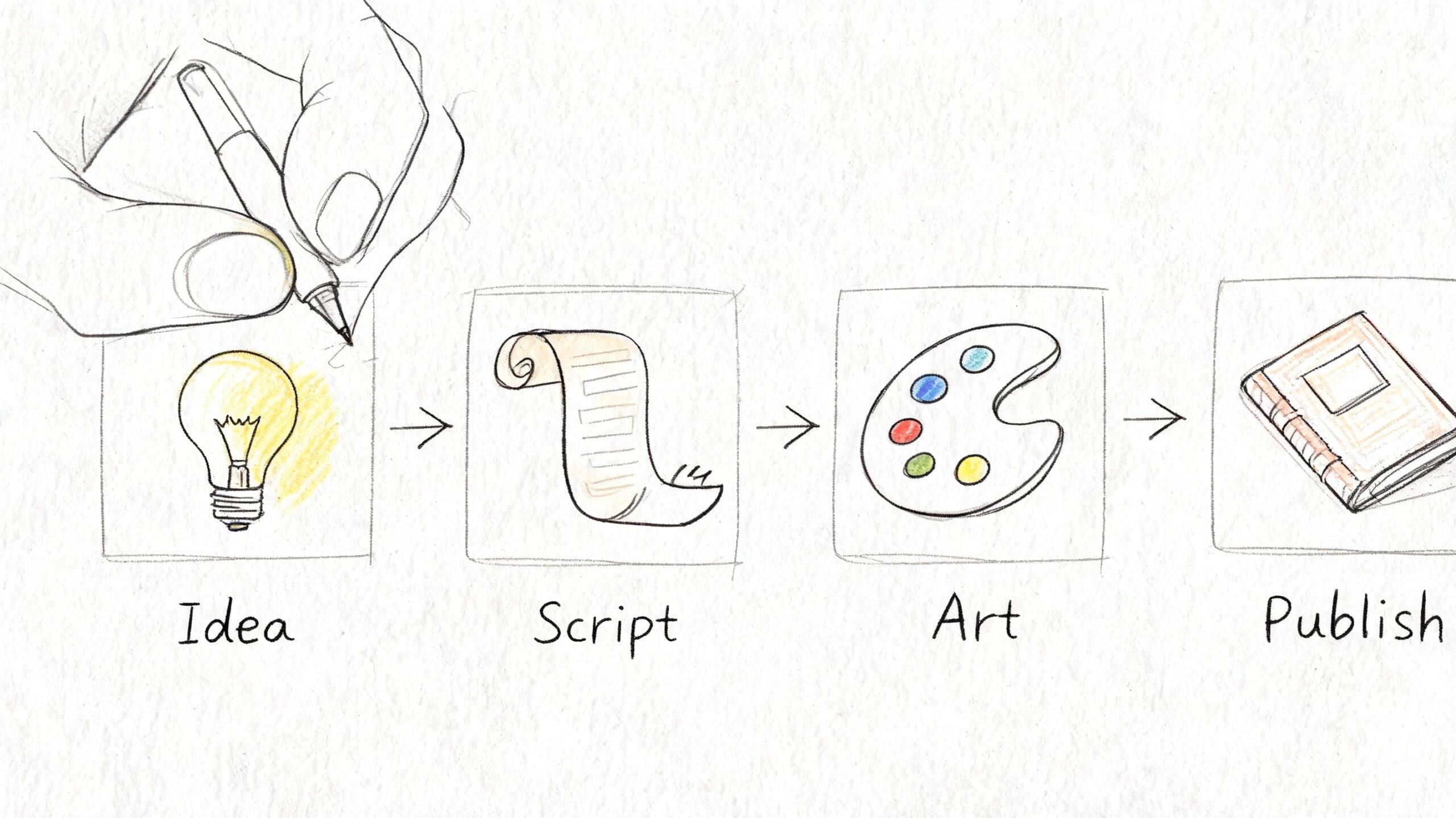
Modern platforms combine story generation, illustration, layout, and print-ready export in one workflow. They often use a credit-based model where 1 credit equals 1 page, and this kind of system can lower the cost of creation from $500 to $2,000 for hiring an artist to around $20 to $100 per comic, based on the production workflow described in this video on AI comic creation and print-ready output.
Start with the core idea
Don't begin by writing page one. Begin by answering a simple question: what is this comic really about?
Not the plot summary. The heart.
A few examples:
- “A thank-you gift for my mom.”
- “A goofy retelling of our road trip disaster.”
- “A visual prototype for my fantasy story.”
- “A short comic that teaches kids a science idea through adventure.”
When the purpose is clear, choices get easier. A heartfelt anniversary comic needs different pacing and art style than a parody superhero gift.
Pick a visual style that matches the mood
Style isn't decoration. It changes how the same story feels.
A watercolor look can make a childhood memory feel soft and reflective. Noir can make an ordinary errand feel like a detective plot. Manga can heighten expressions and energy. Cyberpunk can turn a simple friendship story into a dramatic future-world adventure.
Try this quick matching method:
| Story mood | Style direction that often fits |
|---|---|
| Warm and nostalgic | Watercolor, soft graphic novel |
| Fast and funny | Manga, retro pop |
| Dark and dramatic | Noir, classic graphic novel |
| Big imaginative world | Fantasy, cyberpunk |
You don't need perfect taste on the first try. You just need a style that supports the emotional intent.
Build your cast before building scenes
Beginners often rush into page generation too early. Slow down here.
If the comic includes real people, gather clear reference photos and note the features that matter most: hairstyle, glasses, clothing habits, posture, expressions. If the story uses invented characters, write a short profile for each one. Think of this as casting.
Useful details include:
- Signature look: Red jacket, curly hair, striped scarf, boots
- Energy: Calm, chaotic, shy, theatrical
- Role in the story: Hero, sidekick, love interest, narrator, comic relief
- Non-human additions: Pets, mascots, robots, dragons, or family cats
Your character notes don't need to sound literary. “Always wears a hoodie and looks mildly suspicious” is often enough to guide the visual direction.
Outline the story in beats
Comics work best when you think in moments, not paragraphs.
Instead of writing a long summary, break the story into beats. A beat is one meaningful unit of action or emotion. For a short personalized comic book, that might look like this:
- Setup
We meet the characters and understand the situation. - Trigger
Something happens. A surprise party plan goes wrong. A quest begins. An old memory returns. - Escalation
The middle adds obstacles, jokes, misunderstandings, or discoveries. - Payoff
The comic lands the emotional point, laugh, or reveal.
That structure is simple, but it keeps your pages from wandering.
Write dialogue that sounds spoken
Many beginner comics fail because the text sounds like a summary rather than actual speech. Keep dialogue shorter than you think.
A useful test is to read every line out loud. If you wouldn't say it in conversation, rewrite it.
Try these habits:
- Cut explanation: Let the image do some work.
- Give each character a voice: One person rambles, another answers in three words.
- Use captions carefully: Narration can add reflection, but too much can smother the panels.
Bad dialogue often says exactly what the panel already shows. Better dialogue adds contrast, personality, or subtext.
Review like an editor, not a fan
When the pages are generated, switch roles. Stop being the excited creator for a moment and become the editor.
Look for:
- Does each page move the story forward?
- Do expressions match the mood?
- Does any panel feel confusing or visually crowded?
- Are there too many words for the available space?
- Does the last page earn the ending?
An AI-assisted service can save time, because you can revise specific choices instead of rebuilding the whole project from scratch.
One example is PersonalizedComics, which lets users upload photos, choose among multiple art styles, and generate comic pages with speech bubbles and narration through a credit-based system. That kind of setup is useful when you want one place to handle both visual generation and page assembly.
Top Use Cases For Your Custom Comic
The most convincing way to understand a personalized comic book is to see what people make with one. The format is flexible, but certain uses keep rising to the top because they combine emotion with clear storytelling.
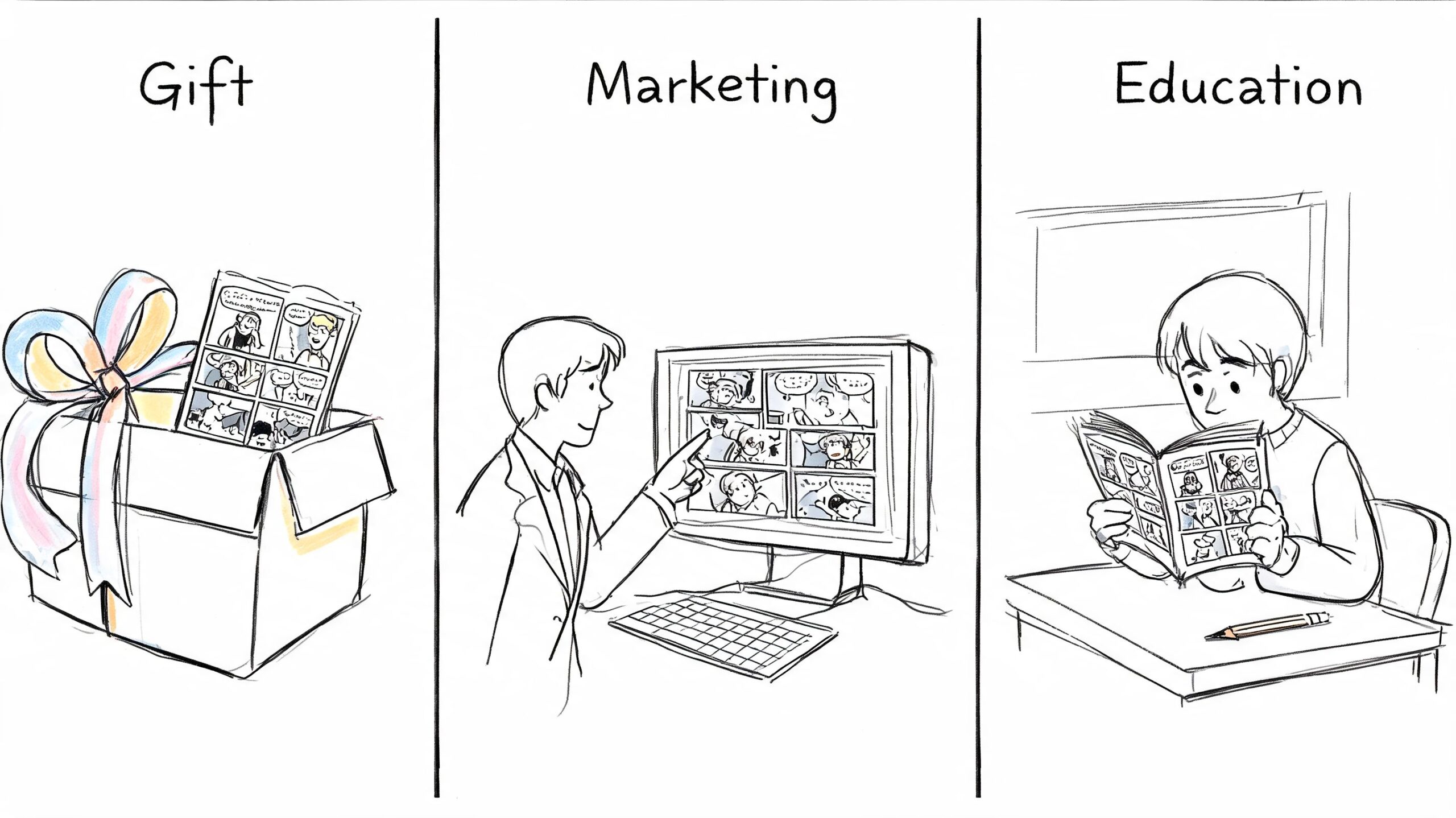
Unforgettable gifts
A standard gift says, “I bought something for you.” A custom comic says, “I paid attention.”
Think about an anniversary gift. Instead of listing milestones, you turn the relationship into a mini adventure. The first awkward date becomes chapter one. The missed train becomes a dramatic chase scene. The private joke about always needing snacks turns into a recurring visual gag.
That kind of comic works because it reflects shared memory in a playful way. It doesn't need to be serious to feel intimate. Often the opposite is true. Humor can make affection feel more personal. The same logic works beyond couples: this roundup of gifts for a brother-in-law shows how one shared memory can outshine the safer default picks.
If you need inspiration for a lighter angle, these ideas for a funny gift for a friend show how comedy can carry a gift without making it feel generic.
Prototyping a dream project
A lot of writers have scripts, notebooks, and character folders sitting half-finished because visual development feels expensive or overwhelming. A personalized comic book can act as a bridge between concept and presentation.
Say you've written part of a fantasy story. You know the lead character, the opening scene, and the emotional tone, but you haven't been able to picture it clearly enough to share. A short comic prototype can make the project legible. Suddenly other people can see the world, the cast, and the pacing.
That's useful for:
- writers testing a graphic novel idea
- creators building a pitch sample
- streamers or content creators wanting a stylized narrative version of their persona
- collaborators who need a visual reference before committing to a bigger project
Educational storytelling
Comics also help when you want someone to understand, not just memorize.
A parent can turn a child into the hero of a history adventure. A teacher can frame a science concept as a mission with a problem to solve. A youth group can create values-based stories that feel like entertainment rather than instruction.
Here's why it works. Comics combine sequence and emotion. That combination helps ideas stick because the reader follows a character through events instead of receiving disconnected facts.
When a learner sees themselves in the story, attention changes. The material stops feeling assigned and starts feeling participatory.
Keepsakes for events and milestones
Some projects don't fit neatly into “gift” or “education.” They're about marking a moment.
A personalized comic book can commemorate:
- graduations
- retirements
- team events
- weddings
- family reunions
- memorial tributes
- convention or cosplay experiences
This use case works especially well because comics can mix reality with symbolism. You can show the ceremony on one page and then represent the person's journey as a mountain climb, a spaceship launch, or a city rescue on the next.
That blend of literal and imaginative storytelling is hard to match in most other gift formats.
Choosing Your Creative Path DIY Versus AI Services
There isn't one correct way to make a comic. The best path depends on your budget, your time, your skill set, and how polished you need the final result to be.
Individuals often choose among three routes. They draw it themselves, hire a freelance artist, or use an AI service.
The tradeoffs at a glance
| Factor | AI Platform (e.g., PersonalizedComics) | Hiring a Freelance Artist | DIY (Drawing Yourself) |
|---|---|---|---|
| Cost | Usually more predictable through page-based credits | Can be higher because you're paying for custom labor | Lowest cash cost, highest personal labor |
| Time investment | Faster once your concept is ready | Depends on artist availability and revision cycles | Often the slowest if you're still learning |
| Skill required | Low to moderate, mostly story and prompt clarity | Low drawing skill required from you, but strong communication helps | High if you want polished art |
| Creative control | High on concept, moderate on exact output | High through collaboration, but filtered through another person's style | Highest direct control |
| Consistency across pages | Strong if the platform supports dedicated character models | Strong with a skilled artist | Depends entirely on your drawing ability and discipline |
| Best for | Gifts, prototypes, hobby projects, fast iteration | Premium custom commissions, distinct hand-drawn feel | Personal art practice, total ownership of craft |
When DIY makes sense
Drawing it yourself is still a valid and often meaningful path. If you love making art, want full control over every line, or see the project as part of your creative growth, DIY has obvious appeal.
But it asks a lot from one person. You're handling writing, thumbnails, anatomy, expressions, lettering, page flow, and revision. That can be rewarding, but it can also stall a project for months.
When a freelance artist makes sense
Hiring an artist works well when you want a very specific hand-crafted look and you're ready to collaborate closely. This path is ideal for people who value the artist's personal style as part of the final product.
The challenge is coordination. You'll need to communicate references clearly, align on expectations, and manage revisions. The process can be wonderful, but it usually requires patience and budget.
When AI services make sense
AI services fit people who have story ideas but limited drawing skill, limited time, or a need to iterate quickly.
This path also addresses one of the hardest problems in comics: staying visually coherent over many pages. Industry analysis suggests 60 to 70 percent of rejected graphic novel submissions fail due to inconsistent artwork, according to Make Me a Comic's discussion of comic creation challenges. That doesn't mean AI automatically fixes every artistic issue, but platforms with dedicated character models are built to tackle exactly that consistency problem.
Choose the path that protects your momentum. A finished comic with heart beats a perfect idea that never leaves your notes app.
From Digital Page to Physical Keepsake
A comic feels different when it leaves the screen. The pages become an object. You can wrap it, shelf it, sign it, or hand it to someone and watch them turn the first page.
That shift from digital file to physical keepsake is where a few technical terms matter.
The print basics that matter most
DPI means dots per inch. For comic printing, 300 DPI is the usual quality benchmark because it keeps images and text sharp on paper.
CMYK is the color mode used for print. Screens display color differently than printers do, so a file prepared for print usually needs CMYK conversion if you want the final colors to behave more predictably.
Binding also matters:
- Saddle-stitch: Pages are folded and stapled along the spine. This suits shorter comics and classic comic-book formats.
- Perfect-bound: Pages are glued into a flat spine, more like a paperback. This fits thicker projects or books that need a more bookstore-style presence.
Budgeting without surprises
A page-based credit system is useful because it makes planning straightforward. If a platform uses 1 credit per page, you can map your budget to your story length instead of guessing what the final bill might look like.
That's especially helpful for first-time creators. You can start with a short comic, test the process, then expand later if you want.
If you want a more detailed walkthrough of paper, export, and production choices, this guide on how to print a custom comic book covers the practical side well.
What to look for before you print
Before you order a physical copy, check four things:
- Text readability
Make sure speech bubbles aren't cramped. - Image sharpness
Fine details should still look clean at print size. - Margin safety
Important faces and words shouldn't sit too close to trim edges. - Binding fit
Match the book format to the number of pages and the purpose of the project.
A personalized comic book becomes more than a digital experiment once it's printed well. At that point it starts behaving like the thing it really is: a keepsake.
Frequently Asked Questions About Personalized Comics
Can I include pets in a personalized comic book
Yes. Pets often make comics better because they add personality fast. A dog, cat, bird, or even a very dramatic hamster can act as sidekick, narrator, running joke, or emotional anchor. If you're using reference-based creation, give the system clear visuals and note any signature traits, like one floppy ear or a permanent judgmental expression.
What if I'm bad at writing dialogue
You don't need to sound like a professional screenwriter. Start with plain speech that sounds like the people involved. Short lines usually read better than polished speeches. If you get stuck, write the scene as a conversation first, then cut anything repetitive.
How long should my first comic be
Shorter is usually better for a first project. A brief story forces you to focus on one emotional through-line and one payoff. Many beginners try to cover too much too soon. A compact comic is easier to revise, easier to print, and more likely to feel complete.
Can AI help if I only have a rough idea
Yes. You don't need a perfect script to begin. A rough premise, a few character details, and the feeling you want are often enough to start shaping scenes. The clearer your idea becomes, the better the output usually gets, but you don't have to wait for total certainty before making something.
Start with a scene you can already picture. One strong scene often unlocks the rest of the comic.
Is a personalized comic book only for gifts
Not at all. Gifts are one strong use, but the format also works for creative prototyping, education, fandom, event keepsakes, and personal storytelling. Some people make one comic as a present, then realize they've found a new way to develop bigger ideas they've been carrying for years.
If you are weighing one as a holiday present, this roundup of Christmas gift ideas shows where a personalized comic fits among 25 options.
If you're ready to turn a memory, joke, relationship, or original idea into a fully illustrated story, PersonalizedComics is one option to explore. It lets you upload photos, choose from multiple art styles, build pages with dialogue and narration, and order a physical comic when you want your story to live off-screen.
Filed under Making Your Comic