Maybe it's an anniversary, a milestone birthday, a retirement, or just one of those moments when you want to say, “I know you. I remember this with you. I made something only you could receive.” That's where the idea of a personalized story book for adults gets interesting. Not as a novelty. As a creative medium.
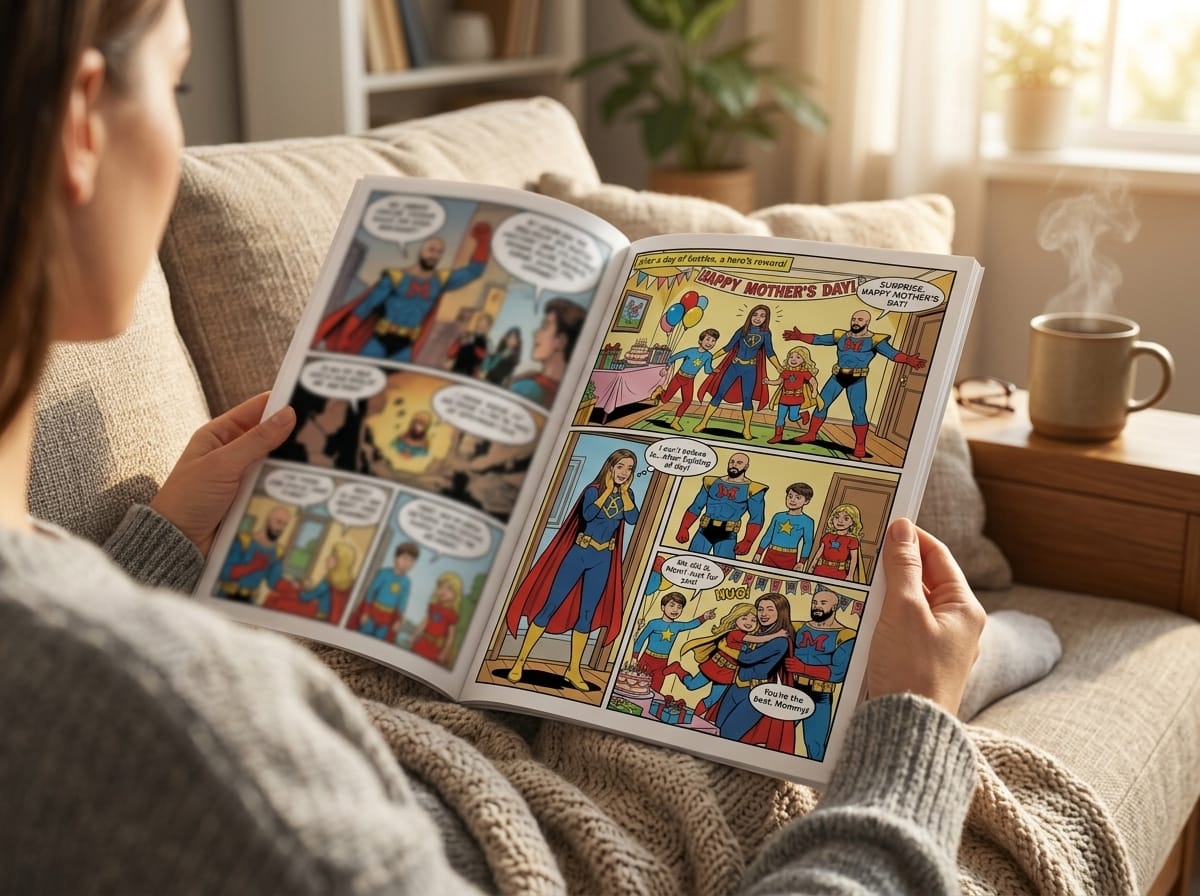
What's changed is the technology. A few years ago, most personalized books meant dropping a name into a prewritten story. Now, new AI-powered platforms can help people build custom narratives, generate characters from photos or descriptions, and create visually rich pages in formats that feel closer to illustrated memoirs, graphic novels, or cinematic comic books than children's keepsakes.
More Than a Memory The Rise of Adult Story Books
Adult personalized books didn't appear out of nowhere. They grew out of a much larger shift in how people buy gifts, preserve memories, and express identity through custom products.
The clearest hard data comes from the broader personalized storybook market. The global personalized story books for kids market was valued at USD 1.48 billion in 2024 and is projected to reach USD 2.76 billion by 2033, with a 7.2% CAGR from 2025 to 2033, according to Growth Market Reports on personalized story books for kids. The same report says North America accounted for USD 530 million in 2024.
Those numbers are about children's books, not adult titles. But they matter because they show something bigger. Personalized storytelling is no longer a tiny corner of publishing. It's a real product category with mainstream demand, especially in markets where custom gifting is already common.
Why adults are drawn to them
Adults usually want something different from a personalized book than children do. They aren't looking for alphabet practice or bedtime repetition. They want meaning, mood, shared history, and recognition.
A personalized adult book can hold things that ordinary gifts can't:
- A relationship story: how two people met, what they survived, what they still laugh about
- A memory archive: family trips, inside jokes, lost places, traditions
- A stylized tribute: turning a real person into the hero of a romance, mystery, fantasy, or comic
- A creative artifact: something that feels authored, not merely ordered
A good adult story book doesn't just say someone's name. It reflects their life, their voice, and the emotional texture around them.
Why this feels new now
Dedicated retail pages for adults also show that the category has matured. Brands such as Wonderbly and Story Bug explicitly offer personalized books for grown-ups, and Story Bug describes the format as a way to create a book that is “the most ridiculous, emotional, or funny gift” you've ever given, as shown on Story Bug's personalized books for adults collection.
This is the shift. A personalized story book for adults has moved from cute novelty to refined keepsake, creative project, and emotionally charged gift.
What Makes a Personalized Adult Story Book Different
The phrase “personalized book” often brings to mind a child's name inserted into a cheerful adventure. That model still exists. Adult books are different in both purpose and design.
The subject matter changes first
Children's books usually aim for reassurance, repetition, and simple participation. Adult books can go in far richer directions. They can be romantic, funny, bittersweet, satirical, reflective, or dramatic.
A book for your partner might retell your first trip together as a fantasy quest. A book for your best friend might turn their chaotic energy into a superhero origin story. A book for a parent might read like a visual memoir filled with family landmarks, old sayings, and stories younger relatives have never heard in full.
The personalization goes deeper
Adult personalization works best when it captures nuance. Not just names, but relationships, habits, expressions, places, and emotional history.
Here's a simple comparison:
| Book type | Typical focus | What gets personalized |
|---|---|---|
| Children's personalized book | Participation and recognition | Name, appearance, small details |
| Adult personalized story book | Meaning, memory, identity | Shared history, tone, private references, life events, visual style |
That depth is why adult books often feel less like merchandise and more like a private universe on paper.
Purpose matters more than format
An adult personalized book might be a gift, but it also does other jobs at once.
- It commemorates: anniversaries, retirements, weddings, reunions
- It interprets: it gives shape to memories that are otherwise scattered
- It performs emotion: humor, gratitude, admiration, apology, celebration
- It preserves voice: even when the story is stylized, it can still feel recognizably “about us”
Practical rule: If the idea still works after you remove the names, it may not be personal enough yet.
The best projects usually start with a specific emotional center. Not “make a book for my husband,” but “make a noir-style story about how he always gets us out of trouble when travel plans go wrong.” That's when the book begins to sound like an adult medium rather than a children's format with older characters.
The New Wave of Customization From Simple to AI-Powered
The biggest change in this space is the jump from template personalization to full custom generation.
Some books still follow the older model. The plot is already written. You edit a handful of fields, maybe a name, hair color, location, or dedication. That can be charming, and for some gifts it's enough.
But newer systems work very differently.
Two very different creation models
According to Wonderwraps' explanation of how personalized books work, a core design choice is the level of variable-data insertion. Some books are pre-made with fixed plots. Others are fully custom, where the storyline, characters, and illustrations are generated from scratch based on user input. That second model needs a much stronger content-assembly pipeline because everything has to stay consistent across text and images.
Here's the visual difference:
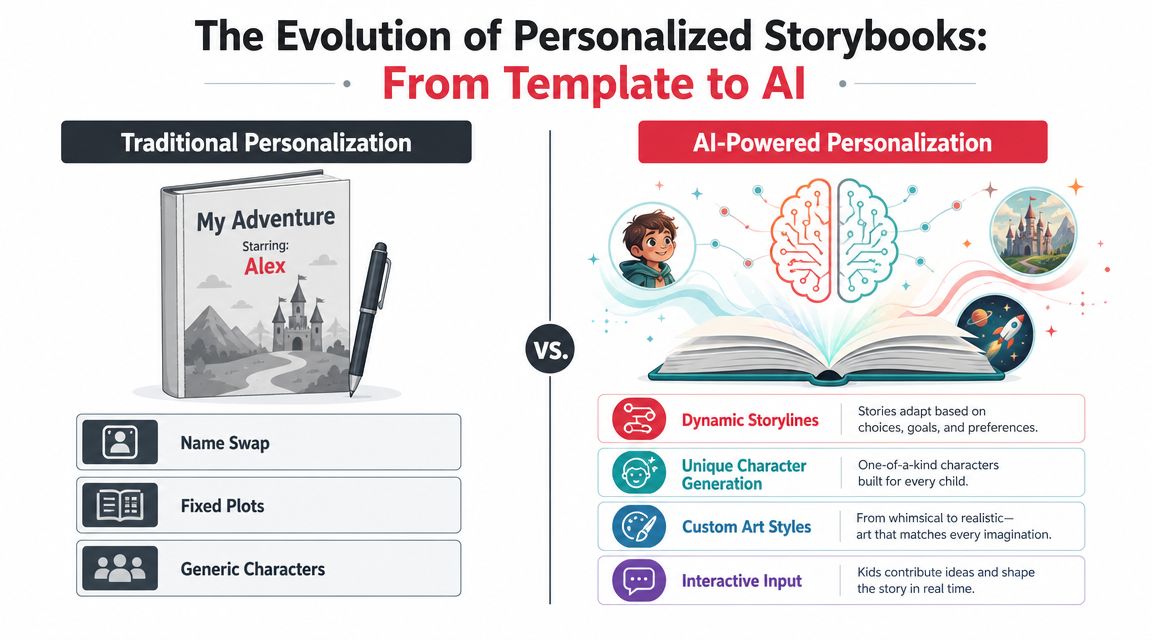
Why AI changes the experience
With AI-assisted creation, you're not only filling blanks. You're shaping a world.
That opens up new possibilities:
- Story generation: You can build a plot around a real relationship, a private joke, or a fictional scenario.
- Character creation: Some platforms let you use photos. Others let you describe a person's look, personality, or role.
- Art direction: You can choose a visual style that changes the mood of the entire project.
- Scene consistency: The same characters, outfits, locations, and emotional beats can carry across multiple pages.
This matters a lot for adults because adult stories often rely on tone. A comic treatment of a birthday roast needs different visuals than a tender illustrated memoir. A template can insert details. A full custom workflow can support a whole narrative identity.
How to tell what a platform really offers
If you're browsing tools, ask a simple question. Are you editing a finished book, or generating a new one?
That one distinction saves a lot of confusion. If you want dynamic storytelling rather than fixed templates, it helps to look at examples of an AI book maker for custom narrative creation.
A platform may still use automation in both cases. The primary difference is creative freedom. Template systems personalize a product. AI-powered custom systems help you author one.
Exploring Creative Formats and Art Styles
Once a story is fully custom, format stops being an afterthought. It becomes part of the storytelling itself.
That's where adults often get the most excited, because the same memory can feel completely different depending on how it's drawn and presented.
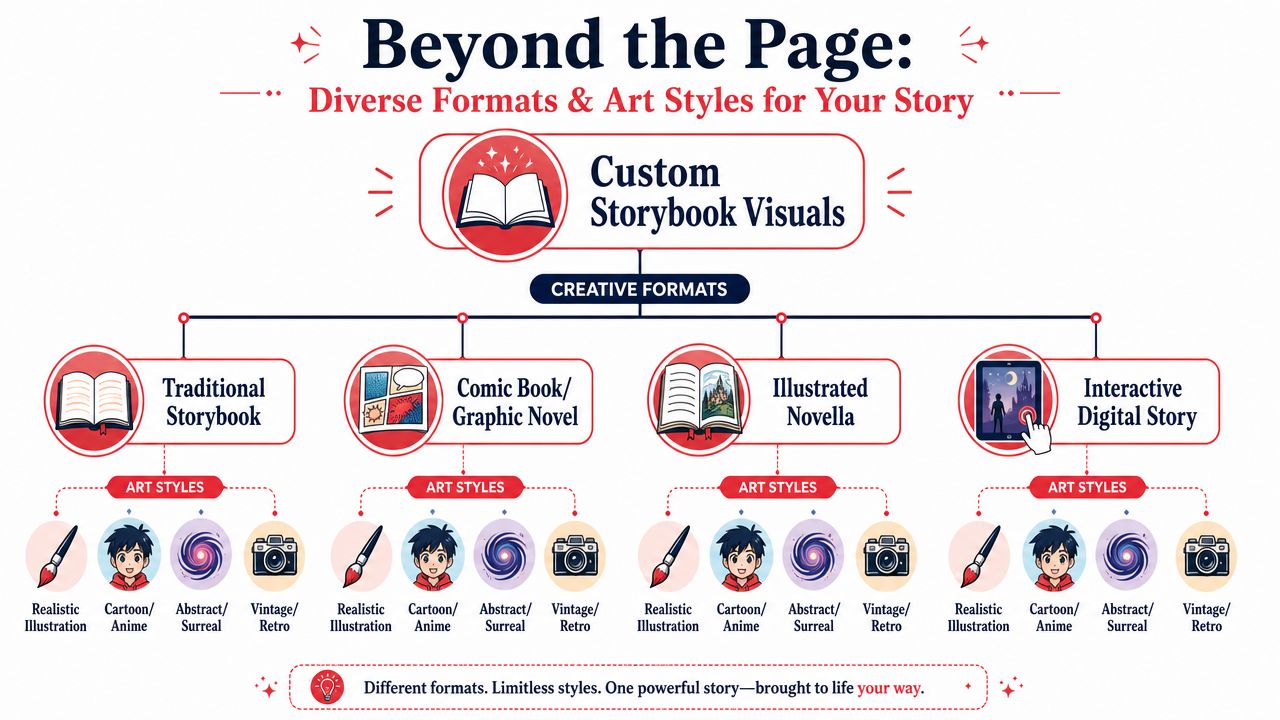
Why comics and graphic novels fit adult stories so well
A comic book format gives you tools that a standard illustrated storybook doesn't. Panels control pacing. Speech bubbles carry voice. Captions can hold reflection, irony, or memory. Visual cuts can jump between time periods, moods, or alternate realities without feeling forced.
That makes comics especially useful for adult projects such as:
- Romantic retellings with cinematic scene changes
- Funny friendship gifts built around exaggeration and timing
- Memoir-style narratives that move between present reflection and past events
- Genre remixes where real people appear in fantasy, sci-fi, noir, or superhero settings
A couple's “how we met” story might become a watercolor graphic novella. The same story in noir would feel wry, moody, and urban. In retro pop, it could feel playful and bright.
Art style shapes emotion
Style isn't decoration. It tells the reader how to feel.
| Art style | Typical mood | Good fit for |
|---|---|---|
| Manga or anime-inspired | Energetic, expressive | Romance, adventure, coming-of-age |
| Graphic novel | Mature, cinematic | Memoirs, character drama, literary gifts |
| Noir | Shadowy, witty, atmospheric | Mystery, city stories, stylish humor |
| Watercolor | Soft, nostalgic | Family memory books, gentle tributes |
| Cyberpunk | Bold, futuristic | Gamer culture, sci-fi gifts, stylized self-inserts |
Choose the visual language first if you already know the emotion you want. Choose the story first if you already know the memory you want to preserve.
If you want to compare visual directions, browsing different comic art styles for personalized storytelling can help you see how much style changes the final effect.
From Idea to Finished Book The Creation Process
A lot of people love the concept but assume the workflow will be technical. It doesn't have to be. You don't need to draw, letter panels, or understand image generation systems to create a strong result.
The easiest way to think about it is as a guided creative sequence.
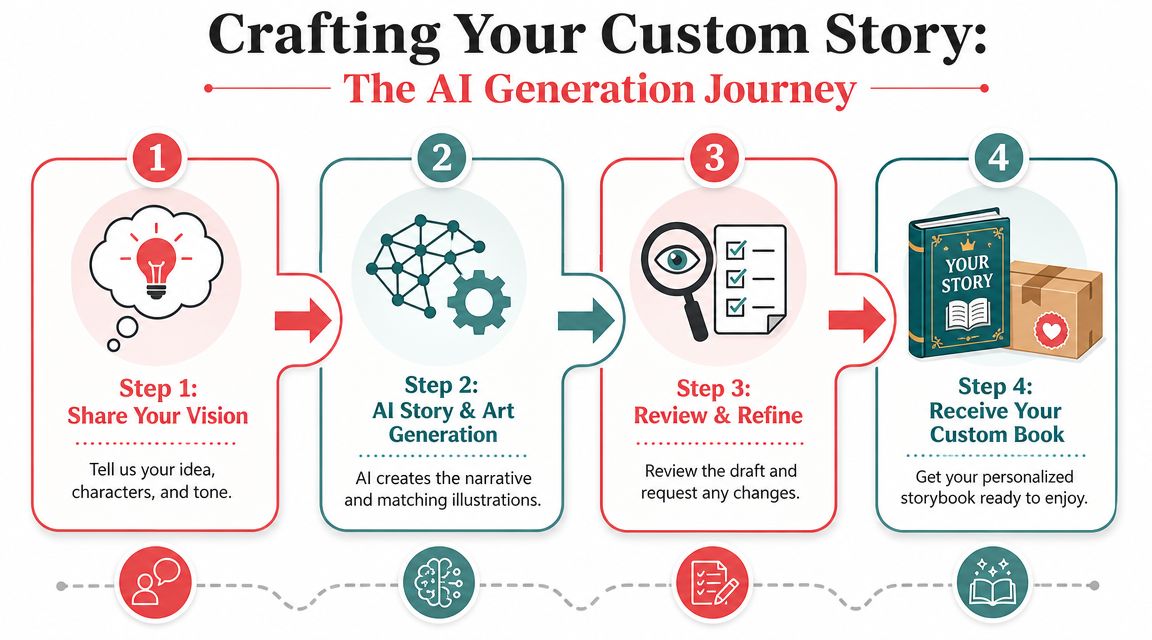
Start with the emotional core
Before you think about pages, think about purpose.
Ask yourself:
- Who is this for
- What should they feel when they read it
- Which memory, relationship, or fantasy idea holds the book together
That gives the AI and the platform something solid to work from. “A funny fantasy quest for my brother's birthday” is already better than “make something cool.”
Build the world in layers
Most projects become easier when you move in this order:
- Characters first: upload photos or describe appearances, personality, age, and role
- Style second: pick the look that matches the emotional tone
- Plot third: write a short outline with a beginning, middle, and ending
- Scenes fourth: decide which moments deserve a full page or a dramatic panel
- Dialogue last: add lines people would naturally say, not just generic narration
A personalized comic workflow works especially well here because it turns each beat into a visible scene. PersonalizedComics is one example of a tool built around that model. It lets users choose from multiple art styles, upload photos or describe characters, and generate illustrated comic pages from a plot and dialogue prompt.
Review like an editor, not a technician
The final stage is where many beginners freeze. They think they need to perfect everything at once. You don't.
Review in passes:
| Review pass | What to check |
|---|---|
| Story pass | Does the sequence make sense emotionally |
| Character pass | Do the people feel recognizable and consistent |
| Art pass | Does the style stay coherent across pages |
| Text pass | Does the dialogue sound natural and specific |
Don't chase perfection on page one. Finish a rough version of the whole book first, then improve the scenes that carry the most emotional weight.
That approach keeps the process fun. It also makes the technology feel like a creative partner, not a barrier.
Top Use Cases for Personalized Adult Books
The easiest way to understand this medium is to see what people do with it. Adult personalized books become most compelling when they solve a specific emotional problem.
Gifts that don't feel generic
An anniversary book can retell a couple's history as an epic adventure. The first date becomes the opening chapter. The move to a new city becomes the “crossing into unknown territory.” The tiny habits they tease each other about become running visual motifs.
A birthday gift can go in the opposite direction. Instead of sentiment, it can lean into comedy. A friend who always arrives late becomes a time-bending antihero. Their bad coffee habit becomes a superpower. Their group chat persona becomes canon.
If you're looking for practical inspiration, examples of how to create a book for a gift show how a personal story can become a readable, visual keepsake rather than a one-note novelty.
Family memory projects
Some of the most moving adult books aren't romantic at all. They're about preservation.
A daughter can turn her father's old travel stories into a graphic memoir. Siblings can collect family legends and turn them into illustrated scenes. A grandparent's voice, humor, and worldview can become part of a book younger relatives can return to. In-laws count too: a personalized book or comic is a warm answer when you need gifts for a sister-in-law who married into the family more recently.
These work because illustration does something memory alone can't. It gives scattered moments a shape people can revisit.
Creative prototyping and self-expression
Not every personalized adult book is a gift. Some are private experiments.
Writers use them to test a story world. Cosplayers and streamers use them to build stylized versions of themselves. Comic fans use them to see what their ideas look like in page form before expanding them into larger projects.
That's one of the most exciting changes in this space. A personalized story book for adults can now be a love letter, a memoir, a visual joke, or the first draft of a graphic novel concept.
Key Considerations Before You Create
Inspiration helps, but a smart decision usually comes from asking a few practical questions before you upload photos or start generating pages.
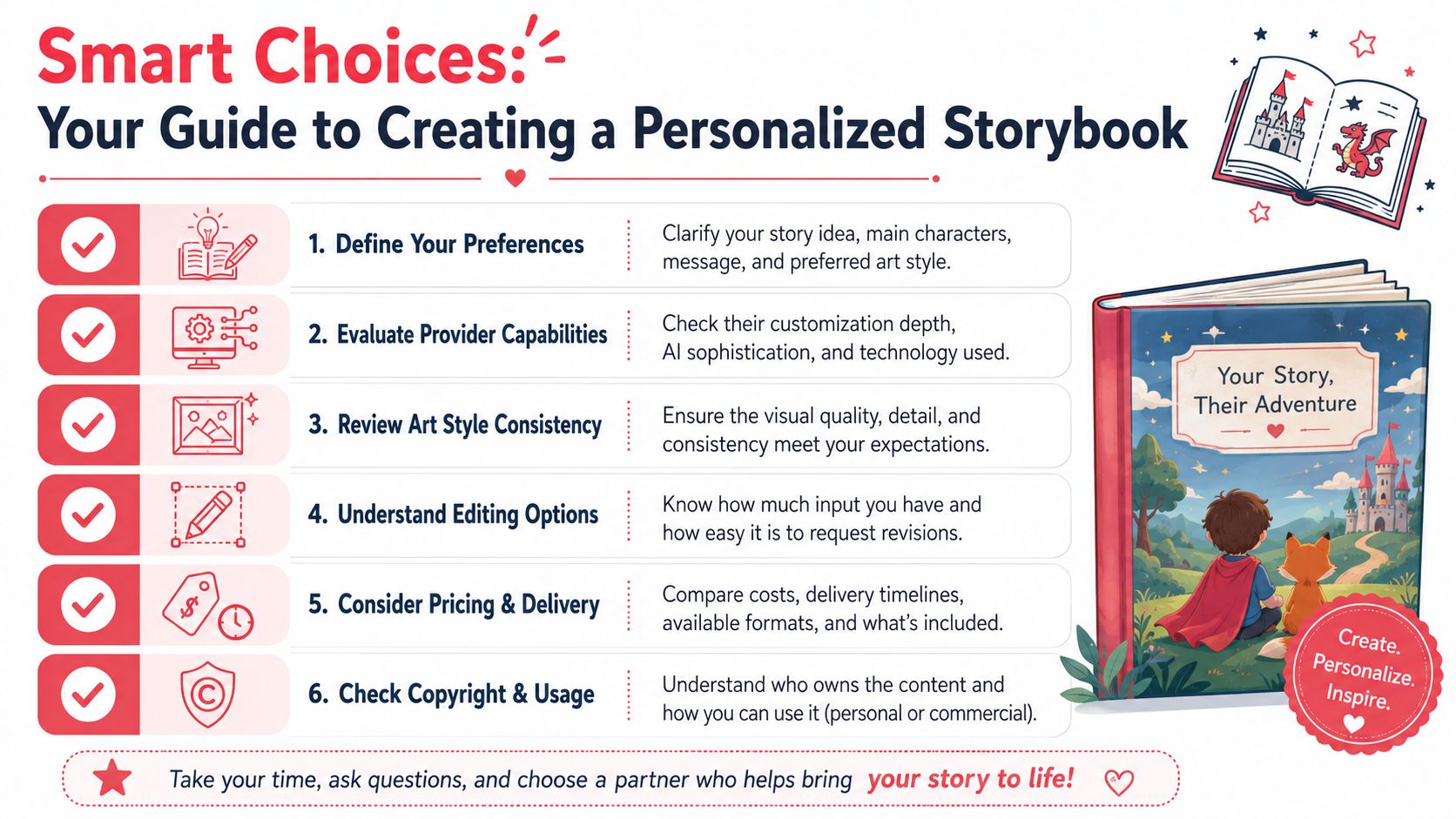
Check the product model first
Not every platform sells the same thing, even when the marketing sounds similar.
Some focus on digital downloads. Others offer printed books. Some use subscriptions, while others use one-time or credit-based systems. Some let you revise heavily. Others keep the process simple and constrained.
Use this checklist before you commit:
- Customization depth: Are you editing a template or creating an original narrative?
- Format options: Is it prose, comic, graphic novel, or a mixed illustrated format?
- Editing control: Can you revise text, scenes, and visual direction?
- Output: Will you receive a digital file, a printed copy, or both?
- Ownership and reuse: What can you do with the finished result?
Look closely at visual consistency
AI-generated projects can vary in quality. A single nice sample image doesn't tell you whether the whole book will feel coherent.
You want to know whether the platform can keep the same character recognizable across scenes, preserve the selected art style, and handle tone without drifting into something generic or mismatched.
A strong adult project usually depends on consistency more than spectacle. Readers forgive a slightly stylized face. They don't forgive a story where the emotional tone keeps changing by accident.
Don't skip privacy and consent questions
This part is often overlooked, especially when people are excited about using real names, photos, and relationship details.
According to I'm The Story on privacy, consent, and likeness rights in personalized books, the market for adult personalized books lacks official national guidelines on data privacy, consent, and likeness rights. As more platforms use user-supplied photos and AI-generated characters, questions about how data is stored, whether someone should consent to being depicted, and how sensitive personal details are handled become more important.
That has real implications.
- If you're depicting another adult, ask first when the content is intimate, sensitive, or publicly shareable.
- If you're uploading photos, read the platform's data policy before you proceed.
- If the story includes private relationship material, think about where the final book might circulate.
Trust matters more when the product is personal. The deeper the customization, the more carefully you should evaluate data handling and consent.
A personalized book can be emotionally generous and still be ethically careless. The best projects do both jobs well. They honor the person in the story and respect the person behind the data.
Frequently Asked Questions
| Question | Answer |
|---|---|
| What's the difference between a personalized adult book and a custom comic? | A personalized adult book is the broad category. A custom comic is one format within it. Comics use panels, dialogue, pacing, and visual sequencing, which often makes them better for humor, drama, and cinematic storytelling. |
| Do I need writing experience to make one? | No. You mainly need a clear idea of the person, the relationship, and the tone. Most beginners get better results by starting with a short concept and a few key scenes rather than trying to write a full manuscript upfront. |
| Can a book be meaningful if it's partly AI-generated? | Yes, if the personal choices come from you. The emotional value usually comes from the memory, the framing, the references, and the intent behind the gift. AI helps shape the material, but it doesn't replace your perspective. |
| What kind of story works best for adults? | Stories work best when they have a strong center. That could be a relationship milestone, a family legend, a playful character transformation, or a memoir-like sequence of scenes. Specific beats almost always feel stronger than vague “celebration” themes. |
| Should I choose print or digital? | Choose digital if you want speed, easy sharing, or a draft you can refine. Choose print if the project is meant to be gifted, displayed, or kept as a physical object. Many people start digitally, then print once the book feels finished. |
| How personal is too personal? | If the story includes private jokes, health details, breakups, grief, or intimate relationship material, ask whether the recipient would feel seen or exposed. Personalization works best when it creates recognition without crossing a boundary. |
A personalized story book for adults works best when it feels authored with care. The technology can do a lot now, but your judgment still shapes the final result. Pick the memory carefully. Choose the format intentionally. Respect the people inside the story.
Story-based keepsakes fit festive occasions as well: if you are shopping for the festival of lights this year, our Diwali 2026 gift guide covers the dates, the five days, and gift ideas from traditional to personalized.
Shopping for the holidays instead? Our guide to Christmas gifts for her rounds up 25 ideas from sentimental to luxury, with lead-time advice for the personalized ones.
If you want to turn a memory, relationship, or original idea into a fully illustrated comic-style book, PersonalizedComics is one option to explore. It lets you upload photos or describe characters, choose from multiple art styles, generate custom pages, and order a premium printed comic without needing drawing skills.
Filed under Making Your Comic