The Complete Comic Creation Workflow
This guide is your roadmap. We're going to walk through the entire process of making a comic, breaking it down into clear, manageable stages—from that first spark of an idea all the way to a finished, published book.
Lots of aspiring artists think the hardest part is drawing. It’s not. The real challenge, and the true heart of any great comic, is telling a compelling story. That has been true for centuries, from the sequential art on historical artifacts like Rome's Trajan’s Column to the modern comics we love today. The medium has always been about telling a story, one panel at a time.
This infographic breaks down the core steps you'll follow.
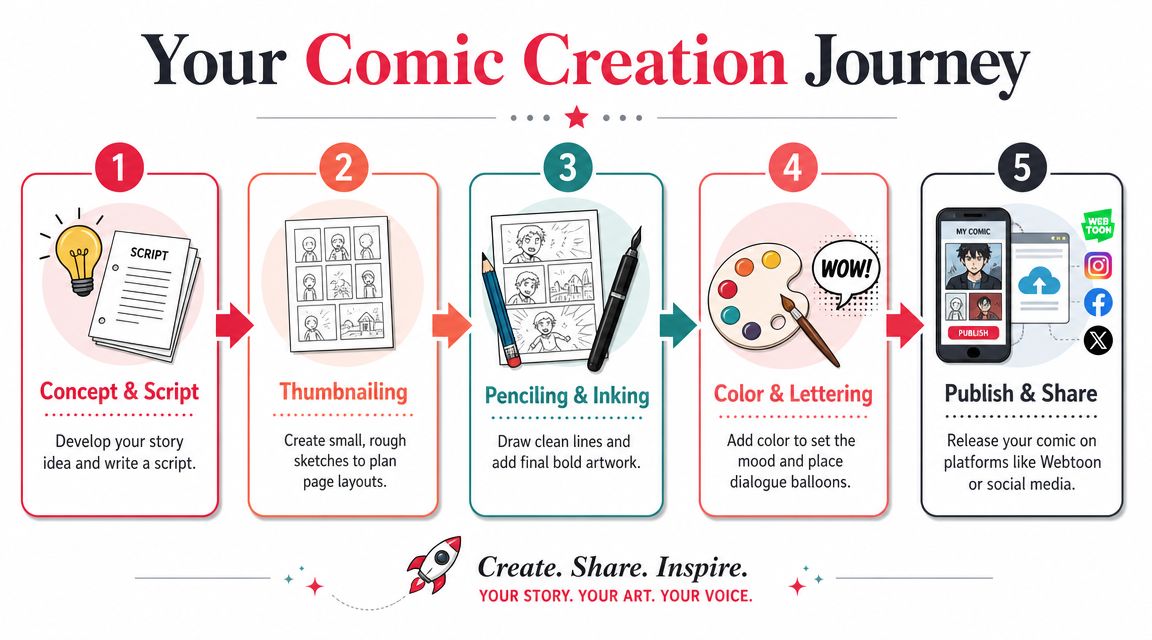
Think of this as your production pipeline. Every successful comic relies on a structured process where each step logically builds on the one before it, turning a simple concept into a fully realized narrative.
Building Your Story From Idea to Thumbnails
Before a single line of finished art is drawn, the real work begins. The biggest difference between an amateur page and a professional one often comes down to the pre-drawing work—the foundational planning that turns a cool idea into a story that actually works.
This is where you build your blueprint, starting with the script. You don’t need anything fancy, just a clear plan for your panels, action, and dialogue. If you’re new to this, we have a complete guide on how to write a comic book script that breaks down the process.
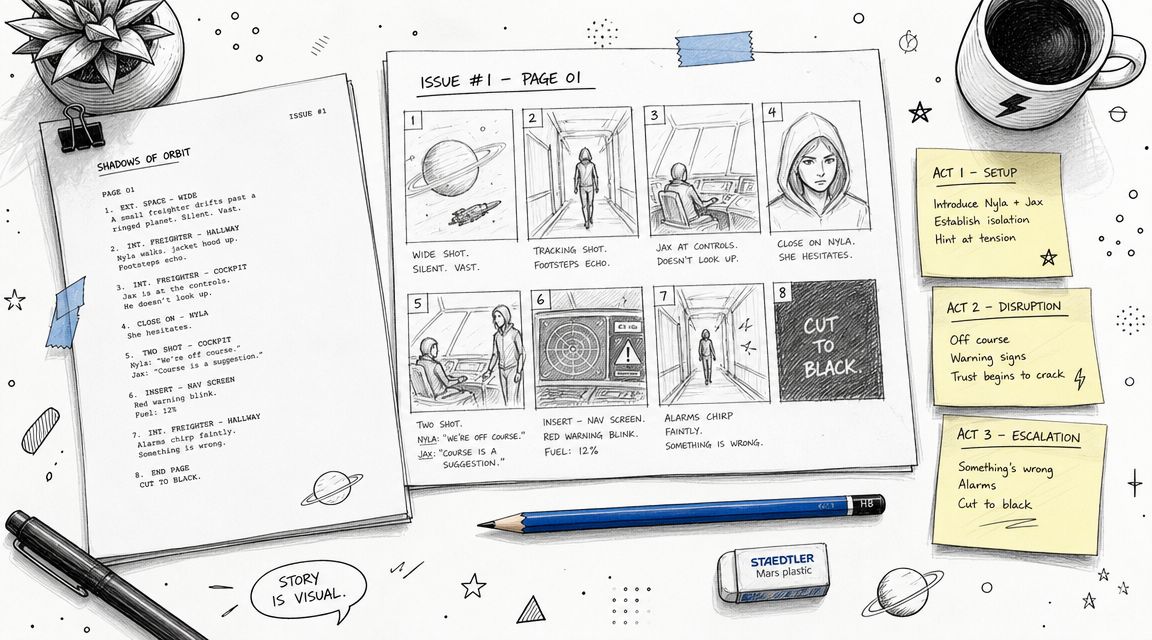
With a script in hand, you can move on to thumbnailing. This is probably the most important, and most skipped, step in the entire process.
Thumbnails are just tiny, ultra-rough sketches of your pages. We're talking scribbles. Their only job is to help you figure out composition, pacing, and flow. This is where you decide if a scene needs a big, dramatic splash panel or a sequence of small, tight shots. You're not drawing characters; you're directing the reader's eye.
This is your chance to solve visual problems cheaply and quickly, before you’ve invested hours into a page that doesn’t land right. Get the thumbnails right, and the rest of the drawing process becomes infinitely easier.
From Pencils to Finished Pages: The Art of Production
You’ve got your script and your layouts. Now comes the part where all that planning starts to look like an actual comic. This is where the real visual magic happens, turning rough ideas into polished, expressive artwork.
This production stage is a three-part harmony: penciling, inking, and coloring. Each step builds directly on the one before it, layering in detail, mood, and style until your pages are ready for the world.
Think of it like this:
- Penciling is where you build the foundation. You take those loose, energetic thumbnails and translate them into clean, detailed drawings on your final page—whether that’s a sheet of Bristol board or a digital canvas.
- Inking is where you commit. This is the art of laying down those crisp, final lines that give your comic its unique visual personality and make the characters and environments pop.
- Coloring is what breathes life into the world. It’s not just about filling in the lines; it’s about setting the tone, guiding the reader’s focus, and making your story feel emotionally resonant.
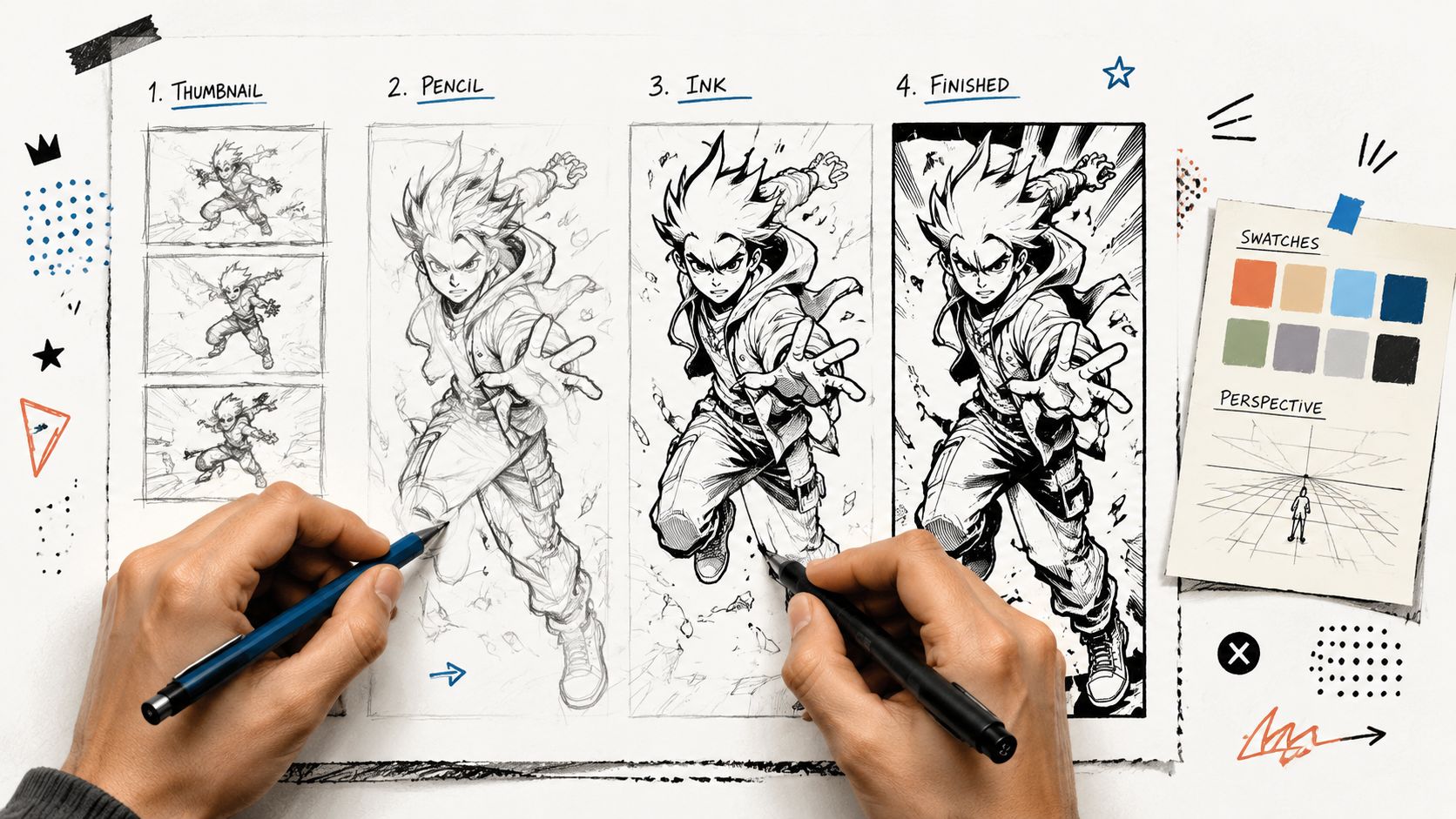
While these stages define the workflow, none of it works without strong characters at the center. Great character design is its own art form.
If you want to really nail that part of the process, we have a whole guide dedicated to it. Check out our deep dive on how to draw comic characters for more focused techniques.
Polishing Your Pages With Lettering and Edits
The art might be done, but a comic isn’t truly finished until it can be read. Lettering is the invisible art that gives your characters a voice and guides the reader's journey through the page. When it’s done right, no one notices it. When it’s done wrong, it can ruin even the most beautiful artwork.
This is about much more than just dropping text into a file. You’re making decisions about font, size, and the careful placement of every speech balloon and caption. Bad lettering makes a page feel crowded and confusing. Think of a balloon’s tail as a pointer—it needs to direct the reader's eye clearly from one speaker to the next without tangling up the art.
The final editing pass is where you separate a good comic from a great one. This is your last chance to hunt down typos, fix awkward dialogue, and make sure the story’s rhythm feels right. Never skip this final quality check.
Using AI to Create Your Comic Faster
Let’s be honest: drawing a comic from scratch takes an incredible amount of time. What if you’re a writer with a killer script but no artist, or you just want to test a story idea without sinking hundreds of hours into layouts and pencils?
This is where AI tools are starting to make a real impact. Think of them less as a replacement for an artist and more as a powerful tool for rapid prototyping. Platforms like PersonalizedComics let you feed your script and character ideas into the system and get back a fully visualized comic page. It’s a fantastic way to see if your pacing works and if your story lands visually before you commit to the long haul of manual creation.
Who Is This For? Writers and Gift-Givers
AI-assisted comics aren't just for prototyping. They're a huge help for anyone who wants to tell a visual story but doesn't have traditional drawing skills.
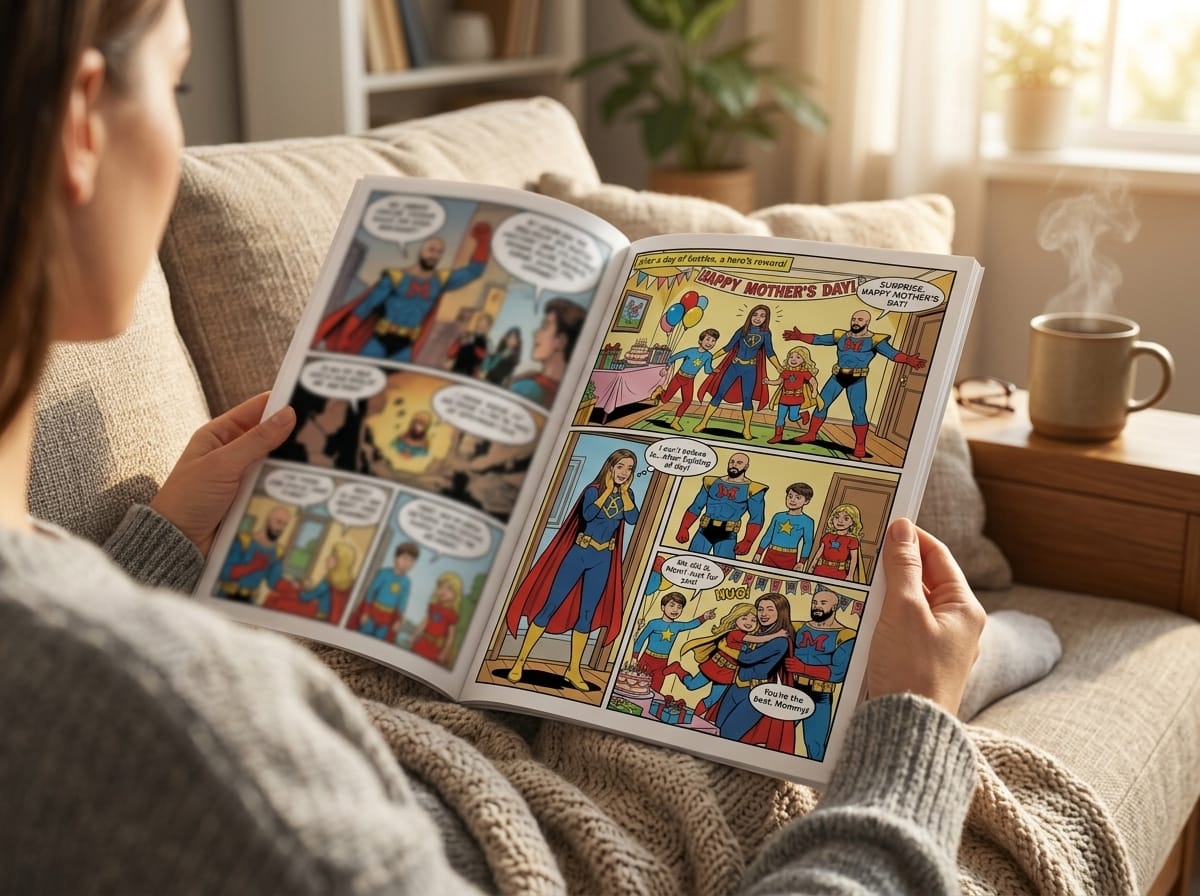
Maybe you want to create a truly one-of-a-kind gift, like turning a favorite family story into a short comic for an anniversary or a birthday. The AI can handle the heavy lifting of illustration, freeing you up to focus on what matters most: telling a great story that resonates with the person you’re making it for. It opens up comic creation to everyone. You can dive deeper into how to use an AI book maker to get your ideas on the page fast.

To see the difference, it helps to compare the workflows side-by-side. The traditional path is rewarding but demands significant time and skill at every stage. The AI-assisted route prioritizes speed and accessibility.
Traditional vs. AI-Assisted Comic Creation
| Aspect | Traditional Method | AI-Assisted (PersonalizedComics) |
|---|---|---|
| Time | Weeks to months for a single issue. | Minutes to hours for a short comic. |
| Skill | Requires drawing, inking, coloring, and lettering skills. | Requires strong storytelling and editing skills; no drawing needed. |
| Resources | Art supplies (digital or physical), software, potentially hiring an artist. | A subscription to an AI platform. |
| Prototyping | Time-consuming; requires creating rough sketches and layouts manually. | Extremely fast; ideal for testing multiple story concepts quickly. |
Ultimately, using an AI tool like PersonalizedComics isn't about skipping the work; it's about shifting your focus from manual illustration to pure storytelling. It’s a powerful option to have in your creative toolkit, especially for personal projects, gifts, or testing the commercial potential of a new series.
Alright, you've poured your heart and soul into every panel, and now you have a finished comic. Congratulations! That's a huge milestone. But a comic isn't truly complete until it finds its readers.
Getting your work out there can feel almost as daunting as making it, but the good news is there have never been more avenues for creators. The key is picking the right one for your story.
For a lot of indie artists, webcomic portals are the place to be. Platforms like Webtoon and Tapas are fantastic because they come with a built-in audience actively searching for new comics. Their vertical scroll format has become the standard for digital reading, and getting your foot in the door is relatively straightforward.
That said, don't just throw your comic onto a portal and hope for the best. You should also be building a home base on social media. This is where you connect with your readers on a personal level.
My best advice is to start building a community before you even publish page one. Share your process. Post character designs, warm-up sketches, and sneak peeks of your workspace. Talk about your story! This isn't just marketing; it's about inviting people on the journey with you. It builds a loyal following that will be genuinely excited when you finally launch.
Common Questions from Aspiring Comic Creators
Over the years, I've seen countless new creators get tripped up by the same handful of questions. Let's get these cleared up right now so you can move forward with confidence.
Do I Need to Be a Professional Artist?
Not at all. In fact, thinking you need to be a master illustrator is one of the biggest mental blocks out there. The truth is, story is king.
Some of the most beloved and influential comics rely on simple, clear art that does one thing exceptionally well: it tells the story. Your art doesn’t need to be hyper-realistic or technically perfect; it just needs to communicate your narrative effectively.
What Is the Biggest Beginner Mistake?
Hands down, it's jumping straight into drawing the final pages. I see it all the time. A creator gets a flash of inspiration and immediately starts penciling panel one, page one, without a script or even a few rough thumbnails.
This almost always leads to a tangled, confusing story, dead ends, and a whole lot of wasted time. The planning stage isn't glamorous, but skipping it is the fastest way to derail a project.
How Important Is a Good Story vs Good Art?
Story is everything. It’s the engine that drives the entire comic. Brilliant, jaw-dropping artwork can’t rescue a weak or meandering plot, but a truly great story told with simple, even crude, art can become an absolute classic.
This is why making comics is such a unique skill—it's not just about drawing, it's about blending art with what educators call information design. A well-structured comic has the power to make incredibly complex ideas feel simple and clear. You can actually see this in action by exploring the research on how comics function in education.
Filed under Comic Craft